
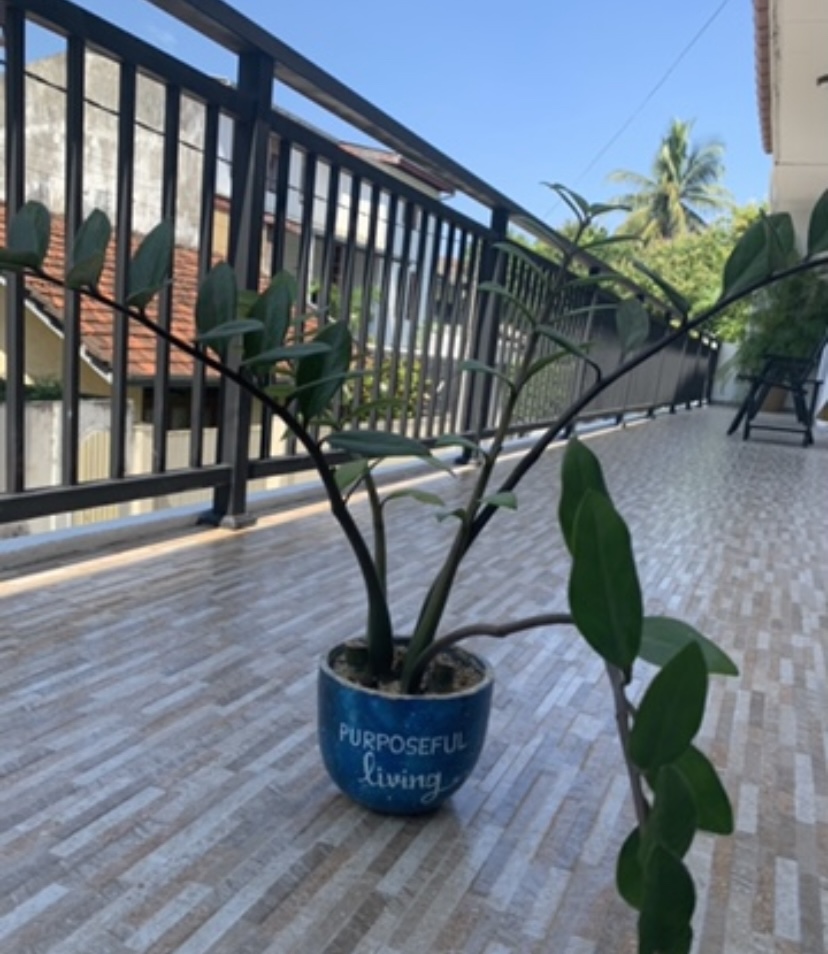
Purposeful Leadership contains two ideas, purposefulness and leadership, which cannot be simplified or explained using a short definition. This is substance for a book or many. I commence this series of blog posts, not knowing the nature of articles nor the number of articles. I allow the series to unfold as in the process of finding purposefulness.
I must start somewhere, hence let me explain purposefulness in an over-simplistic manner. Purposefulness is a mindset that guides thinking, decisions and actions, with the flourishing of life being given importance. Flourishing of life begins with one’s own life, that of family, team, organisational stakeholders, environment, society, and the world at large. It’s simply for the flourishing of all forms of life. Being purposeful is a challenging aspiration, given the cognitive, practical, psychosocial and contextual complexities of the world we experience. Nevertheless, it is a worthwhile pursuit as discussed in my doctoral thesis; Living Purposefully: An Inquiry into the Life of a Leadership Development Practitioner (De Silva, 2024). Leadership is about the intention and effort to influence oneself, and those connected with oneself in personal and work roles. Therefore, purposeful leadership is enacting self-, team- and organisational leadership for the flourishing of life.
During my doctoral research into Purposeful Living, I was alarmed at how almost all the leadership approaches I work with have limitations. As I searched for answers to this dilemma, the book Responsible Leadership – Realism and Romanticism by Kempster & Carroll (2016, p.1) seemed promising. As I was wondering if this was another leadership fad, I was relieved by the assurance of the authors that responsible leadership is offered as a critical stimulant to supply enough grit and intrigue to catalyse new questions about the state of leadership, thinking through its myriad forms rather than being another adjective to leadership. I was inspired by this idea and started to see that the version of leadership offered by me contained such qualities too.
Kempster & Carolle (2016, p.25-29) propose that responsible leadership contains something old, something new, something borrowed and something green, akin to the myth of what a bride should wear on her wedding day. Extending the metaphor to responsible leadership, the old ideas are “portrayed as a paragon of the best of transformational (Avolio, Waldman, & Yammarino, 1991), authentic (Avolio & Gardner, 2005), servant (Greenleaf, 2002; Russell & Stone, 2002), ethical (Brown & Trevio, 2006; Ciulla, 2004), and charismatic (Conger & Kanungo, 1987) leadership”. The new idea is to seek to use the old themes of leadership with authenticity and values for economic, ecological and planetary restorative benefits and discursive conflict resolution whilst encouraging bottom-up activism. What is borrowed is the framework developed by Hernandez, Eberly, Avolio, & Johnson (2011), which seeks to map existing leadership theories into acohesive body, suggesting that responsible leadership is not a new and different form of leadership but a manner of undertaking whatever other form of leadership we choose to adopt. What is green, a departure from the traditional colour blue in the myth, are the individual acts of responsible leadership which collectively add up to dramatic changes in individual and organisational practice or provide the catalyst for wider policy initiatives for the sustenance of social, economic and environmental values.
From my frame of purposeful Leadership, what is old are the leadership qualities from transformational-, authentic-, servant-, ethical- and charismatic leadership in constructing purposeful leadership. What is new is my version of purposeful leadership and my unique coaching approach developed during my doctoral research project. What is borrowed is the social constructionist philosophy and Action Research methodology to construct a unique coaching approach to help leaders in their quest for purposeful leadership. This approach helps adapt a version of purposeful leadership to suit the cognitive, practical, psychosocial and contextual aspects of each coachee. I see the green aspect clearly when leaders articulate a purpose-statement which contains individual acts of responsibility for the flourishing of life.
Since my approach is to help each leader articulate their version of purposeful leadership and find a bridge to connect to the organisation’s purpose, it causes many difficulties during the process of finding alignment. In such a scenario, leadership development practitioners find it difficult to be responsible towards the organisation as well as the coachees, as their aspirations can be conflicting. Dealing with such complexities provides interesting leanings regarding purposeful leadership and helps leaders and leadership development practitioners learn and grow during the process.
To conclude, through this exploration of literature I see very limited attempts to incorporate purposefulness into leadership, except the work of Kempster et al (2011, p.317) who initiate a discussion regarding purpose within leadership and problematise the manifestation of purpose in everyday organizational leadership practices. I agree with their assertion that this notion requires greater attention if it is to become manifest in both the corporate and the societal orientations of leaders. They recommend an exploration of the lived experience of leadership as purpose, possibly through ethnographic or autoethnographic approaches. Therefore, in addition to drawing from their work, I also contribute to their work by sharing my lived experiences. I invite you to participate in this endeavour as leaders, leadership practitioners, and/or researchers and I open this space for such an aspiration.
References
De Silva, R. L. G. (2024). Living Purposefully: An Inquiry into the life of a leadership development practitioner. (Doctoral dissertation, Hult Ashridge).
Kempster, S., & Carroll, B. (Eds.). (2016). Responsible leadership: Realism and romanticism. Routledge.
Kempster, S., Jackson, B., & Conroy, M. (2011). Leadership as purpose: Exploring the role of purpose in leadership practice. Leadership, 7(3), 317-334.

Pingback: Start with the Self (Purposeful Leadership – Part 3) – Dr. Ranjan De Silva
Pingback: Developing Purposeful Self-Leadership (Purposeful Leadership – Part 4) – Dr. Ranjan De Silva