Artificial Intelligence is transforming our world at an astonishing pace. Tasks that once required human expertise can now be completed in seconds. AI can analyse data, generate content, recommend solutions to complex problems, and even engage in conversations that feel remarkably human.
While these advances offer tremendous opportunities, they also present a profound question: as machines become increasingly intelligent, how do we remain deeply human?
The greatest risk of AI may not be the loss of jobs or the disruption of industries. It may be the gradual erosion of the very qualities that make us human. As we become accustomed to outsourcing our analysis, thinking, decision-making, and even aspects of our relationships to technology, there is a danger that efficiency begins to replace wisdom, convenience begins to replace effort, and information begins to replace understanding.
Yet, when viewed through the lens of purposefulness, we see that the more capable AI becomes, the more valuable uniquely human capacities become.
One of these capacities is judgement. AI can process vast amounts of information, but it cannot fully understand psychosocial contexts, emotions, values, ethics, or the consequences of decisions in the way humans can. Much of this knowledge is unique to each individual and is shaped by lived experience rather than stored in a data centre. In an increasingly complex world, the ability to exercise sound judgement will become far more important than simply possessing information.
We cannot change anything unless we accept it. Condemnation does not liberate; it oppresses – Carl Gustav Jung
Over the years, I have worked with thousands of leaders, managers, professionals, teams and organisations. Regardless of industry, geography or level of responsibility, I have observed that the challenges people face tend to fall into three broad categories.
Some challenges are about understanding ourselves.
Some are about understanding and leading others.
And some are about understanding and transforming the organisations within which we work.
These three perspectives form the foundation of what I call Purposeful Leadership.
They are:
Purposeful Self Leadership
Purposeful People Leadership
Purposeful Organisational Leadership
Over the years, I have developed, adapted and curated a range of assessments to help individuals and organisations gain insights across these three perspectives. This article introduces the framework that connects them all.
Last evening, I had the privilege of attending the Centenary Celebrations of the St. Anthony’s College Kandy Old Boys’ Association, Colombo Branch (SACKOBA Colombo), marking one hundred years since its establishment in 1926. For a few hours, I was transported back to a chapter of my life that shaped me far more than I realised at the time. The Colombo Branch has served generations of Antonians by strengthening the connection between old boys and the College while supporting its development over nearly a century.
As I met former teachers, schoolmates and fellow Antonians, I found myself going down memory lane. Old stories resurfaced. Forgotten experiences returned. Most importantly, I was reminded of a simple yet profound truth:
I am who I am today largely because of the grounding I received at St. Anthony’s College.
One of the highlights of the evening was reconnecting with some of my teachers. Among them was our beloved Mathematics teacher, Mr R. N. A. De Silva. During our conversation, I shared a secret with him. I told him that I had modelled my signature on his signature when I was a student. He laughed and replied that he had modelled his signature on that of Rev. Fr. Dom Aiden De Silva.
I was amazed.
It reminded me that legacy often flows through generations in the most unexpected ways. We tend to think of influence as grand speeches or major achievements. Yet often it is transmitted quietly through example, values and everyday interactions that leave an imprint on those who follow.
Wherever we look today, the world is accelerating towards a digital future.
Artificial intelligence is transforming how we work. Governments are digitising public services. Businesses are automating processes at an unprecedented pace. Schools and universities are preparing students for careers that did not exist a decade ago. Across industries and nations, digital transformation has become synonymous with progress.
The benefits are undeniable. Technology has enabled us to communicate instantly across continents, access knowledge at extraordinary speed, improve productivity and solve problems that once seemed insurmountable.
Yet amidst this progress, I find myself reflecting on a deeper question.
As we become more digital, are we becoming less human?
Over the past few weeks, Sri Lanka has quietly witnessed something quite remarkable. In the space of just days, Vesak was celebrated across the country, while Muslims observed Eid al-Adha, known locally as Hajj. Christians celebrated Easter earlier in the month, and Hindus observed Thai Pongal, Maha Shivaratri and Deepavali earlier in the year. This sense of unity is further strengthened through shared moments such as the New Year on the first of January, and when Sinhala and Tamil communities celebrate a traditional New Year in April.
At its heart, this is a collective pause, a moment to reset, express gratitude and step into the year ahead with renewed intention. These moments unfold not in competition, but in coexistence. They serve as a gentle reminder that, despite different expressions of belief, there is a shared rhythm in how communities seek meaning, connection and purpose.
This reveals something deeper than a series of celebrations. It reflects a pattern of alignment around renewal, reflection and purposeful living. This unity becomes particularly visible in times of difficulty. One recent example is the Ditwah cyclone, which affected many parts of the country, where people came together to support each other in survival and recovery, irrespective of their spiritual beliefs.
Across traditions, there is a shared inquiry: Why are we here, and how should we live?
When I wrote my last blog post, Purposefulness in a World at War, I found myself holding a quiet but hopeful assumption. That the world, fractured as it is, would eventually move towards something recognisable as post‑war. That there would be a settling, an aftermath, a time for rebuilding and reflection.
Yet, as weeks have turned into months, that assumption feels increasingly naïve.
What we seem to be living through is not a temporary disturbance between periods of stability, but the emergence of a new normal: sustained uncertainty. Wars without clear endings, economic volatility that refuses to stabilise, climate disruptions that defy prediction, technological acceleration that outpaces ethical reflection, and social divisions that seem to harden rather than heal.
Uncertainty is no longer an interruption to normal life. It is normal life.
This raises a far more demanding question than the one I posed earlier:
How do we remain purposeful when uncertainty is not a phase to be endured, but a condition to be lived with?
A luminous crystalline ring hovers above a miniature landscape of urban ruins and glowing embers.
As the war in the Middle East continues to unfold, it is difficult to remain untouched by the images, stories, and consequences that surround us. Families displaced, lives lost, travellers stranded far from home, and entire societies living under sustained fear and uncertainty. In moments such as these, any reflection on leadership must begin with humility.
It is important to acknowledge something that is often overlooked in conversations about conflict: those engaged in war rarely see themselves as acting without purpose. On the contrary, every party involved believes it is acting in the service of its people, its values, and its understanding of justice or security. The challenge, therefore, is not an absence of purpose, but the narrowness of the purposes being pursued.
When purpose is defined only within national, ideological, religious, or territorial boundaries, it can legitimise actions that cause immense suffering beyond those borders. Purpose, when disconnected from a wider moral horizon, becomes a powerful justification for harm.
This raises a difficult but necessary question: What would it mean to act purposefully in a world at war?
There is a compelling seduction in goal setting. A tidy metric. A date on the calendar. A trophy on the shelf. Goals promise clarity and certainty in a complicated world. Yet, as I have often observed in leadership work and personal reflection, the same mechanism that energises performance can also distort judgement, corrode relationships, and narrow our field of vision until only the finish line seems to matter.
This is the problem with goals; not that they exist, but that they so easily become all that exists.
When organisations get obsessed with goals, people begin to feel the heat of retribution and repercussions. Meeting the number eclipses meeting the need. Targets become a test of capability rather than a tool for learning. Under pressure, talented individuals often drift into unhealthy competition and, at times, resort to unethical means. Collaboration gives way to territorialism. Short-term wins get overvalued; long-term consequences get discounted. Leaders unwittingly convert their teams into anxiety machines, characterised by being busy, brittle, and perpetually braced for impact.
Purposeful leadership is often understood as a progression: purposeful self-leadership, followed by purposeful people leadership, and eventually purposeful organisational leadership. While this sequence is a helpful entry point, it does not reflect how leadership is actually lived. In practice, purposeful leadership is not linear. It is cyclical, relational, and complex. Each form of purposeful leadership both shapes and is shaped by the others, forming a living system rather than a developmental ladder.
Purposeful self-leadership is the inner anchor of this system. It is the ongoing practice of aligning values, beliefs, intentions, and actions with a deeper sense of purpose. This inner work is not private or abstract. It shows up most clearly when leaders are under pressure, navigating ethical tension or difficult trade-offs. When leaders lack inner coherence, purpose becomes performative. When they are grounded in purposefulness, they are better able to act with integrity, resist expedient compromises, and hold responsibility with maturity.
Purposeful people leadership is where inner purpose meets relational reality. Purpose is tested not in declarations, but in conversations, decisions, and everyday interactions. The way leaders listen, build trust, address conflict, and hold accountability reveals whether purposeful self-leadership is truly embodied. Purposeful people leadership translates inner alignment into lived experience, shaping how people feel, engage, and commit to the organisation.
As we welcome 2026, many of us feel the familiar mix of gratitude, exhaustion, and anticipation. The year has given us moments we are proud of, and moments that remind us how imperfect, human and evolving we are. Before we rush into 2026, this is a valuable moment to pause, to breathe, and to reflect on how purposefully we lived in 2025.
Over the years, through the Purposeful Leadership series, I have written about the importance of aligning who we are, how the quality of our leadership begins with the quality of our inner world and how we lead. As I look back on 2025, I am reminded again that purposefulness is not a grand concept; it is a daily practice.
A simple way to explore your own experience of purposeful leadership is through three lenses: purposeful self, purposeful team, and purposeful organisation.
In the previous article, we explored how to develop purposeful organisational leadership. In this post, we focus on the complexities of purposeful organisational leadership and potential remedies.
Organisations do not become purposeful by proclamation; they become purposeful by orchestration. And orchestration is complex. It asks leaders to conduct a score that balances markets and meaning, governance and grace, pace and patience. If purposeful people leadership is the dance with paradox at the human scale, then purposeful organisational leadership is that paradox amplified across systems. The stakes are higher, the variables multiplied, the pressure relentless. Yet the beauty is also greater, because purposeful organisations can hold the space where profit and flourishing meet.
The first complexity is when the purpose is only a brand. Organisations often craft eloquent purpose statements, then proceed to pursue them with methods that quietly contradict the message. Purpose is not merely narrative; it is action. When we violate this principle, people quickly learn that the banner on the wall is not the truth on the floor. To lead purposefully at the organisational level, we must ensure that strategy, structure, systems, and culture are not just aligned conceptually, but coherent behaviourally. This coherence is evident in how we behave, especially when performance pressures intensify.
In the previous article, we explored what purposeful organisational leadership means and why it matters. In this post, we focus on how leaders can intentionally develop purposeful organisational leadership, turning purpose from a statement into a lived reality across the organisation.
Start with Leadership Commitment
“I hold the view that leaders are better able to contribute to the flourishing of life if their actions are guided by a deeper sense of purpose” (De Silva, 2024, p.6). Therefore, purposeful organisational leadership needs to begin at the top. Senior leaders must embrace the organisation’s purpose as a guiding principle for decisions and behaviours. This commitment is not symbolic; it requires courage to prioritise purpose even when short-term pressures tempt compromise.
Make the Organisational Purpose Your Guiding Light
The starting point for developing purposeful organisational leadership is a clear purpose statement. This is not a marketing slogan; it is the organisation’s reason for being and its unique contribution to the flourishing of life. From this foundation, leaders can craft a mission statement that defines how the purpose will be delivered and set Big Hairy Audacious Goals (BHAGs) to drive long-term success.
In the previous articles, we explored the first two branches of purposeful leadership: self and people. In this post, we turn to the third and final branch, purposeful organisations. If purposeful leadership begins with the individual and extends to teams, its ultimate expression is in organisations that are guided by purpose rather than vision.
Beyond Vision: Why Purpose Matters
Traditional organisations often define themselves through vision statements, aspirations of what they want to become. While visions can inspire, they are frequently inward-looking, focused on growth, dominance, or profitability.
Purposeful organisations, by contrast, start with a deeper question: Why do we exist? The answer is not about market share or shareholder value; it is about contribution to the flourishing of life. “Flourishing workplaces require the re-creation of organisations to give life to a truly postmodern era of collaboration in order to facilitate organisations to flourish on this planet for future generations” (De Silva, 2024).
Purpose is not an add-on, like corporate social responsibility (CSR). It is not a department or a project. It is the organising principle of the entire enterprise. Every policy, process, and decisions flow from the purpose. Every role is designed to serve it. Every strategy is evaluated against it. Purpose becomes the compass that guides the organisation through daily decisions, complexities and change.
In the previous article, we explored how leaders can intentionally develop purposeful people leadership, an approach that transforms teams and organisations by aligning individual purpose with collective contribution.
While this aspiration is noble and deeply impactful, it is not without its complexities. In this post, we examine the challenges, paradoxes, and tensions that arise when we choose to lead people purposefully.
Cognitive Aspects
One of the first complexities arises from how people cognitively make sense of the notion of purposefulness. The concept of “purpose” is often misunderstood or conflated with goals. While goals are specific outcomes we strive to achieve, purpose is the deeper reason behind those goals, the “why” that gives them meaning. This distinction is not always clear, and many team members may struggle to grasp its relevance. Some may view purposefulness as abstract or philosophical, disconnected from the practical realities of work.
Moreover, individuals interpret purpose through the lens of their own experiences, beliefs, and values. What feels purposeful to one person may seem irrelevant or even threatening to another. Leaders must navigate these differences with sensitivity, helping people explore and articulate their own understanding of purpose without imposing a singular definition. This requires patience, dialogue, and a willingness to embrace ambiguity.
In the previous article, we explored the concept of purposeful people leadership and its importance. In this post, we delve into how leaders can intentionally develop purposeful people leadership, an approach that transforms teams and organisations by aligning individual purpose with collective contribution.
Purposeful people leadership begins with the leader’s own sense of purpose. When leaders connect their role to their higher purpose, they begin to see their primary responsibility not just as managing tasks, but as developing their team members, purposefully. This shift in perspective changes everything. The team is no longer a means to an end; it becomes the very reason for leadership. The leader’s purpose expands to include helping team members discover their own purpose and align it with meaningful roles.
This development process starts with purposeful conversations. Leaders engage with team members to understand their aspirations, strengths, struggles, concerns about their world and values they aspire to live by. They help individuals reflect on their personal purpose, articulate a purpose statement and explore how it can be expressed through their work. When people are placed in roles that resonate with their purpose, they flourish. Their contribution becomes authentic, passionate, and sustainable.
Purposeful leadership extends beyond the self. Once the leader becomes purposeful, the natural next step is to help others, team members, and teams become purposeful. This is not a directive process but a deeply human one, rooted in example, empathy, and engagement. In this article, we explore the second branch of purposeful leadership: leading people purposefully.
Purposefulness in people is transformative. It improves their personal lives, relationships, health, and peace of mind, and this inevitably enhances their effectiveness and contribution at work. The workplace becomes more than a place of transaction; it becomes a space of meaning. Families benefit too, as individuals carry their sense of purpose home, influencing their roles as parents, partners, and community members.
I have experienced this transformation personally. At the age of 27, I had climbed the corporate ladder rapidly to become a director of two subsidiaries of John Keells Holdings, Sri Lanka’s leading conglomerate. At the time, I was driven by ambition and the goal of professional success. I worked long hours, including weekends, and neglected many aspects of my life. I was overweight, frequently ill and hospitalised, disconnected from my young family, absent from church, and unaware of the importance of developing and empowering my team. I had no sense of purpose, only a relentless pursuit of achievement.
Everything changed when I discovered the notion of purposefulness and wrote the draft of my first purpose statement. I began going to the gym, spending quality time with my family, returning to church, reading, cutting excessive costs, investing the savings, and cultivating emotional maturity through meditation. This personal transformation awakened a desire to help my team grow. I began teaching them about purposefulness and supporting their development. As a result, my quality of life and work improved significantly. It was no longer a choice between work and life; it became a commitment to both work and life, harmoniously.
My doctoral research reinforces this understanding. As I wrote in my thesis:
“My research suggests that being purposeful helps understand life from a more holistic and altruistic manner, leads one to conduct life with decent human values, helps make choices beneficial to the flourishing of life, improves caring for the well-being of family and self, and choosing vocations which are aligned with an evolving life-purpose. Adjusting one’s lifestyle in this manner takes courage, determination, and self-discipline. However, persisting with such an aspiration leads to an improvement in the quality of life, generating happiness which, in turn, encourages persisting in being purposeful.” (De Silva, 2024)
I invite you to reflect on how you are leading people. Are you helping them become purposeful? Are you creating conditions for their flourishing? If not, what needs to change?
You may explore literature from my blog http://www.ranjandesilva.blog, my website http://www.ranjandesilva.com, and other sources. Speak with your trusted advisor. We will further explore the notion of purposeful leadership and methods of transformation in the upcoming blog posts.
In the next article of this series, we will explore how to develop purposeful people leadership, how leaders can intentionally cultivate purposefulness in others through structured development, coaching, and empowerment.
References
De Silva, R. L. G. (2024). Living Purposefully: An Inquiry into the Life of a Leadership Development Practitioner. (Doctoral dissertation, Hult Ashridge).
In the last post, we explored how to develop purposeful self-leadership by articulating a purpose statement and taking small, meaningful steps to live in alignment with it. While this process is deeply enriching, it is not without its challenges. In this post, we explore the complexities of attempting to enact purposeful self-leadership in our lives (De Silva, 2024).
Understanding the Notion of Self-Leadership
The idea of self-leadership is inspiring. It suggests that we can take charge of our lives, lead ourselves with clarity and conviction, and live in alignment with our purpose. However, understanding this notion deeply can be complex. Many mix purpose with goals when in fact it is not. A goal becomes more meaningful when it is based on a purpose. It requires us to accept responsibility for our thoughts, emotions, and actions—something that can feel both empowering and intimidating. The concept may seem abstract or idealistic, especially when life feels uncertain or overwhelming.
We explored the notion of Purposeful Self-leadership in the last post, part 3 of this series titled ‘Start with the Self’. Today we explore how to develop Purposeful Self-Leadership and in the next post, we can explore the complexities of such an aspiration. In the first two articles of this series, we explored the two key concepts of purposeful leadership: purposefulness and leadership, and the three branches of purposeful leadership: self, people, and organisations.
Developing Purposeful Self-Leadership starts with articulating a purpose statement depicting our sense of purpose at the current stage of life. The first version of the purpose statement is only a glimpse of our purpose as finding purpose is a lifelong journey. However, having a sense of purpose begins the quest and gives us the drive and desire to be purposeful. Being purposeful improves our clarity about our life purposes and helps us fine-tune our purpose statement, leading to us being more purposeful. This cyclical process not only improves our sense of purpose and purposefulness but also attracts abundance to succeed in vocations aligned with our life purpose, gives us happiness and peace of mind (De Silva, 2024).
Purposeful leadership starts with the purposefulness of the individual holding the leadership role. How can a purposeless individual help people and organisations to be purposeful? I am not claiming that all leaders are purposeful self-leaders. Many are not, and as a result, the people and businesses are not purposeful. In this article, we explore the notion of purposeful self-leadership. Given the need to keep these articles short, we will explore how to develop purposeful self-leadership and the complexities of such an aspiration in subsequent articles. In the first two articles of this series, we explored the two keywords of the concept of purposeful leadership: purposefulness and leadership and the three branches of purposeful leadership: self, people and organisations.
A useful question to ask at the outset is what is purposefulness and how do we know we are purposeful?
In the first article of this series, published last month, we explored the two keywords of the concept of purposeful leadership: purposefulness and leadership. As I mentioned earlier, I allow the series to unfold as in the process of finding purposefulness. Being purposeful means creating a positive impact on the people and environment one encounters (De Silva, 2024). As I reflected on this series, the idea of writing about the three branches of purposeful leadership emerged.
I use the metaphor of ‘branches’ rather than categories, boxes, or containers because I see the three core areas of purposeful leadership growing in unison, but at different speeds and proportions, much like the branches of a tree. The bigger branches grow stronger but perhaps more slowly, while the smaller branches grow faster but are not as strong. However, all branches, big or small, have a purpose in the growth of the tree.
A plant with the words Purposeful Living on the pot, given by my eldest daughter for Christmas 2020. This is a photo of it on the 1st of January 2023. It has grown with the thesis.
Purposeful Leadership contains two ideas, purposefulness and leadership, which cannot be simplified or explained using a short definition. This is substance for a book or many. I commence this series of blog posts, not knowing the nature of articles nor the number of articles. I allow the series to unfold as in the process of finding purposefulness.
I must start somewhere, hence let me explain purposefulness in an over-simplistic manner. Purposefulness is a mindset that guides thinking, decisions and actions, with the flourishing of life being given importance. Flourishing of life begins with one’s own life, that of family, team, organisational stakeholders, environment, society, and the world at large. It’s simply for the flourishing of all forms of life. Being purposeful is a challenging aspiration, given the cognitive, practical, psychosocial and contextual complexities of the world we experience. Nevertheless, it is a worthwhile pursuit as discussed in my doctoral thesis; Living Purposefully: An Inquiry into the Life of a Leadership Development Practitioner (De Silva, 2024). Leadership is about the intention and effort to influence oneself, and those connected with oneself in personal and work roles. Therefore, purposeful leadership is enacting self-, team- and organisational leadership for the flourishing of life.
The love, wishes, and blessings we share with our loved ones after New Year mass, parties or at home, as we move into 2025 are always special and energising. In addition, we are bombarded with various New Year messages on social media. One rare but valuable wish is related to a New Purpose for the New Year.
As I reflected on this, the question that came up was, is it a new purpose or a renewed purpose? If the concept of ‘purpose’ is perceived synonymously with ‘goals’ or if the reference is to the purpose for the year, then it could be considered a new purpose. However, if we look at ‘purpose’ as a life-purpose, a reason for being, we look at it as a renewed purpose.
One of the swans living in the River Ivel – Biggleswade (that flows by my home), keeping me company during my solitude of writing my thesis – Photo credit mine.
Let me at the outset wish you a New Year filled with purposefulness, positive energy, and prosperity.
You might have wondered why I was SILENT in 2023. My last blog post was on the 1st of January 2023. I was silent from the public with almost no activities on social media as I was purposefully engaged.
My purpose statement got adjusted almost monthly during 2023 and the first paragraph of the latest revision done this morning (1 January 2024) reads as; To live purposefully based on my evolving realities and sense of purposefulness, actively offer my learnings to others and be available to those who reach out for guidance.Please reach out if you would like to read the rest of my purpose statement and if you want to discuss your life purpose.
A picture taken today on our new renovated balcony of a gift of a plant given by my daughter Natasha, son-in-law Pulasthi and grand-daughter Sathyana for Christmas 2019. This signifies growth, letting go of non-value adding activities (cut branches) and renewal purposefully.
This is a question we need to ask ourselves?
We Live in a world that is volatile, uncertain, complex and ambiguous that no one can tell us what’s in store for 2023. We have been asking this question every year and we could not find the answers out there. It was even more profound in the past three years of the pandemic and the global economic crisis.
The response to this dilemma from my experience is to reflect using some guiding questions. I found this approach so useful that I could say that I had one of the best years of my life in 2022.
Without boring you with what I achieved I would like to say that I attempted to live a purposeful life. A life of service to my world. When making crucial decisions, I asked myself what would be the course of action that is best aligned with my purpose. What action would I be most proud taking. Please search with the key word ‘purpose’ in this blog to explore ideas about living purposefully.
A photo captured by me on the 18th of December at Yala National Park – Sri Lanka
My new year’s message last year was ‘I wish you serenity this new year’. I hope you find the serenity to accept the new reality as you went through the second year of the pandemic, with all the confusion surroundings vaccines, booters, masks, lockdowns and travel restrictions. Perhaps the best approach would have been to find serenity and love it all as a way of releasing the tension and finding meaning.
I enjoyed taking one day at a time as it was pointless trying to predict or control the future. Whiles short-term plans were made with a long-term aspiration, I was willing to change them based on the reality of every new day. This helped me to be in the present (now) and enjoy the present (gift) of ‘peace of mind’ I received in the process. Interestingly when I released the want for the control of outcomes and made peace with not having them, almost all such aspirations manifested.
Which 3 words do you see first? What do those three words tell about you? Does this help you to understand who you are and or your big ‘why’ or something else. Let’s share and explore.
This my quest to help us understand purposefulness. Please respond to each other’s comments and questions and come up with new questions. I hope this enriches our lives.
I have been attempting to understand the notion of purposefulness over the past 25 years. I plan to pose a question every day to help us go deeper. Please respond to each other’s comments and questions and come up with new questions. I hope this enriches our lives.
While trying to avoid any infections of the vulnerable is our responsibility, it is important that we do it in the most holistic and helpful manner.
Taking precautions to prevent being a conduit in spreading the virus based on social distancing and hygiene guidelines is important. This can be augmented by strengthening our immune system. Good quality and timely sleep, exercises, fresh air, nutrition and being stress free is important to keep a strong immune system.
“The first principles of value that we need to rediscover is this: that all really hinges on moral foundations. In other words, that this is a moral universe, and that there are moral laws of the universe just as abiding as the physical laws” – Marting Lucher King Jr.
The importance of value for organisational and personal purpose came into my radar about 25 years ago when I was in the mid thirties in age. I have incorporated this notion in my leadership development practice in developing leaders and helping them transform organisations. As I started inquiring in to this notion as a part of my doctoral studies a few years ago, having learnt to look at things critically from different paradigms, I realised the complexity of the notion of ‘values’.
Think of the last time you had to make a difficult decision. A time where options were difficult to pick from. A time where the more materialistically profitable option did feel right. I have faced many such situation. I would like to share my personal experiences to help shed some light on this dilemma.
When I have such a dilemma I reflect on my aspired values to find direction as per the quote by Idowu Koyenikan in the visual above. The five values I attempt to live by are summarised I the following statement.
Many things have been written about the impact of the pandemic, positive and negative. I have reflected on the pandemic from various view points in my blog posts over the past 10 months. I choose to share one aspect of the pandemic, decluttering my life.
I had developed the habit of filling all documents such as bank statements, a habit I learnt from my father. This was way before personal computers entered our life. Once computers arrived I was used to storing all files I created and received as well as emails that I thought would be required I the future. This habit started when I started working in 1982 and has been going on for the past 38 years.
This years Christmas present from my eldest daughter – a symbol of abundance & purpose
My new year’s message last year was ‘I wish you a new year and new decade overflowing with abundance & purposefulness’. Having gone through perhaps the most ‘interesting’ year of our life, I wonder if this wish had an impact or not. I suppose it depends on how we look at 2020. While many of us had challenges in our jobs, businesses, finances, relationships and health, it is important to reflect on and find the hidden gifts.
We inculcate values during our formative ages, influenced by family, teachers, religion and the society we live in. I always found it is difficult to ‘train’ people to live values as they are already part of each person. I also agree with the above quote by Jennifer Cruise; values do not take us get anywhere, they define us. Therefore what is the point of having values in an organisation and developing team members to live by organisational values.
How time flies. We are upon the final month of 2020.
This year we learnt that plans are nice to have but our plans are so insignificant when compared to the plans of the higher powers; be it God, Universal energy system or nature.
We learn that we need to deeply understand and respond to the plans of the higher power so that we synchronise, rather than fight those plans, causing anxiety, stress and a multitude of negative behaviours.
When I first read these lines in the ‘Road Less Travelled’ by M.Scott Peck, quoted from the original writings of Khalil Gibran, I was confused. What are you saying? My children are my children, I gave birth to them and I did what it takes to grow them in to purposeful adults. However, after listening to it and reflecting on it, I realised how profound these words were. I have created a video with these words of wisdom as you see embedded in this blog. I recommend you watch and listen to the words in the video, reflect on it and then read the rest of the blog.
I believe the impact this video creates is different from person to person. I also believe the impact this video creates for you is determined by the journey of your life so far, where you are in your life now and your aspirations for the journey ahead. Therefore I feel the best contribution I can make is to write about what this poem means to me. Perhaps that might give you another perspective for you to reflect on, perhaps nourish your perspective and move you on to further reflection.
Do you really know who you are? Well, I am still discovering who I am and I am not sure if I will ever find the answer. However, everyday I live with this question in my mind, I see a little bit more of who I am.
I decided to take a break from social media, blogging, tweeting and newsletter writing during October. This is partly to allow my mind to settle down and rest after the extensive online work done in the past 6 months from April to September. It is also due to my calendar getting filled with corporate sessions for clients in UAE, Africa, Solomon Islands. Bangladesh and Sri Lanka.
On the personal side, it was my second daughter’s wedding which gave us a lot of joy and I needed to release myself from work for this important life event. We also had two other wedding anniversaries and four birthdays in the family during the month. It looks like October (my birth month) is becoming a month of family celebrations and this perhaps would be the month I take time off from work in the years to come.
Six questions you need to ask yourself to be the person you are destined to be – A presentation by Marshall Goldsmith.
Engage in this sincere presentation by Marshall Goldsmith and reflect on the six powerful questions he is prescribing. You may at-least start thinking in a manner that leads you to discover who you are meant to be. Enjoy the journey.
The following process can be used to create a learning experience for your team using this video.
Reflect on the basic human qualities taught by each religion and philosophy. Reflect on the extent to which we measure up to those qualities. What changes do we need before we earn the right to call ourselves Christian, Buddhist, Muslim, Hindu or any other religion or philosophy we belong to.
A photo taken at a rain forest in Kandy, the hill capital of Sri Lanka.
This is a photo taken during a nature walk with my team. I remember sitting down on this bench to take in the energy of the beautiful rain forest. As I reflected I felt the paradox of the place; the sounds of nature and the voices of people, the trees and the cement bench, the forest and the road, the cool wind and the warm sun rays. One of my colleagues had taken this photo at that time and I was fascinated with the rays of sunlight coming towards me, as if the universe was sending me rays of enlightenment.
An amazing perforce that stunned the audience and judges at Britains Got Talent.
Reflection Guide:
As you watch this video, think of the times that you have pre-judged someone by your initial perception. How many time have they surprised you with the real substance in them. Reflect on times that you had been in the receiving end. What learnings do you take from the reflection and what steps would you take to change your attitude and help other change their attitude.
In the one before the last blog post (two Wednesdays ago) in the ‘Purpose Quest’ series, I attempted to list down questions that came up during my various interactions with various audience over the last 6 months of the pandemic. I started attempting to write about how I responded to those question and the insights I had regarding the first two questions related to goals, in last Wednesdays blog post. Let me attempt to respond to the third questions;
What is the purpose of the pandemic? How is it serving us?
As you watch this video, reflect on your attitude towards failure, rejection and setbacks etc. What steps would you take to reinforce your attitude or change your attitude to enjoy success?
Leadership – A poem by Spatula – Read by Mathew Coger
As you listen to this poem, reflect on your current attitude about leadership. Does this move you into thinking of doing what you are doing as a leader or to change your leadership approach? What baby steps would you take to reinforce your good leadership behaviours and/or transform.
Developing Purposefulness in Team Members – My presentation at the Asian & African Retail Congress in Mumbai India,
A presentation made to leaders in the retail industry at the Asia & Africa Retail Shopping Center Congress. Practical application of leadership and personal develop ent methods delivered with powerful concepts and personal experiences.
As you watch this video, reflect on steps you are taking and further steps you can take to develop purposeful team members in Your organisation.
The following process can be used to create a learning experience for your team using this video.
Step 1 – A moderator (an expert from your company) to open the session, explaining the importance of the session.
Step 2 – Show the video – let participants absorb, take notes and write down questions to ask later
Step 3 – Have a Q&A session and a discussion
Step 4 – Agree on actions to be taken based on the video
Step 5 – Participants to say how the session was useful.
Reflect on the values you aspire to live by, the challenges you face in upholding those values in a materialistic world and steps you are taking to avoid compromising your values.
A screenshot captured by a participant of the ‘Mastery of Self – NLP online’ session.
It was a common occurrence to have participants take photos during in-room sessions and publish it widely on social media during my work before the pandemic. After having taken my work online over the past 6 months and conducting various organisational and personal transformation webshops for leaders, teams and individuals, I was pleasantly surprised to see this photo on LinkedIn.
A participant from r-pac Bangladesh, Rakibul Alam has posted this photo with the message: I am not the best but I can be better. Yes I can do it in a better way, no one can hold me down! Special thanks to my Guru Ranjan De Silva.
This type of gesture gives me confidence to do this work, even online. This comes at a time when I have started conducting in room sessions for companies in Sri Lanka, with the mindset that my type of work requires and in-room experience for best impact. However due to travel restrictions I don’t see myself flying for a while and this gesture gives me confidence to innovate newer methods to make online learning experiences to my overseas clients in a more enjoyable and effective manner.
As you listen to this song, reflect on those who raised you up so that you can stand on mountains and walk on stormy seas, specially during times of troubles and heart burn with an attitude of gratitude.
Lyrics
When I am down, and, oh, my soul, so weary When troubles come, and my heart burdened be Then, I am still and wait here in the silence Until you come and sit awhile with me
You raise me up, so I can stand on mountains You raise me up to walk on stormy seas I am strong when I am on your shoulders You raise me up to more than I can be
You raise me up, so I can stand on mountains You raise me up to walk on stormy seas I am strong when I am on your shoulders You raise me up to more than I can be
You raise me up, so I can stand on mountains You raise me up to walk on stormy seas I am strong when I…
In the last blog post in the ‘Purpose Quest’ series, I attempted to list down questions that came up during my various interactions with various audience over the last 6 months of the pandemic. I will attempt to write about how I responded to those question and the insights I had, in the next few blog posts. So let’s begin with the first two questions. Both of them are related to goals;
My goals have become irrelevant due to the pandemic? What do I do now?
Why do I need to have goals when they can become irrelevant due to uncontrollable situation?
As you watch this video, reflect on your motivation (motive to take action). How does emotion (energy in motion) creates that motivation from within that helps us make a difference?
As you listen to this poem, reflect on the wonders of nature and let it heal your pensive mood or broken heart.
I Wandered Lonely as a Cloud I wandered lonely as a cloud That floats on high o’er vales and hills, When all at once I saw a crowd, A host, of golden daffodils; Beside the lake, beneath the trees, Fluttering and dancing in the breeze.
Ron Kaufman discusses his New York Times bestselling book Uplifting Service,
A proven path to delighting your customers, colleagues, and everyone else you meet. The book exposes a massive wound in a subject area that has become buried in weak distinctions, inadequate practices, and popular but shallow clichés. Ron explains the 5 key elements to build a self-sustaining service culture that can uplift an individuals, transform an organization, and ultimately change the world.
As you watch this video, reflect on steps you can take to engage the fickle minds of your children, team members and yourself.
The following process can be used to create a learning experience for your team using this video.
Step 1 – A moderator (an expert from your company) to open the session, explaining the importance of the session.
Step 2 – Show the video – let participants absorb, take notes and write down questions to ask later
Step 3 – Have a Q&A session and a discussion
Step 4 – Agree on actions to be taken based on the video
Step 5 – Participants to say how the session was useful.
This was such a common view, having been on a flight at least twice a month, over the past 15 year until the pandemic arrived. I was on a flight only once in the last 6 months and that too a special flight that repatriated standard Sri Lankan’s home. I feel relived that I don’t have to pack my bags every fortnight and this is likely to continue for many more months. Stumbling upon this picture that I had taken on one of my flights, evoked mixed feelings. I am not sure if I am actually relieved or if I am going to miss my travel. Well I suppose this is food for thought dished out by the pandemic.
The last six month opened up amazing opportunities for me to reflect on the notion of purpose. These opportunities arose during conversations with family, team and clients in trying to make sense of the pandemic. These opportunities arose during webinars conducted to help people with their concerns, anxieties, stress and other psychological challenges. These opportunities arose from the 150 plus participants from 15 countries taking part in the four ‘Mastery of Self’ through NLP, online certificate courses over the past few months.
In this blog post I will attempt to list down the questions that came up. Some of these questions were already asked earlier, some of these are modifications to the old questions and some of these are new questions.
My goals have become irrelevant due to the pandemic? What do I do now?
Why do I need to have goals when they can become irrelevant due to uncontrollable situation?
What is the purpose of the pandemic? How is it serving us?
Is our purpose changed due to changing realities?
I am struggling more due to the pandemic. Is it helping me to find purpose?
Am I struggling more during the pandemic because I try to live purposefully?
Do our values change with situations? Arn’t they supposed to be fixed?
Isn’t values an important component of our purpose?
My purpose is clashing with the purpose of some of my family. It is prominent now because I spend a lot of time with them. How do it deal with them?
Are religious people more purposeful than non-religious people?
Does spirituality become more important than religion for purposeful people?
Does the notion of Purposeful living taken a new meaning with the pandemic?
Are world leaders being purposeful in the way they are handling the pandemic?
I will reframe from answering these questions to provide you the opportunity to reflect and answer these questions. I am not sure what that process will do. I will be delighted to hear from you the answers that came up and how these questions and answers served you.
What can a coin reveal about your service mindset? Listen to Ron Kaufman and discover.
As you watch this video by customer service guru Ron Kaufman, reflect on the ‘coin’ that is preventing you from reaching specialness. What will it take to pick up YOUR coin and get rid of it today?
A Poetic spoken word piece that explore the question: what is the purpose of life? and explores the decisions we make that shape our lives.
As you reflect on these words, a powerful line within it to reflect is; “Just keep writing, keep filling in the chapters on the pages of your life and don’t look back because if you keep regretting and rereading you won’t move past and you miss that final ending at last”.
What has passed has passed. Everything that happened has given us some insights to assist us in our quest for our purpose. The next step we take, using the learnings of the past or not, will help us get more insights in our quest. Turning the page and moving on seems more meaningful that turning back and regretting.
Reflect on your life so far to make sense of your higher purposes and use that information to take your next step in your quest for purpose.
A post-lunch keynote by Ranjan De Silva that kept an audience of almost a 1000 professionals entertain, energised and engaged at the National HR Conference of Sri Lanka, organised by the Institute of personal management (IPM). A real life testimony of how to engage the Fickle Mind.
As you watch this video, reflect on steps you can take to engage the fickle minds of your children, team members and yourself.
The following process can be used to create a learning experience for your team using this video.
Step 1 – A moderator (an expert from your company) to open the session, explaining the importance of the session.
Step 2 – Show the video – let participants absorb, take notes and write down questions to ask later
Step 3 – Have a Q&A session and a discussion
Step 4 – Agree on actions to be taken based on the video
Step 5 – Participants to say how the session was useful.
As you read this quote, reflect on how well or sick the society you live in. Do you see the level of wellness and sickness or are you blind to it? Have you adjusted to the society or are you trying to adjust the society to be well so that you can be in sync with it. What baby steps would you take to heal the society? If you do not see how sick the society is, do you require some healing/ If so what step would you take? Hope these questions are helpful in finding success, happiness and peace.
The place which developed thousands of boys to be men of stature for over 165 year, the place I had the good fortune of being nurtured, St Anthony’s Collage in Kandy, the hill capital of Sri Lanka. The picture speaks of the nurturing location on the banks of the Mahaweli river, the space provided for sports signifying the importance of the development of the body in addition to the mind. To write about the great men produced by St Anthony’s will take a few books. All I have is gratitude for my alma mater.
As you listen to this song, reflect on those things which you believed were possible, when you were a child. Those beliefs are still embedded deep inside you. We may believe such dreams are impossible now. However the mind has amazing potential. Think of baby steps you can take today to make those dream come true.
Lyrics:
I used to think that I could not go on And life was nothing but an awful song But now I know the meaning of true love I’m leaning on the everlasting armsIf I can see it, then I can do it If I just believe it, there’s nothing to itI believe I can fly I believe I can touch the sky I think about it every night and day (Night and day) Spread my wings and fly away I believe I can soar I see me running through that open door I believe I can fly I believe I can fly I believe I can fly hooSee I was on the verge of breaking down Sometimes silence can seem so loud There are miracles in life I must achieve But first I know it starts inside of me, ho ohIf I can see it hoo, then I can be it If I just believe it, there’s nothing to itI believe I can fly I believe I can…
In the last 8 blog posts in the ‘purpose quest series’, we explored how the pandemic impacted eight important pillars for purposeful living; spiritual, mental, emotional, relational, physical (health), financial, environmental and societal. Let’s explore the ninth pillar, the ‘temporal’ aspect in this blog post. As in the past eight blog posts let me attempt to describe my personal experience during the pandemic.
The word ‘Temporal’ has two broad applications; relating to worldly as opposed to spiritual affairs (secular) and relating to time. I use the word in relation to the use of time. The temporal aspect of purposeful relates to the use of limited time. The purposeful person attempts to utilise most of the time for purposeful activity, which requires letting go of non-purposeful activity.
The last eight weekly blog posts in the ‘purposeful quest’ series illustrated how my time was allocated to purposeful activity in spiritual, mental, emotional, relational, physical (health), financial, ecological and temporal areas. These activities took most of my waking time and there was rarely any time remaining for non-purposeful activity during the approximately 16 hours of waking time.
The sense I make from this reflection is that the pandemic gave me so much opportunities to be purposeful, that it left me with almost no time for non-purposeful activities. This way of life has kept me occupied in meaningful and energising activity, giving me inner success, happiness and peace. My purpose is to inspire others to live a purposeful life and I hope this series of blog posts will inspire you too to live a purposeful life and find Success happiness and peace.
Robin Sharma – on the dangers of your devise and other non-value adding addictions on your success and how to gain monomaniacal focus, using practical and neurological information.
As you listen to this powerful speech by Robin Sharma, reflect on steps you can take to kill the distractions of your life, build purposeful habits and give life and energy to your special talent … to achieve mastery purposefully.
Reflect on the deeper meaning of this poem as you listen to it and read the lyrics below. How did you respond to trouble times? What did you do when you fell down? What is real success & failure? How would you face life’s challenges from now onwards?
Read by Shane Morris – Full Poem:
Did you tackle that trouble that came your way
With a resolute heart and cheerful?
Or hide your face from the light of day
With a craven soul and fearful?
Oh, a trouble’s a ton, or a trouble’s an ounce,
Or a trouble is what you make it,
And it isn’t the fact that you’re hurt that counts,
But only how did you take it?
You are beaten to earth?
Well, well, what’s that!Come up with a smiling face.
It’s nothing against you to fall down flat,
But to lie there-that’s disgrace.
The harder you’re thrown, why the higher you bounce
As you read this quote by Aesop, reflect on a baby step you can take to protect your secret – your special character and values, from getting swallowed up by complacency.
Can empathy be developed or Liberated? As you watch this video, reflect on this questions. Consider how important empathy is for leadership success. Is there an ideal amount of empathy? Could empathy be too much or two little? What steps would you take to liberate the ideal amount of empathy from within you for your leadership success.
The following process can be used to create a learning experience for your team using this video.
Step 1 – A moderator (an expert from your company) to open the session, explaining the importance of the session.
Step 2 – Show the video – let participants absorb, take notes and write down questions to ask later
Step 3 – Have a Q&A session and a discussion
Step 4 – Agree on actions to be taken based on the video
Step 5 – Participants to say how the session was useful.
What does this picture arouse inside you? Reflect on how blessed we are. Reflect on what we can do to give a little bit from the much we have to make a difference.
Something Inside So Strong – Lewisham And Greenwich NHS Choir
As you listen to this powerful song, let the strength inside you awaken and fight against the odds so that your bright light will blind the darkness.
Lyrics
The higher you build your barriers The taller I become The further you take my rights away The faster I will run You can deny me, you can decide To turn your face away No matter ’cause there’sSomething inside so strong I know that I can make it Though you’re doing me wrong, so wrong You thought that my pride was gone, oh no There’s something inside so strong Oh, something inside so strongThe more you refuse to hear my voice (ooh-weh ooh-weh ooh-weh ooh-weh) The louder I will sing You hide behind walls of Jericho (ooh-weh ooh-weh ooh-weh ooh-weh) Your lies will come tumbling Deny my place in time, you squander wealth that’s mine My light will shine so brightly it will blind you Because there’sSomething inside so strong, strong I know that I can make it Though…
In the last 7 blog posts in the ‘purpose quest series’, we explored how the pandemic impacted six important pillars for purposeful living; spiritual, mental, emotional, relational, physical (health), financial and environmental. Let’s explore the eight pillar, the societal aspect in this blog post. As in the past seven blog posts let me attempt to describe my personal experience during the pandemic.
With lockdowns being imposed, offices closed, and people starting to work from home, my clients either took the assigned transformational work online or postponed them. This gave me the illusion that there will be a lot of free time. Since I was in Dhaka, while engaging with the foreign ministry and the high commission to arrange repatriation flights, I joined my friend I was staying with to distribute dry rations to people who were financially affected due to lockdowns. In addition I arranged some help for some relatives and friends who were looking for financial assistance and guidance.
To help with the psychological challenges faced by many, my team in Dhaka helped me to produce some videos with mental tips to deal with challenges and anxiety releasing meditation. While using social media to get these to people who needed it we started conducting free webinars to help people deal with the present and gear up for the future. After returning to Sri Lanka I had the opportunity to join my team to conduct psychological first aid for the medical staff of the Infectious Diseases Hospital (IDH), the command center fighting the pandemic in Sri Lanka.
I believe most of the above opportunities were provided to me to help be purposeful during the pandemic. My purpose to inspire others to live a purposeful life and these opportunities helped me share the idea of ‘purposefulness’ and show how it can help to make sense of the pandemic, deal with anxiety & stress and adjust their way of life to respond positively. While all these were related to giving, my time without any financial benefit, I enjoyed the happiness of giving, learning & building relationships in the process. I feel purposeful.
I Have a Dream” is a public speech that was delivered by American civil rights activist Martin Luther King Jr. during the March on Washington for Jobs and Freedom on August 28, 1963, in which he called for civil and economic rights and an end to racism in the United States. Delivered to over 250,000 civil rights supporters from the steps of the Lincoln Memorial in Washington, D.C., the speech was a defining moment of the civil rights movement and among the most iconic speeches in American history.
(please note – Under the applicable copyright laws, the speech will remain under copyright in the United States until 70 years after King’s death, through 2038.)
As you listen to one of the greatest speeches ever delivered reflect on your dream for a better world and a baby step you can take to start the journey of making that dream come true.
Reflect on the deeper meaning of this poem as you listen to it and read the lyrics below. Who is the captain of your life? How will you live to be able to be happy on your last day feeling that that you lived it all.
O Captain, my Captain our fearful trip is done The ship has weathered every rack, the prize we sought is won The port is near, the bells I hear, the people are exulting, While follow eyes the steady keel, the vessel grim and daring But O heart! heart! heart! O the bleeding drops of red, Where on the deck my Captain lies, Fallen cold and dead.
O Captain, my Captain (x3)
O Captain, my Captain rise up and hear the bells Rise up—for you the flag is flung—for you the bugle trills For you bouquets and ribboned wreaths—for you the shores a-crowding For you they call (the swaying mass) their eager faces turning (their eager faces turning) Here Captain! dear father! This arm beneath your head It is some dream that on the deck, You’ve fallen cold and dead. Dead.
My Captain does not answer, his lips are pale and still My father does not feel my arm, he has no pulse nor will The ship is anchored safe and sound, its voyage closed and done From fearful trip, the victor ship, comes in with this object won Exult, O shores, and ring, O bells! But I, with mournful tread, Walk the deck my Captain lies, Fallen cold and dead. Fallen cold and dead.
As you read this quote by Sir Albert Einstein, reflect on a baby step you can take to go towards a simple and unassuming manner of life that has potential to have a positive impact on body and mind.
This Video is created to learn the secrets of understanding Self and others. Eric Berne is the founder of the Transactional Analysis. In this video you will learn about Ego States and Transactions that will help you improve communications and relationships.
The following process can be used to create a learning experience for your team using this video.
Step 1 – A moderator (an expert from your company) to open the session, explaining the importance of the session.
Step 2 – Show the video – let participants absorb, take notes and write down questions to ask later
Step 3 – Have a Q&A session and a discussion
Step 4 – Agree on actions to be taken based on the video
Step 5 – Participants to say how the session was useful.
The Cardinal of the Catholic Church of Sri Lanka and a Senior Buddhist monk during a moment that capture interfaith harmony and childlike joy. The picture speaks for itself. Let’s hope and pray that this type of authentic harmony and joy spreads far and wide to heal this world.
As you listen to this beautiful song reflect on how you can use your heart, the hunter to fight off hatred and help find peace and happiness in your little world, thereby creating ripples to make this world a better place.
Lyrics
For all of the times that you’ve wondered why The world turned out this way And all of the times that you’ve asked yourself About the games that people play.
About the politics of hunger And the politics of need, How the politics of power Seem to be the politics of greed.
For all of the times that you’ve struggled in an effort To work your way back up stream, And all of the times you’ve held on to it, When most of us had lost the dream.
And for all of the ones who have walked with you, By your side or way back home, Maybe much more than any of us You know that no one is really alone.
Because the heart is still a hunter, It’s like a beacon in the night. Though the heart is just a lover, It’s never afraid to fight.
In the last 6 blog posts in the ‘purpose quest series’, we explored how the pandemic impacted six important pillars for purposeful living; spiritual, mental, emotional, relational, health and money. Let’s explore the seventh pillar, the ecological aspect in this blog post. As in the past six blog posts let me attempt to describe my personal experience during the pandemic.
With lockdowns being imposed, offices closed, and people starting to work from home vehicles movement reduced drastically. With airports restricting flights there were less flights in the sky. With demand for non-essential products reducing factories were operating at lower capacity reducing environmental damage. All this made the air cleaner, water cleaner, skies bluer and grass greener.
Unlike in the earlier six aspects, there was not much for me to do, the earth was healing itself. I had to only participate by using the freshness for my well being and helping others to use this Knowladge to make sense of the positive aspects of the pandemic. Therefore I used the webinars I was conducting and conversations I was having with people to show these benefits and to use this opportunity to adjust lifestyles, so that even after the pandemic, we live in a manner that is beneficial to the environment.
With life coming back to normal in Sri Lanka, I am concerned to see that the amount vehicles on the road have gone back to pre-pandemic levels. Our airways are still clean as the flights are still restricted, but with the envisaged opening up of the skies end of this month, the air pollution levels are likely to start increasing again. Work from home is getting lesser, and in person activities are increasing. I am attempting to keep at least half of my learning experience delivered online even when things are back to normal. I need the other half to interact with people as we cant be totally devoid of human interactions to help them in their learning, growth and transformation.
So lets continue to communicate and role model to help people at least adjust to a mid-way level between total lockdowns and total free movement with their free will so that we can bring this planet to liveable conditions. If not nature will hit back with a bigger pandemic and will keep doing it more regularly to save the planet.
Anne Hathaway Keynote Address International Women’s Day 2017
As you listen to this speech, reflect on how it speaks to your heart and mind. Is it about the rags to riches story? Is it about love? Is it about parenting? Is it about gender equality? Is it about speaking out on behalf of your concerns? Is it it about your sense of direction? Is it something else? Reflect on what matters to you and the baby steps you would take to make a difference.
As you listen to this powerful poem, let the words touch you deep inside so that you can wake up and turn your dreams in to reality. Reflect on the good thoughts you dream of, that goes to sleep when you wake up. Think of a baby step to take for you to live those dreams.
As you read on these words of wisdom by Theodore Roosevelt, reflect on the natural wonders, history and the romance of our heritage. Reflect on steps you can take to save these wonders from the selfish and the greedy.
It’s May 2017. I got a call from the account manager from the company that manages my Mahogany plantation in the Ratnapura district of Sri Lanka. I have some bad news to share with you. What is it? I ask. One of your Mahogany plantations in Munihinkanda has got affected by the recent landslides. We have not been able to access the plantation yet as the authorities have restricted access to the plantations until they are able to confirm that it is secure. What is the extent of the damage? I ask. About ten acres of the plantation has slid down to the river below and we feel it includes one of your plots too.
As I digested this news my mind went to the time that a rubber plantation of a larger extent belonging to my father was destroyed due to a cyclone about 40 years ago. I remembered my involvement in the process of transporting the fallen trees to help my father recover at least a part of the losses. My mind wonders to the hundreds of lives lost due to this storm and thousands who have lost their livelihood as a result. I have watched with dismay so many natural disasters such as hurricanes, tsunami’s, floods, landslides, forest fires and now a pandemic.
The question is, when will we humans learn to stop destroying nature? How many more disasters are needed before we stop damaging Mother Nature so that we can live in harmony with nature.
As you watch this video and listen to this beautiful song, Proud – By Heather Small (see lyrics below), reflect on the title things you do everything that makes you feel humbly proud about being in this world for a bigger purpose, to make this world a better place.
Lyrics
I look into the window of my mind Reflections of the fears I know I’ve left behind I step out of the ordinary, I can feel my soul ascending I am on my way, can’t stop me now and you can do the same, yeahWhat have you done today to make you feel proud? It’s never too late to try What have you done today to make you feel proud?You could be so many people If you make that break for freedom What have you done today to make you feel proud?Still so many answers I don’t know (There are so many answers) Realize that to question is how we grow (To question is to grow)So I step out of the ordinary I can feel my soul ascending I am on my way, can’t stop me now You can do the same, yeahWhat have you done today to make you feel proud? It’s never too late to try What…
In the last 5 blog posts in the ‘purpose quest series’, we explored how the pandemic impacted five important pillars for purposeful living; spiritual, mental, emotional, relational and health. Let’s explore the sixth pillar, the financial aspect in this blog post. The financial pillar consist of four aspects earnings, expenses, savings and investments. As in the past five blog posts let me describe my personal experience during the pandemic.
With the announcement of the pandemic, cases starting to rise and lockdowns getting implemented, many of my clients decided to postpone sessions that were scheduled. In addition some of the industries my clients were in, specially the apparel industry was having orders getting cancelled, resulting in impending reduction in their cashflows. In the past too, some companies first eliminated people development budgets when such challenges arose. All this made me realise that I need to focus on planning my finances. Continue reading “The Pandemic & Money”→
Inspirational speeches and interviews by Jeff Bezos
As you listen to this compilation of speeches and interviews of Jeff Bezos reflect on what makes you passionate and what you can you do to allow passion find me?
Everything is Waiting for You – Poem by David Whyte
As you listen to this poem, reflect on the wonders of the world that we experience every day. Reflect on how we take them for granted or just don’t notice the wonder in them. Imagine if you pay attention. Everything is waiting for you, go experience all of it.
EVERYTHING IS WAITING FOR YOU – Words
Your great mistake is to act the drama as if you were alone. As if life were a progressive and cunning crime with no witness to the tiny hidden transgressions.
To feel abandoned is to deny the intimacy of your surroundings.
Surely, even you, at times, have felt the grand array; the swelling presence, and the chorus, crowding out your solo voice. You must note the way the soap dish enables you, or the window latch grants you freedom.
Alertness is the hidden discipline of familiarity.
The stairs are your mentor of things to come, the doors have always been there to frighten you and invite you, and the tiny speaker in the phone is your dream-ladder to divinity.
Put down the weight of your aloneness and ease into the conversation.
The kettle is singing even as it pours you a drink, the cooking pots have left their arrogant aloofness and seen the good in you at last. All the birds and creatures of the world are unutterably themselves.
Reflect on the values you were living by when you were happy and peaceful and what were the values in your life when you were unhappy and disturbed. What were the values you were living by when you made good decisions easily and what were your values when the decisions were wrong and difficult to make. Listing these can help you pick a few values for you to shape your life around.
This is a moment of Joy and Humility. The humility of being trusted to spend 3-days with the Sri Lankan Cricket Team in 2003 in helping them in developing mental strength. The joy of learning from this amazing team while been entrusted to share some essential mental techniques with them. The joy of liberating and galvanising the energy, passion and confidence of this team that makes a cricket loving nation of 20 million proud.
Think of one moment in time that you were more than you thought you could be. Reflect on it. Take in the feeling deep in to your heart and use it to create more such moments as you race with your destiny and find your real freedom.
In the last 4 blog posts, we explored how the pandemic impacted four important pillars for purposeful living; spiritual, mental, emotional and relational. Let’s explore the fifth pillar, the ‘physical’ related to the health of people in this blog.The health pillar consist of three aspects exercise, nutrition and rest. As in the past four blog posts let me describe my experience during the pandemic.
After I got standard in dhaka, ehe time I spent converting delivery methods of our intellectual services online, engaging with the authorities about arranging passage home, conducting webinars, taking part in webinars organised by others, catching up on the covid updates, writing recommendations, and being in touch with my family took more time and energy than usual.
Let’s explore the ‘rest’ aspect first. While I used to sleep one our two hours before midnight before the pandemic, the new workload resulted in me sleeping after mid night and waking late most days. While I was conscious of how detrimental this was to my health, I was not able improve this. However after returning to Sri Lanka, this changed as my work load on getting back home was eliminated. I slept by 10 pm and was awake at 6 am the entire fortnight while undergoing quarantine at the Blue Waters Beach Resort. This trend continued after returning home for a while, but with the emerging demands the sleep timings became inconsistent. In addition to sleep timings it is important to take at least one free day a week and this was a big improvement area too, until I managed ot find the time to take the family down to a beach resort last weekend and take a proper free day.
The next aspect is exercises. I used to do yoga and meditation in the morning and exercises for at least 30 minutes a day before the pandemic. The length and quality of meditation and yoga varied based on the time I had in the morning before I headed off to work. After the pandemic began, my meditation and yoga sessions were longer and exercise were more intense. I ensured these practices every day even if I woke late when I was in Dhaka. It was easier and of better quality during quarantine and for a few weeks after returning home. However with my sleep patterns becoming inconsistent the quality of my morning meditation and yoga has also got adversely affected.
Nutrition is the aspect where I have been least consistent with, during the time in Dhaka and after returning home. Thankfully the quality and quantity of nutrition during quarantine was very good as we were provided well balanced meals planned by the medical experts.
The sense I make from this exploration is that the challenges of the pandemic has had an adverse effect on my health related practices although I am aware of what is required, have practiced such disciplines regularly in the past and have the intention get back to an ideal routine.
People I speak to lament about challenges in the various aspects. Many could not sleep on time or sleep well due to the information overload and the anxiety as as the lockdowns began in March. Many could not exercise as they were not allowed to leave home. However this should not be an excuses as I exercised indoors most of the days. Its only in the last 2 months that I started taking walks by the lake near my home in Sri Lanka. Some manage nutritious well, specially due to the compulsion of doing home gardening in the first two months with the fear of food shortages etc. This too is fading out and many find that managing the quality of food intake is also becoming challenging.
The quality of health related practices explored in this blog has a direct impact on our immunity, which has a direct impact on our ability to fight the virus. As such it is important for us to be very mindful about this aspect and I intend focusing on it more intensely and intently from now onwards.
As you listen to this amazing speech, reflect on what will you leave behind (not what you will take with you, because we don’t) and how will you gain what you will leave.
Good Timber by Douglas Malloch – Read by Mark O’Keeffe
As you listen to this poem (words below), reflect on what your challenges and struggles have done for you?
The tree that never had to fight For sun and sky and air and light, But stood out in the open plain And always got its share of rain, Never became a forest king But lived and died a scrubby thing.
The man who never had to toil To gain and farm his patch of soil, Who never had to win his share Of sun and sky and light and air, Never became a manly man But lived and died as he began.
Good timber does not grow with ease, The stronger wind, the stronger trees, The further sky, the greater length, The more the storm, the more the strength. By sun and cold, by rain and snow, In trees and men good timbers grow.
Where thickest lies the forest growth We find the patriarchs of both. And they hold counsel with the stars Whose broken branches show the scars Of many winds and much of strife. This is the common law of life.
Reflect on what you are seeking? Is it Love? Is so how True is that Love? Is it Money? If so how Truthfully can you earn it? Is it Fame? If so how do you know you truly deserve it? In all these three situation the question of Truth comes up. Therefore is it Truth that we ultimately seek?
This short video introduces Emotional Intelligence using interesting animations. This will show the importance of emotional intelligence and how to improve emotional intelligence.
The following process can be used to create a learning experience for your team using this video.
Step 1 – A moderator (an expert from your company) to open the session, explaining the importance of the session.
Step 2 – Show the video – let participants absorb, take notes and write down questions to ask later
Step 3 – Have a Q&A session and a discussion
Step 4 – Agree on actions to be taken based on the video
Step 5 – Participants to say how the session was useful.
This is a moment from an in-room learning experience pre-pandemic. This a photo taken after an activity related to the ‘Six Thinking Hats’, conducted for one of my clients in Dubai. It now 4 months of online learnings using ‘webshops’, a concept innovated by my team to attempt to create an experience close as possible to the fun and interactive in-room experience.
While some participants who have experienced our in-room and online learning experiences say that they got a similarly impactful experience, my fervent wish, for the sake of the quality of learnings, is that we move back to physical venues as soon as the situation starts permitting us to. Given that life in Sri Lanka is limping back to normal, we have already conducted 3 days of in-room sessions and many more are lined up. I cant tell the impact these have had not only on the participants experience, but also on the quality of our contribution.
Reflect on the times you stopped believing when challenges seemed unmanageable or you felt you did not have the strengths to deal with situations. Keep believing in yourself that you can be the best version of yourself as you listen to and watch this performance. Belief generates positive energy and attract abundance. The reverse is also true. Take baby steps to make a difference and enjoy the journey to greatness.
When lockdowns happened in mid-march I got standard in Dhaka without flights to return home. Therefore my experience is quite different to those who were with families and had to spend a lot of time with them while working or not working from home. However since returning home about 2 months ago I have been largely working from home that gives me the experience to reflect on that reality as well.
Being away from home with the uncertainty of when I will return home increased the concern towards me by mother, wife and daughters at home as well as my siblings and other relatives from various part of the world. The 10 weeks in Dhaka resulted in more communications with all my close family and other relatives more than ever before. Conversations among relatives resulted in each one inquiring from others about how they are affected by the pandemic, the impact on livelihood etc. Therefore there was concerned among each other for each other, much more than usual. Continue reading “Pandemic and Relationships”→
Listen to the wisdom of A. P. J Abdul Kalam in a compilation of his speeches and interviews. Reflect on the message that matters most to you. The variety of insights are so diverse and insightful, each person listening to this will takeaway gems of wisdom most relevant to you. Reflect on a change in attitudes, behaviours and actions that you will make as a next step.
Seven Ages of Man – Shakespeare (Powerful Life Poetry)
As you listen to this poem by William Shakespeare, reflect on the seven ages, where have you been, where are you, and what lies ahead. Has it been chronological journey or otherwise?
As your read Mahathma Gandhi’s quote above reflect on the destiny you intend manifesting and think in the reverse order. What values will help create that destiny? What Habit will help live those values? What actions will help create those habits? What words will lead you to those actions. What thoughts are needed to use those words? and what beliefs will help generate those thoughts?
Thereafter develop the required belief through reading, writing, affirmations, conversations, and teaching etc. As you keep moving forward towards destiny by converting beliefs to thoughts to, words, to actions, to habits to values to your destiny, reflect if this process has changed your sense of destiny. If so work backwards from any point in the process and start again.
While you may or may not find and/or reach your destiny in this life time, being in this process, holding it lightly, experiencing the messiness, savouring journey will give you contentment, happiness, and peace. You will feel that your life is purposeful, giving you meaning.
You might be searching for destiny your entire life, but being in this process, holding it lightly, moving forward and backwards will help you to live and happy, content, peaceful life. A Purposeful life.
A picture from the interfaith conference in Sri Lanka a few years ago. The respect for each other and their views points gives hope to make this world a better place. Please reflect on a baby step you can take to create interfaith harmony in your own community, be it the neighbourhood, workplace, school, social organisation or any other organisation you are associated with.
As you watch and listen to this authentic, passionate, and united performance, reflect on the baby steps you can take to create unity in your little world to heal this planet of not only the medical disease.
We can make sense of emotions as e-motions or energy in motion. If the energy in motion in your being is positive it would create positive emotions and if the energy is negative, it creates negative emotions.
Image Credits: Livescience.com
Positive energy gets created with positive thoughts, memories, habits, actions, learnings, relationships, sounds, visions, soothing environments, fragrances and tastes etc. The reverse is also true.
When I realised that getting back home from Dhaka was going to be difficult, that my customers would postpone work assigned to me, having to be self-confined indoors to be safe from the virus and not been able to be with my family when they needed me created negative emotions.
In addition to the anxiety of not being in control of the unknown as well as physical comfort & safety, a part of these negative energy was generated when memories of the 2009 recession where I was struggling financially came back to my mind. Another part of these negative energy was generated when a negative habit of sleeping late and waking late, which I had eliminate some time ago returned. Thankfully I was equipped with tools of Neuro Linguistic Programming (NLP) to erase bad memories and giving up bad habits. Continue reading “Dealing With Negative Energy in Motion (e-motion)”→
As you listen to the words of this poem, closed eyed or watching the visuals of the visit of the South African Rugby team to Nelson Mandela’s prison (scene from the movie Invictus), reflect on your biggest struggle and how that helped you to realise that you are the master of your fate and the captain of your soul.
Read the above quote and reflect on the struggles you head and the steps you took to deal with it? Did you have a big ‘why’ to understand the higher purpose of the struggle? If so how did you serve you? If not, how would it have been if you had a big ‘why’?
This is the path that I must have walked a 5000 times for 10 years during my childhood. this is the path connecting to the rear entrance to my school, St Anthony’s college, Kandy. it was the last few steps in to school or the first few step returning home every morning or evening. It was the beginning or end of the two mile walk from or to home. This was the point where I started or ended another day or learning in the class room or on the sports field. If this picture can read my mind and talk, imagine the stories it will tell. This picture received yesterday from a friend in our school WhatsApp group created so much nostalgia. Thank you!
As you listen to this song, reading the lyrics below if you choose to, reflect on those long shots you took, where you felt the chance of success was one in a million. Reflect on how those efforts played out.
Lyrics of the song:
We knew it was one in a million, It was such a long shot,
Somehow we’ve got here together, and who knows what will happen,
Anything can happen, If we keep getting better, And we keep on believing.
When you put your heart in it, It can take you anywhere,
Who’s to say that we can’t make it, It’s the same dream that we share,
When you put your heart in it, It can take you anywhere.
This road was so long and winding, It was such a hard road,
But we can’t stop once we had started, We were always getting closer,
Suddenly it happens, A chance in a lifetime,
Now we’re gonna take it, We can make it.
When you put your heart in it, It can take you anywhere,
Who’s to say that we can’t make it, It’s the same dream that we share,
When you put your heart in it, It can take you anywhere…
When the world started changing due to the pandemic it had a big impact on my focus on my intellectual development process. This blog post tells my story and I hope this will help you to reflect on how the pandemic affected your intellectual development.
Image Credit: medspace.com
Let’s start with the question, what is the meaning of intellectual? While different people may make sense of the word ‘intellectual’ in different ways, based on their thinking, to me intellectual is the quality of my thinking and understanding aspects I am concerned with. The stronger my intellectuality becomes, I tend to understand aspects I am concerned with and the related complexities in a deeper manner. The shift in priorities brought about by the pandemics resulted in some interesting changes to my intellectual development processes.
Empathy & Perspective, an inspirational Speech By Simon Sinek
Everyone can be a leader. Everyone don’t want to be a leader. Everyone don’t have to be a leader. You need to love your people to be a leader. As you listen to this inspirational speech, reflect on if you love being a leader. If not why not? What steps would you do?
A collection of Ranjan De Silva’s favourite poems recited by him with short introductions and debrief of each poem at an online Rotary meeting between Rotary Club of Colombo Reconnections Sri Lanka and Rotary Club of Nanganallaur, India.
As you listen to these poems reflect on what inspire you. Is it the selection, a particular poem, the themes, the words, the way they are recited, relevance to you, your mindset or anything else?
Reflect on the quote by John Lennon and ask yourself, Who do or did you want to be? Who are you being? Are you pursuing happiness? Where and how do you find happiness? I hope these reflections will help you understand life better and find the higher purpose of life.
A picture that speak of the pride and gratitude for a father. This is my father Stephen Richard Francis De Silva addressing a gathering of 500 plus buisness leaders of Sri Lanka after being presented the first copy of my first book in 2003. My mother Carmen Cordillia Maureen De Silva, who is a tower of strength for him and our family stands by during this beautiful moment as I look at my fathers performance with pride and gratitude. I pay tribute to him on his 16th death anniversary on the 5th of July.
Man in the Mirror Performed by Michael Jackson (with lyrics)
As you watch this performance listening to the words or reading the lyrics, reflect on who you see as you look at. yourself in the mirror. Reflect on the change you need to start making to prepare yourself to change the world.
When the world started changing due to the pandemic it had a big impact on my spirituality. This blog post is to tell my story and I hope this will help you to reflect on how the pandemic affected your spirituality.
Let’s start with the question, what is spirituality? While different people may make sense of spirituality in different ways, based on their beliefs, to me spirituality is the quality of my engagement with the energy that nourishes my soul. The stronger my spirituality becomes, Iget more concerned with the well being of other living beings and my peace of mind and lessconcernedwith material things. The shift in priorities allows me to embrace my spirituality in a more profound way”
A compilation of five powerful Short Speeches by Jay Shetty, Brendon Burchard, Tom Bilyeu, Robert Quinn, and David Rutherford.
Reflect on when you felt or lazy or asked yourself “what to do with my life” or “what is my purpose”. Have you ever felt it is not time yet or its too late. Reflect on these questions and beliefs again while watching or after watching this video.
Defeat – a Thought Provoking Poem by Kahlil Gibran – Read by Shane Morris
Reflect on the sweetness of your defeats as you listen to this poem.
Defeat, my Defeat, my solitude and my aloofness;
You are dearer to me than a thousand triumphs, And sweeter to my heart than all world-glory.
Defeat, my Defeat, my self-knowledge and my defiance,
Through you I know that I am yet young and swift of foot, and not to be trapped by withering laurels, and in you I have found aloneness, and the joy of being shunned and scorned.
Defeat, my Defeat, my shining sword and shield, In your eyes
I have read That to be enthroned is to be enslaved, and to be understood is to be levelled down, and to be grasped is but to reach one’s fullness, and like a ripe fruit to fall and be consumed.
Defeat, my Defeat, my bold companion,
You shall hear my songs and my cries and my silences, and none but you shall speak to me of the beating of wings, and urging of seas, and of mountains that burn in the night, and you alone shall climb my steep and rocky soul.
Defeat, my Defeat, my deathless courage,
You and I shall laugh together with the storm, And together we shall dig graves for all that die in us, And we shall stand in the sun with a will, And we shall be dangerous.
Kahlil Gibran was the key figure in a Romantic movement that transformed Arabic literature in the first half of the twentieth century.
Reflect on the value you put on simple things of life, those things we take for granted, things given to us free or we obtained cheaply. Look at such things from someone less fortunate than you. Would you see a different value? Perhaps thats heavens way of helping us see the proper price of goods. Feel the attitude of gratitude.
HPI is the sum total of the actions, interactions, behaviors and collaboration of leaders, teams and individuals at all levels of a business that have direct or indirect impact on business performance. HPI is the answer to measuring the quality of organisational cultures that is vital for performance improvement. It also works as a tool to help make strategic decisions that enable creating a winning work culture.
A presentation by Ranjan De Silva at the Bangalore HR Summit 2011, titled HPI at work at Agora, the leading supermarket chain in Bangladesh.
The following process can be used to create a learning experience for your team using this video.
Step 1 – A moderator (an expert from your company) to open the session, explaining the importance of the session.
Step 2 – Show the video – let participants absorb, take notes and write down questions to ask later
Step 3 – Have a Q&A session and a discussion
Step 4 – Agree on actions to be taken based on the video
Step 5 – Participants to say how the session was useful.
A picture that speaks of the notion of ‘Havingness’. The lady’s white dress and serene face show that she is totally in peace with herself. The background shows the abundance of the universe. The open arms depicts being open to welcome the the gifts of the universe. Havingness is an energy space we are capable of creating based on the notion and methods of ‘Releasing’ introduce by Lester Levenson.
As you listen to the beautiful lyrics of this song, with the energising music in the background and motivating visuals, reflect on you being the world’s greatest in the purposeful arena you are born to win. Start taking baby steps with that little bit of hope you have to energise you and see, hear & feel the journey getting more meaningful and exciting as you smell and taste those little wins that grow.
After having arrived in Dhaka with a packed schedule of coaching, facilitation and consulting assignments for multiple clients on the 14th of March, I suddenly found myself having to make some decisions on how best to respond to the universe who decided that we need to change the way we operate.
With some companies postponing the scheduled sessions, free time was opening up. What do I do with this time? It takes time to sell the time and right now most of my clients were fire fighting, figuring out what they need to do. Therefore I decided to be available to them. Continue reading “Find Purpose & Let Money Find You”→
Five Rituals that Predict Success – Inspirational Speech by Robin Sharma
These are 5 rituals, that Robin Sharma encourage you to wire into your daily life through consistent practice, because as you know so well, consistency is the mother of mastery. It’s not what you do once every year that is going to allow you to live a legendary life, it’s what you do every single day. In this Robin shares with you the 5 Rituals that help you become successful in your business and in your life:
The 5 Rituals are: The ritual of early rising, The ritual of strategic time-blocking, The ritual of over-delivering, The 60-minute student, and The ritual of private reflection.
Reflect on what you felt and thought differently during the pandemic. What are the new relationships you formed and new action you took? Did you notice a different you? Was that different you a better version of You? A Deeper Version of You? The original version that was pushed away due to the way the world was operating? Reflect on what you would do with the version of you that got revealed during the pandemic?
In the name of psychology and neuroscience, Daniel Goleman shares his insights on why IQ is not an accurate predictor of how well one does in life. A new metric is called for, one he calls, ‘Emotional Intelligence’. Everyone has the capacity to develop their emotional skills and improve their EQ. This video shows you some examples of ways to cultivate your emotional intelligence so you can put them to work at home, in the workplace, and in your relationships.
Attention! The word ‘depression’ in this video simply refers to feelings of sadness and not ‘clinical depression’.
This is one of my favourite pictures that depicts the essence of learning. This is an executive coaching process underway for senior executives of the John Keells Holdings at the Cinnamon Citadel Hotel in Kandy, the Hill Capital of Sri Lanka. A peer coaching process where peers who participate in the coaching process, becomes a part of the coaching team together with the coach.
The beanbags and the dress code signify the informality of the process, the blend of colours signifies the diversity of the aspirations, hopes, concerns, issues, methods and solutions of the participants. The disorderly nature of the white chairs in the background with bags thrown around signifies the messiness that needs to be experienced in the learning and growth process. The flip charts signifies the formality of the work to be done. The sweets, water, snacks and tea provided shows the care taken to ensure the comfort of the participants. The intense listening and focus of the participants shows the seriousness, rigorous and the respect show to each other and the process.
Overall a beautiful blend of the soft and the hard, the messiness and the orderliness, the informality and formality, the soft and the hard touching hearts and minds for real, purposeful transformation.
Because you Loved me – song of gratitude by Celine Dion
As you listen to this song, reflect on those who helped you and are helping you grow to you your fullest potential. What kind of sacrifices did they make and are making? These could be your family, life partner, friends, teachers, colleagues. Is this person who helped you, your own self? Feel the emotions you experience as you listen to the song, each time with a different person in your life in mind, including yourself. Could you give a name to these actions ? Reflect on what you would do to pay forward?
The notion of Love is perhaps one of the most complex.
I like to define ‘love’ as the act of helping someone to grow to their fullest potential, even if it is inconvenient to me. Growing to our fullest potential starts with baby steps.
The potential of a seed is the fruit. The seed needs watering before it turn in to a plant. The plant needs water, air, sunlight and fertiliser to become the tree. The tree needs continuous nurturing to become the fruit. Converting the seed to a fruit requires help that is inconvenient to the nurturer. Continue reading “Loving is Purposeful Growth”→
How to Love and be loved – an inspirational Speech by Leo Buscaglia
As you listen to this multi-emotional speech, reflect on how you were loved and how you loved. What can you learn from Leo, the Doctor Love about love and living life to the fullest. What baby steps would you take today to Learn, Laugh, love and Leave a Legacy ?
As you listen to this short poem given to Leo Buscaglia by a Vietnamese Girl, think of the times you made a difference by understanding someone else and not reacting, even if the other person was responsible for it. Remember the pleasant surprise in the other person and the bond you created with each other. Or remember someone else who did this to you. My plea to you, make a promise to yourself to understand and respond with love, immediately it happens. The time is Now!
As we celebrate fathers day, let’s reflect on the greatest gift your father gave you.
My loving father taught me that no one is perfect and that I can be happy if I accept myself for who I am, improve areas that can be improved and give of my best to the world, starting from my own little world, my family, my team, my community and so on.
I love and respect my dad; Stephen Richard Francis De Silva, who left us 16 years ago to enjoy eternal happiness.
A powerful conversation between masterminds Arthie Moore, Jan Roberts and Coach Kamrul Hasan, all three John Maxwell certified professionals, exploring how Masterminds can impacts our success if we choose to engage with their learnings.
The following process can be used to create a learning experience for your team using this video.
What else can be more gratifying and humbling than to be trusted by the Ministry of Health of Sri Lanka with the nerve center fighting covid-19 in Sri Lanka, the Infectious Disease Hospital, popularly known as IDH. The team of 300 medical professionals led by the Director of Quarantine of the Ministry of Health – Sri Lanka, Dr. Mahendra Arnold benefited by this initiative.
These héros and heroines have contributed to the machinery of the Sri Lanka government that has eradicated the community spread of covid-19. The statistics speak for the amazing work they have done with less than 2000 infection in the Island, no community spread for 7 weeks, 74% recovery rate, 0.5% mortality and less than 1% infection rate (only from quarantined overseas returnees and a spread in a navel base that is now under control).
These healers were gifted with psychological first aid based on Neuro Linguistic Programming (NLP) and Releasing to help them learn how to heal from inside out. The workshops organised by Intercontinental Institute of Human Resource Management (IIHRM) was delivered by my Team and me. We salute all the companies who supported this initiative.
We hope and pray that these healers will get mentally stronger to continue their noble cause.
When you see what’s wrong and try to make it right, you become a point of light.
As you listen to this song, reflect on the times you were a point of light, when others were a point of light for you and when you could have been a point of light. Write down situations in your life that you can and you will be a point of light to make this world a better place.
Image credits: lightworkerhealing.com
Last week I wrote about how we can become an Abundance Magnet as a part of the weekly ‘Purpose Quest’ series I commenced two weeks ago. Today I focus on an aspect of the story that I wrote last week, releasing anxiety’.
Anxiety was arising due to my inability to return home to Sri Lanka and impending drop in revenue when the reality of the pandemic was getting clearer. This blog post is dedicated to illustrate how I released such emotions using Releasing Techniques that I was learning and teaching since October last year.
When we have an emotion, we either repress it, express it or escape from it. Initially I repressed it by telling myself that this will pass soon, flights will be arranged for me to return and clients will continue their work. My sleep that night was not comfortable as something from within was nudging me to take this more seriously.
So how did I respond to this call?
Continue reading “Releasing Anxiety”→
Reflect on where you are today and how you got here. Was your journey well planned an choreographed. Connect the dots backward and noticed the amazing plans of a higher power. Reflect on how you would respond to opportunities and choices of the future.
As you read this poem, listening to the soothing music in the background, reflect on the lille things that gives you hope. Imagine how our collective hope can make this world a better place.
Reflect on what you saw, heard and felt during the past few months of the pandemic. How was it different to what you experienced before. Did something from within urge you to reach out, help out, ask for help, leave your ego aside, reprioritise what was important in life. This reflection could help you understand how your soul was tested during these challenging times.
Learn how to deliver an inspiring speech from one of the best in the trade; Barack Obama.
By the time Barack Obama had finished speaking at the 2004 DNC, Democrats across the USA knew they had seen the future of their party. How does he do it?
Learn the elements of his speech from political speech experts featured in this episode including: Michael A. Cohen Author, Live From The Campaign Trail, Mario Cuomo Former Governor of New York, Robert Lehrman Chief Speechwriter for Vice President Gore and Professor of Speechwriting American University, Charlton McIlwain Professor of Communication, New York University, Jeff Shesol Speechwriter for President Clinton and Founding Partner, West Wing Writers.
The following process can be used to create a learning experience for your team using this video.
Gardens of the Blue Waters resort, usually filled with holidaying tourist, quietly healing.
The lone healer, in the boiling hazmat suit symbolic of the amazing medical team, setting up Covid tests for another batch of quarantined returnees from overseas.
I watch from the balcony of my little ashram (hotel room) in anticipation for my turn to clear the final hurdle, before I am cleared to return home to my family.
Although missing the dip in the sea, soaking in the pool and relaxing on the lawn, experiencing the cool breeze, sounds of the ocean and view of the sea, beach, pool and the gardens is a confirmation I am back in my motherland.
Yes! I am back, it’s not a dream anymore.
Full of love for the universes and all its living beings, I feel so thankful and hopeful.
Life is worth Living – an inspirational song by Justin Bieber
As you listen to the song, reflect on the how you feel when you look at the long road ahead in your life, on who who gave you direction and help when you were confused, and on the mistakes you made and how you responded. Moving on reflect on how would you respond to such situations and how would you help others who are on the journey of life.
Image Credits: Brainhackers.com
Last week I started this series,’Purpose Quest’ to illustrate with narratives of how we search for purpose. We explored the question, Are we Searching for Purpose or is Purpose Searching for us? Today let me focus on one aspect of the story that I wrote last week, attracting abundance.
Once the various social distancing norms were coming in to place and clients started postponing the various sessions that were planned, I was concerned about its impact on cash flow for my organisation and family. Therefore while starting to engage with government authorities in getting myself home and ensuring that my family back home in Sri Lanka was safe and comfortable, I started reflecting on the situation related to my practice.
While there was some anxiety with regard to the situation, I was able to release such emotions using Releasing Techniques that I was learning and teaching since October last year. I will write about how releasing helped in an upcoming post. After having released the anxiety, my reflections reminded me of three principles and beliefs that could help; ‘God does not give challenges we cannot handle’, ‘focus on the process and let the outcome take care of itself’ (the 3rd principle of Mastery we teach during our Mastery of Self – NLP learning sessions) and ‘give and you shall receive’.
So what steps did I take and how did it turnout?
Continue reading “Abundance Magnet”→
If You Want to Change the World, Start Off by Making Your Bed – William McRaven, US Navy Admiral
One little task leads to another and to another and to the big achievements. One little person can be the strongest link. One little hope leads to big hopes. One little bit of compassion leads to unlimited love.
As you listen to this inspirational speech, reflect on the little waves you can create now that will create ripples leading to waves that makes this world a better place.
The Cookie Thief – A Poetic Story – Recited by Ranjan De Silva
I have experienced many ‘Cookie Thief Moment’ in my life. What about you? What was yours? What did you learn about your Beliefs, Attitudes and Values from that moments? Is there any over-due actions that must be taken now to respond to that moment. What ‘baby steps’ would you take to respond to the old ‘Cookie Thief Moment’ and prevent new ‘Cookie Thief Moments’ from happening?
Yes the pandemic has many dangers in the medical, economic, social and psychological fronts. While recognising and reflecting on it, do reflect on the opportunities you have already recognised and yet to recognise.
An introduction to Neuro Linguistic Programming (NLP) and simple steps on how to unlock the power of mind and unleash our potential. A powerful and thought provoking 27 minute presentation by Ranjan De Silva at the ‘Unleashing Your DNA’ seminar at Zayed University Convention Center, Dubai, UAE.
The following process can be used to create a learning experience for your team using this video.
Step 1 – A moderator (an expert from your company) to open the session, explaining the importance of the session.
Step 2 – Show the video – let participants absorb, take notes and write down questions to ask later
Step 3 – Have a Q&A session and a discussion
Step 4 – Agree on actions to be taken based on the video
Step 5 – Participants to say how the session was useful.
Please send a message if you would like to receive a white paper that can help in your learning process.
I hope this learning process was useful in providing online learning to your team during the current down time so that they would be kept positive, motivated and sharp so that all of you would be geared to perform with excellence during the crisis and after.
These are a set of pictures taken by me in Bangladesh during a leadership retreat for a client. The contrast of the four pictures provided me a great sense making opportunity.
Photograph 1 was at dusk, photograph 2 was at dawn and photograph 3 was at noon. After taking photograph 3, I realise the angle of photograph 1 was not the same as photograph 2 and 3. So I go back at dusk next day and try to re-capture photograph 1 and end up taking photograph 4. So what sense do I make from this?
The sense I make is that same way the tree looks different in different conditions but is not affected by the conditions, I may look different to different people given their conditions. Seeing the tree at dusk differently the second time informs me that I could look different to people as live evolves. The fact that the tree continues to grow in all conditions irrespective of ecological condition that supports and destructs and people who care for it and harm it. The people who consume from it are not necessarily those who nurture it and experience it. This shows me that life is dynamic and I need to choose my from the feedback I receive and respond appropriately to allow myself to grow in sync with the universal energy system.
I invite you to reflect on these pictures and make sense of it with regard to the dynamic nature of your life, the feedback you need to take and how to respond to the call of the universe to grow in a synchronic manner.
This song ‘We are the Champions’ by Queen is dedicated to all the front line people such as medical care givers, military, pilots, cabin crew, delivery people, taxi drivers, hotel staff and numerous organisations such as the Rotary movement who is fighting the pandemic.
Please remember to smile and say a big thank you to any of the champions you meet. They need all the encouragement to keep fighting.
This series of ‘Purpose Quest’ will be illustrated with narratives of how we search for purpose. The question is, Are we searching for ‘purpose’ or is ‘purpose’ searching for us?
On the 14th of March, when I boarded the Sri Lankan airlines flight UL 189 to Dhaka I did not realise that I will have to stay in Dhaka for 10 weeks due to flight restrictions. The WHO had declared Covid-19 as a pandemic a few days ago. My mother was encouraging me to stay back without going as I had just recovered from a cough. I was hearing how passengers coming in to Sri Lanka from Europe were being taken to quarantine centres. Was the universe trying to inform me and help me make a purposeful choice?
Over the past two months I switched to a daily blog from the monthly blog I used to write. This was prompted by the pandemic and lockdowns that provided me the opportunity to spend more time indoors and online.
I initially started with online learning videos and soul nourishing poems to share my life work for those needed to learn and those looking for inspiration while being at home.
Thereafter I introduced quotes for reflection and yesterday I added motivational speeches. Some of this work is from others who have inspired me, some from my colleagues and some my own presentations.
As I was reflecting on the purposefulness of my life yesterday, my mind went on to the online work I am doing. Something from within prompted me to expand my contribution to have one type of blog everyday of the week.
That prompted me to think of other types of work that inspired. Music and Art were two other areas that came to my mind and therefore I decided to experiment with ‘Songs for Growth’ and ‘Pictures the Speak’.
I needed one more. What is the seventh category? And then, ‘Purpose’ which is the core philosophy of my life, that I have been writing for the past 4 years, but have not focused too much on over the past 2 months popped in to my mind. Yes I miss writing those ‘purposeful living’ blogs. So the seventh category became ‘Purpose’ Quest’.
I invite you to join me in exploring the wonders of life through these seven categories. I welcome comments, feedback , life experiences, ideas and questions from you so that we can create ripples that makes this world a better place.
Watch Michelle Obama’s speech about her husbands Presidency and reflect on the pressure situations you had been in and how it help reveal your true nature and core values.
The Too Shall Pass – A Should Nourishing Poem – Helen Steiner Rice
Mediate on the challenges you went through in the past and how it passed, as you listen to this poem. Then reflect on the challenges you and your family and friends are facing in relation to the pandemic. Then reflect on how this too shall pass leaving us stronger and with a better world. Reflect on what you need to do today to prepare for the new reality.
Reflect what you need in the minimum for sustain yourself and meet your commitments till the next assured cash inflow. Reflect on what you need and what you can give, how you can give and when you will give.
Potential Into Reality – The Leadership Challenge!
Your organization is a corporate leader. Your leaders reflect some of the best available global talent. Your aim is to of course optimise their individual AND collective potential. You also need to ensure that their priorities synergise, that they can leverage off each other to innovate productively, and that together they are creating a leadership and performance culture that will sustain your growth and progress in the years ahead.
Meditate on the poem and reflect how you make sense of the notion of Love. Does this prompt you to re-think the way you make sense of Love. Does the new way make you feel more peaceful internally. Reflect on baby steps you would like to take to test in reality your new way of making sense of love.
Enjoy Bette Midler’s song recited in a poetic manner, defining ‘Love’ by Ranjan De Silva
Reflect on how you knowingly or unknowingly destroy nature. Reflect on how it is directly or indirectly an act of destroying God’s creation and disrespecting God grand plan to help all living being live in peace and harmony.
People, Technology or Innovation – A candid discussion between Kamal Munasinghe and Coach Kamrul Hasan.
Learn about what is required for business success; people, technology or business? Kamal, a CEO of a leading Apparel Manufacturer in Bangladesh talks about business using his own industry experience, responding to thought provoking question from Coach Kamrul Hasan. Gain a practical perspective from people who have been there, done that.
The following process can help you get good value from this video:
Step 1 – A moderator (an expert from your company) to open the session, explaining the importance of the session.
Step 2 – Show the video – let participants absorb, take notes and write down questions to ask later
Step 3 – Have a Q&A session and a discussion
Step 4 – Agree on actions to be taken based on the video
Step 5 – Participants to say how the session was useful.
Please send a message if you would like to receive a white paper that can help in your learning process.
I hope this learning process was useful in providing online learning to your team during the current down time so that they would be kept positive, motivated and sharp so that all of you would be geared to perform with excellence during the crisis and after.
Has the pandemic given you the opportunity to take a road not taken? Imagine the positive difference it can make for you and your little world. What baby steps would you take today in identifying that road and the baby steps you need to take today.
Jennifer Niven’s wish for measles or small pox or some easily understood disease has been granted with Covid-19. Her intention was that the disease will help people be more sympathetic. Reflect on how the pandemic has helped you to become not only sympathetic but also empathetic and compassionate. Reflect on baby steps you can take to make the best our of this opportunity.
Being a CEO of an organisation is the dream of many. A great first step is to be the CEO of your own life. Ranjan De Silva shares how to be purposeful and use your unlimited potential within you, to take control of your life and guide it to growth and prosperity, as a CEO of an organisation would.
In this powerful keynote at the Dhaka University, Business Faculty, Skill Hunt event – Road to CEO, Ranjan shares simple steps to success and happiness through purposeful living. See the poems ‘Plea of a graceful women’ and ‘Determination of an extraordinary man’ at the conclusion of the talk.
The following process can help you get good value from this video:
Step 1 – A moderator (an expert from your company) to open the session, explaining the importance of the session.
Reflect what Love is to you. Is it River that drowns, a razor that leaves the soul to bleed or an endless hunger? Or is it nurturing – like a seed in to a flower.
Enjoy Bette Midler’s song recited in a poetic manner, defining ‘Love’ by Ranjan De Silva
Reflect on what you used to wish for before the pandemic and what you wish for now? How has that helped you to make sense of your purpose in this world? Reflect on what steps you need to take to live your life with your renewed wish list and renewed purpose.
Reflect on the greater disease of humanity, the hunger for Love and hunger for God. Reflect on what we can do to show a little LOVE to those who need it so that we can ensure the greater disease is not forgotten in the pandemic. Reflect on how to protect your family, friends and self from the spiritual disease, in addition to the medical disease.
We all have felt broken, let down, and practically shattered to pieces specially during this pandemic. How do you build yourself back up from such a low point? In this inspirational poem, Jon Jorgenson talks about how there is beauty to be found in every downfall. This poem is for Anyone going through a trial of any kind.
I hope this could be useful in nourishing your soul with hope, aspiration, positivity and confidence to deal with the present and gear up for the future.
Please feel free to share this poem with others who can benefit and communicate with me if you would like to share your thoughts.
Learn how to be a better leader by using mindfulness practices. This is a skill which is even more important during times of anxiety when your mind is full. Learn how to empty your mind of the anxiety, worry, clutter etc. so that you can fully focus on your teams and inspire them to perform at their optimum.
I hope this could be useful in providing online learning to your team during the current down time so that they would be kept positive, motivated and sharp so that all of you would be geared to perform with excellence during the crisis and after.
The following process can help you get good value from this video:
Reflect on the divisions in your life such as interests, beliefs, geographic boarders, status, economics etc. that has become irrelevant in your life due to the Pandemic. Reflect on how such blurring of the boarders are affecting you positively and negatively, in the short term and the long term. Reflect on baby steps you can take to power-up the positives and negate the negative.
The Most Beautiful Poem of All Time by Nefthali Hoyos Barrena
Discover the secret to happiness in this soul nourishing poem
I hope this could be useful in nourishing your soul with hope, aspiration, positivity and confidence to deal with the present and gear up for the future.
Please feel free to share this poem with others who can benefit and communicate with me if you would like to share your thoughts.
A Mental Vacation through Alpha Meditation (35 mts) – by Ranjan De Silva
A simple explanation of the benefits of meditation and a guided meditation session to help you take your brain to the alpha brainwave frequency, that provides you a deep mental relaxation at a conscious state. Take your mind away from the turbulence of the current world, improve health & well being , quality of sleep, focus, creativity, relationships, peace of mind and purposefulness.
I hope this could be useful in providing online learning to your team during the current down time so that they would be kept positive, motivated and sharp so that all of you would be geared to perform with excellence during the crisis and after.
The following process can help you get good value from this video:
Reflect on what we have done to create the medical crisis that is curing the ecological crisis and causing an economic crisis. Reflect on the change in consciousness we need. Reflect on one simple step we can take to make this world a better place, medically, ecologically and economically.
Love is Separateness is Soul Nourishing Poem by Khalil Gibran written by M. Scott Peck in his book The Road Less Travelled. Parents sometimes fail to appreciate the individuality of their children, and instead regard their children as an extension of themselves. It is a mild but nonetheless destructive forms of parental narcissism. These are perhaps the finest words ever written about child rearing,
I hope this could be useful in nourishing your soul with hope, aspiration, positivity and confidence to deal with the present and gear up for the future.
Please feel free to share this poem with others who can benefit and communicate with me if you would like to share your thoughts.
Poem that reminds us never to give up and never to give in as there is an answer for everything. Live your life with an attitude of gratitude.
I hope this could be useful in nourishing your soul with hope, aspiration, positivity and confidence to deal with the present and gear up for the future.
Please feel free to share this poem with others who can benefit and communicate with me if you would like to share your thoughts.
For Leaders at all levels and Sales & customer service Professionals
Interaction Personalities (10 mts) by Ranjan De Silva
Helps understand your quality of interactions by understanding the five interaction personalities of yourself and others. This in turn helps improve the way they interact with others, especially when dealing with conflicts. Includes free self assessment to find out your interaction personality.
I hope this could be useful in providing online learning to your team during the current down time so that they would be kept positive, motivated and sharp so that all of you would be geared to perform with excellence during the crisis and after.
The following process can help you get good value from this video:
Reflect on what you can do to create contagious laugher and good humour. Use this great immune booster in addition to all the other steps you are taking to boost immunity and precautions you are taking to fight cover-19. Stay safe, stay positive, stay hopeful.
A Poem dedicated for winners. This poem describes behaviours of real winners and appreciates them. This poem is an ideal gift for those in your life you consider real winners.
I hope this could be useful in nourishing your soul with hope, aspiration, positivity and confidence to deal with the present and gear up for the future.
Please feel free to share this poem with others who can benefit and communicate with me if you would like to share your thoughts.
JUMP method is a simple but powerful 7-step process. It’s a world-class method to bring your inside out for your self-empowerment.In this video, you will learn about the 7-step process and guidelines to perform it.
I hope this could be useful in providing online learning to your team during the current down time so that they would be kept positive, motivated and sharp so that all of you would be geared to perform with excellence during the crisis and after.
The following process can help you get good value from this video:
Reflect on how you rate the impact of the pandemic in your life. Would it seem a lesser problem if you look at it from a broader view point. How would this help you to respond with less anxiety and more effectiveness?
A poem that helps change the perspective of life. Experience how different our perspective of life is when you look at it from up there.
I hope this could be useful in nourishing your soul with hope, aspiration, positivity and confidence to deal with the present and gear up for the future.
Please feel free to share this poem with others who can benefit and communicate with me if you would like to share your thoughts.
Today’s learning video – for those selling anything or service anyone … thats everyone
A Better Way to Sell (10 mts) by Ranjan De Silva
Helpsyou generate spectacular results by learning a better way to sell through Neuro Linguistic Programming (NLP). We All sell ideas, our talents, our brand image, our professional practice & products etc. Find out a better way to sell to generate better results.
I hope this could be useful in providing online learning to your team during the current down time so that they would be kept positive, motivated and sharp so that all of you would be geared to perform with excellence during the crisis and after.
The following process can help you get good value from this video:
The determination of an Extra-Ordinary man: recited by Ranjan De Silva
A poem for all the men and the men in the lives of women who sees this poem. Reminds us of what it takes to be a real hero. Please share this as a thank you gift with the special men in your life such as your grandfather, father, husband, brother, son, friend, teacher and guide.
I hope this could be useful in nourishing your soul with hope, aspiration, positivity and confidence to deal with the present and gear up for the future.
Please feel free to share this poem with others who can benefit and communicate with me if you would like to share your thoughts.
Today’s learning video – for people at all levels in organisation
EQ-IQ Balance by Ranjan De Silva (6 mts)
Helps understand the importance of having the right balance between our Intelligence Quotient (IQ) and Emotional Quotient (EQ). It helps understand the reason why we think, make sense, decide and act the way we do. It also helps in understanding others better and how they think, make sense, decide and act, thereby improving relationships.
Includes free self assessment to find out your EQ-IQ balance.
I hope this could be useful in providing online learning to your team during the current down time so that they would be kept positive, motivated and sharp so that all of you would be geared to perform with excellence during the crisis and after.
The following process can help you get good value from this video:
If by Rudyard Kipling – narrated by Tom O’ Bedlam.
A poem that shows how the word ‘IF’ opens up possibilities in our mind.
I hope this could be useful in nourishing your soul with hope, aspiration, positivity and confidence to deal with the present and gear up for the future.
Please feel free to share this poem with others who can benefit and communicate with me if you would like to share your thoughts.
The plea of a graceful women: Recited by Ranjan De Silva.
A poem for our mothers, wives, sisters, daughters and friends. A nice thank you gift to be sent to the ladies in your life to give them courage and confidence to continue the great work they are doing.
I hope this could be useful in nourishing your soul with hope, aspiration, positivity and confidence to deal with the present and gear up for the future.
Please feel free to share this poem with others who can benefit and communicate with me if you would like to share your thoughts.
Today’s learning video – for Leaders at all levels:
Natural Abilities (10 mts) by Ranjan De Silva
Helps understand the four natural abilities and how getting your team members in to their natural ability areas helps you to achieve near optimum performance. Includes free self assessment to find out natural abilities.
I hope this could be useful in providing online learning to your team members, family, friends and self during the current down time so that they would be kept positive, motivated and sharp so that all of you would be geared to perform with excellence during the crisis and after.
You can watch this alone or learn with others in-room or Online.
The following process can help you get good value from this video:
Step 1 – A moderator (an expert from your company) to open the session, explaining the importance of the session.
Step 2 – Show the video,
Step 3 – Have a Q&A session and a discussion
Step 4 – Agree on actions to be taken based on the video
Step 5 – Participants to say how the session was useful.
In addition, we can also arrange online sessions or executive coaching for your current and future business needs. Please inbox if you would like to discuss options.
Today’s Soul Nourishing Poem is: The Hero’s cry by – Eddie Pinero
Dedicated to all heroes in our lives. We remember their names not because of a lack of mistakes but because they looked the universe dead in the eye and dared to give what it takes”
I hope this could be useful in nourishing your soul with hope, aspiration, positivity and confidence to deal with the present and gear up for the future.
Please feel free to share this poem with others who can benefit and communicate with me if you would like to share your thoughts.
Today’s learning video is for anyone who is affected in someway by the crisis
Anxiety Releasing Meditation (17 mts) by Ranjan De Silva
Guided meditation, specially done to help release anxiety related to the Covid Pandemic. Follow it closed eyed or open eyed on a laptop watching the beautiful visuals of life. Do it in quiet place, using ear phones for best effect.
I hope this could be useful in providing online or in-room learning to your team members, family, friends and self during the current down time so that they would be kept positive, motivated and sharp so that all of you would be geared to perform with excellence during the crisis and after.
Today’s Soul Nourishing Poem is: If You Think You Can You Can – recited by Ranjan De Silva
I hope this could be useful in nourishing your soul with hope, aspiration, positivity and confidence to deal with the present and gear up for the future.
Please feel free to share this poem with others who can benefit and communicate with me if you would like to share your thoughts.
Today’s learning video is for Customer Service and Sales Professionals at all levels.
Mindfulness Based Customer Service by Tanzi Usoof
Learn how to provide better customer service by using mindfulness practices. This is a skill which is even more important during times of anxiety when your mind is full. Learn how to empty your mind of the anxiety, worry, clutter etc. so that you can fully focus on the customer with the intention of being of service to the customers.
I hope this could be useful in providing online learning to your team members, family, friends and self during the current down time so that they would be kept positive, motivated and sharp so that all of you would be geared to perform with excellence during the crisis and after.
Today’s Soul Nourishing Poem is: Little Cloud – recited by Eric Carle
I am pleased to provide you a series of videos containing soul nourishing poems. There will be one every other day for the next few weeks.
I hope this could be useful in nourishing your soul with hope, aspiration, positivity and confidence to deal with the present and gear up for the future.
Please feel free to share this poem with others who can benefit and communicate with me if you would like to share your thoughts.
Today’s learning video is for employees at all levels.
Fight Covid-19 – 7 Simple Steps (7.35 mts.)
A 7 minute video with 7 tips on how to deal with the present and gear for the future.
I hope this could be useful in providing online learning to your team members, family, friends and self during the current down time so that they would be kept positive, motivated and sharp so that all of you would be geared to perform with excellence during the crisis and after.
Today’s Soul Nourishing Poem is: Forgive Me When I Whine
I am pleased to provide you a series of videos containing soul nourishing poems. There will be one every other day for the next few weeks.
I hope this could be useful in nourishing your soul with hope, aspiration, positivity and confidence to deal with the present and gear up for the future.
Please feel free to share this poem with others who can benefit and communicate with me if you would like to share your thoughts.
Today’s learning video is for those in Senior Leadership Positions;
Leadership Complexities (10 mts) – Helps understand deep-seated leadership competencies and tips to deal with it. Includes free self assessment to find out own leadership complexity.
I hope this could be useful in providing online learning to your team members, family, friends and self during the current down time so that they would be kept positive, motivated and sharp so that all of you would be geared to perform with excellence during the crisis and after.
I hope you, your family and team are safe and in the event you or a loved one is affected by the virus, I wish you strength in dealing with the situation.
We are all in some way affected by the Covid-19. Many of the conversations are about the impact on health, economy, jobs, livelihood, etc. This is real and we need to first accept it and respond to the immediate realities. Once some of these immediate realities are responded to, it is important to reflect on how to rise and move in to the post-coved future. These 7 steps will help you in the process. Watch, reflect, customise, use, discuss and Share.
A 7 minute video with 7 tips on how to deal with the present & gear for the Future.
Wish you all a happy new year, Subho nababarsho [Bengali], Sawatdii pimaï [Thai], Hnit thit ku mingalar pa [Burmese], Naya Barsa Ko Hardik Shuvakamana [Nepali], Nav varsh ki subhkamna [Hindi], Iniya puthandu nal Vazhthukkal [Tamil], Suba nava vasarak wewa [Sinhalese]
This is an amazing time every year for many countries in South Asia and Southeast Asia when most of us celebrate the traditional New Year. The New Year is celebrated between 13 to the 15 of April in India, Nepal, Myanmar [Burma], Laos, Thailand, Cambodia, Bangladesh and Sri Lanka.
However, this New Year is perhaps the most significant in our life time as we celebrate it during the pandemic which most of us are experiencing for the first time. Let’s explore the significance of the New Year this year from that context.
We are all in some way affected by the Covid-19 virus and wondering how it is going to affect our lives. Many of the conversations I read are about the materialistic impact such as health, economy, jobs, livelihood, etc. This is real and we need to first accept the reality and respond to it. The response needs to be at different levels; global bodies like the World bank and World Health Organisation, governments, business organisations, NGO’s, social groups, communities and individuals. It is heartening to see this happening at different levels, although much more still needs to be done. Once some of these immediate realities are responded to it could help to reflect on the bigger purpose of the pandemic.
I have learnt that we keep discovering our higher purpose as we live life once we discover the notion of purpose and is conscious of its existence. This had got me in to the habit of reflecting, reviewing, refreshing and re-writing my purpose every month.
The first part of my current purpose statement is;
Inspire others to live a purposeful life based on their own evolving beliefs, values and methods.
This is based on my discovery of how my beliefs, values and methods evolved during my first-person inquiry and my discovery of how different people have different beliefs, values and methods that evolve as they attempt to live purposefully, during my second-person inquiry. First- and second-person inquiry are methods of action research that I adopt in my doctoral research into the notion of ‘purposeful living’. Continue reading “Take a JUMP in to your purpose – Purpose of Living – Part 36”→
It was not an easy decision to take 10 days off my busy schedule and travel to the other side of the planet to be with my sister for one of her milestone birthdays. It was not easy because I had to allocate time to respond to time demanded by my clients and team.
However, I made the decision, went through many challenges getting the visa because my busy travel schedule provided me only a small window to obtain the visa, worked long hours to clear as much work as possible so that I can be with the families of my sister and brothers during this time.
I am so glad that I made this decision to see the joy in my sisters face when I arrived at her door at 7am a few days ago, with my brother who picked me up from the Toronto Airport. I am so glad that I can spend time with the families of my brother and sister, catching up on their lives, sharing nostalgic moments, visiting interesting places, and spending quality time together.
As I cherish the wonderful experiences on the day of love, peace, giving and forgiving, a profound message at the Christmas Mass last mid-night re-enters my mind. This message not only gave me a new perspective to the attitude and behaviour of the Inn keeper, it made me realise that peoples thinking and action can have a higher purpose that we may not understand, and therefore makes us misunderstand them.
We’ve grown up hearing the account that the “inn” in Bethlehem was full, with no “room” available, so Joseph and Mary ended up in a stable, with Jesus Christ born and laid in a manger there. This image has been used to promote the typical Christmas nativity scene for generations.
The question for today’s blog post is; How can we use messages from our sub-conscious mind to live more purposefully? We have been exploring the notion of purpose and purposeful living over the past 33 posts and hence I assume the notion is clear to you. Therefore, let’s directly move on to exploring the sub-conscious mind and how we can use it to live purposefully.
The idea of deeper levels of information processing was developed and extensively studied by famous Austrian psychologist Sigmund Freud (1856 – 1939). According to him, the mind could be divided into conscious, subconscious and unconscious levels. The Conscious Mind – defines all thoughts and actions within our awareness. For example, the beauty and pleasance of the smell of a red tulip. The Unconscious Mind– defines all past events and memories, inaccessible to us no matter how hard we try to remember to bring things up. For example, the first time you had ice cream, or how it felt to be able to speak for the first time. The Subconscious Mind defines all reactions and automatic actions we can become aware of if we think about them. For example, our ability to ride a bicycle: once we get skilled we stop thinking about balancing, when to pedal, when to break, when to speed up, when to slow down, when to bend etc., but when we think about it later, we become aware about all the action we took.
After having been a student and teacher of how to master ourselves by living a purposeful life and programming our own mind, for the past twenty five years and believing that this is one of the best methods available to help us live a happy and successful life, finding ‘Releasing’ (or did Releasing find me?) has opened possibilities I thought never existed.
Sometimes opportunities find us when we welcome them. And perhaps it was such serendipitous moments when the notion of Purposefulness found me about 25-years ago and the notion of Releasing found me 25-years later. Releasing, also presented under the rubric of The Sedona Method (same methodology with a different presenter), has been hailed by people like Jack Canfield and Mark Victor Hansen, was showcased in the best-selling The Secret, has been the subject of numerous testimonials from leading authorities like Dr. David Hawkins, Michael Singer and others in terms of being an exemplar of “inside out” breakthroughs. Continue reading “Purposeful Living through Releasing – Purpose of Living – Part 32”→
Managing stress was at the center of a coaching discussion I had with a CEO a few months ago. He was very successful and his success is attributed to the hard work he put in to his job. He gave his job first place and was willing to work late in to the evening, work on weekends and travel extensively for the success of his organization.
He had not adequately developed his team to take over responsibilities as he preferred to get things done on his own. While this worked for a while, it was taking its toll when the organization grew to a larger scale. He was also having issues at home as his two teenage sons had lost interest in studies and sports and preferred a lazy life engrossed in video’s and games using the expensive devises the father had purchased for them. His wife had given up trying to get him involved in family matters and was trying to manage on her own, but the absence of the father’s love, guidance and attention could not be compensated adequately by her. This is a source of stress when he returns home.
Click on the above link for the presentation related to the keynote speech to be given by me at NAFLIA 2019. Conference participants are invited to download the presentation and use it to follow the keynote speech.
This blog is written in service of life-Insurance Advisors in Sri Lanka, specifically the members attending NAFLIA 2019, the National Forum for Life Insurance Advisors scheduled for the 2ndof September. My attempt is to articulate the key messages of the keynote speech that will be delivered by me.
As I was reflecting on the topic for the annual conference, ‘Assuring Tomorrow Dream Today’. The questions that come up are, what is the action we need to take today to assure our dream of tomorrow? How do we know the action we choose to take today will assure our dream tomorrow? I realised this is a very complex question and that there is no standard answer to this as the action to be taken depends of the world each person lives in. What I mean by the ‘world’ is the immediate world of each person starting with him/herself, family, friends, organisations they belong to, organisations and people they interact with etc. The answer is personal.
I was at a cocktail party listening to an interesting conversation between two other guests who were in the same huddle as me.
Person A: What do you do?
Person B: I sell financial services.
Person A: What do you really want to do?
Person B: I want to be banker.
I asked A why he asked that question, and B why he responded that way. A said, “isn’t selling a profession that is not respected?” B said “yes”, it is so difficult to sell because customers look at him with suspicion. In my three decades of being in business and playing the roles of seller, buyer, leader, trainer, consultant and coach of sales professionals, I have encountered this attitude towards sales on many occasions.
However, my personal attitude towards sales is the opposite. As I reflect on the questions – how is it that people have developed this attitude towards sales, and what would be the best way to help people to look differently at sales? – the notion of purposefulness continues to come to my mind. Perhaps if I can find out if ‘sales’ is a purposeful profession, then it might help me to engage with people who have diverse viewpoints regarding this question.
Answering the above question requires understanding what is a purposeful profession. While I have attempted to answer this question in the earlier blog posts regarding purposefulness, there is no definite answer due to the complexity of this question. I believe that a purposeful profession needs to be of service to the flourishing of life and supported by noble values. Let’s examine these two aspects in relation to the sales profession. Continue reading “Is Selling a Purposeful Profession – Purpose of Living – Part 29”→
Over a billion people have been engaged with the ongoing Men’s Cricket World Cup over the last month. It all started with everyone hoping the cricket teams of their respective countries will become the world champions. The fact remains that only one team will be the eventual world champions. This blog is not about trying to predict the eventual champs, it is to discuss the impact of such sports extravaganza has on the lives of people.
The International Cricket Council organizes the Men’s Cricket World Cup as well as other global competitions related to Cricket to propagate cricket as well as raise funds. I am not sure which comes first. Is it to raise funds to propagate cricket or propagate cricket to raises funds. Well it doesn’t matter, perhaps both ends feed each other. There could be other reasons, for example to raise the standards of the sport and of those who are involved in it such as the players, coaching staff, umpires, referees, cricket boards and administrators. These aims could have a higher purpose that impacts the lives of people and I would like to address such issues in this blog post.
My blog post of the last two months addressed the impact of violence, religion and politics on the lives of people in the aftermath of the Easter Sunday bomb attacks in Sri Lanka, one of the former world champions who are now at the bottom of the table, struggling for form. Yet the entire nation was hoping that they will become the champs again. Teams from other countries besieged by violence such as Pakistan and Afghanistan are also in contention. The founders of cricket, England, is amid perhaps their worst political crisis related to Brexit. They entered the tourney as one of the favourites. Countries such as South Africa, Bangladesh and the West Indies are besieged with their own political and economic crises.Continue reading “The Purpose of the Mens Cricket World Cup – Purpose of Living – Part 28”→
My blog post of last month addressed the notion of purpose of violence in the aftermath of the Easter Sunday bomb attacks in Sri Lanka. We saw the involvement of religion and politics in the aftermath of the incident, over the past month. The intention of this blog post is to help us to understand how religion and politics positively and negatively impacted the lives of people.
Since I am not an intelligence, theological or political science expert to make judgements about what happened, and who was responsible for what happened, I request you not to take the assumptions I make in this post as truth. I am far away from the inner circles to know the truth and I am basing this blog post on what I have heard from trusted personalities such as the Cardinal of Sri Lanka, the Commander of the Army, and a retired intelligence experts known to me personally.
Thank you Tanzi for writing this masterpiece. I feel it will touch the hearts of the even the most selfish and the most misguided. This a blog post that needs to be read by all
It was Easter Sunday (21 April 2019). I was in my flat in Dhaka, attending to some important business matters when I got a message that a bomb had gone off at St Anthony’s Church in Kochchikade, Colombo. Having not heard of bombings and terrorist violence for the past ten years, since the end of the civil war in Sri Lanka, I hoped it was a hand grenade thrown by a business rival involved in unscrupulous business, with no injuries; these were the rare occurrences we heard of over the past ten years. Then the news started pouring in with photos and videos of simultaneous bomb attacks in two other churches and luxury hotels as well. My immediate concern was for my family who would have been at an Easter Mass at the same time. After calling and ensuring they were safe, my thoughts went out to the victims. I started hearing news of people known to me or families of people known to me having lost their lives or being injured, among the 253 souls that departed and 500 plus injured. I had visited St Anthony’s Church many times and I could picture the carnage as if I was there. It is considered a miraculous church and people from all religions visit to reflect on their challenges and ask help from St Anthony to resolve them.
Have you ever faced a situation where you have a purpose that clashes with the purpose of a colleague, such as your boss, peer or a direct report? Has this situation led to misunderstandings, arguments, anger, click formation, politicking and even violence that starts affecting the business of the organisation? How did you handle the situation? Has it made you become disgruntled about the notion of ‘purposeful living’ and even resulted in discouraging team members in living purposefully. I will try to address this issue in this blog post from the experience I have had in dealing with such situations as a team member from within the organisation or as a consultant and coach from outside the organisation. Continue reading “When purposes clash at the workplace – Purpose of Living – Part 25”→
Have you ever had a situation where you have a purpose different to the purpose of a family member, such as a spouse, parent, sibling or child? Has this situation led to misunderstandings, arguments, anger, violence or estrangement? How did you handle the situation? Has it made you become disgruntled about the notion of ‘purposeful living’. I will try to address this issue in this blog post from the limited experience I have had in dealing with such situations.
Recently I had the opportunity of counselling a couple who were facing such a situation; the husband is a successful chief executive of a company and the wife is a senior manager in a bank. They have two adorable children. The family is financially sound with means of passive income. The husband was very caring to the family and they were always happy. The wife had always been supportive of the husband, specially in the early days of their marriage when he was struggling to move up the corporate ladder, while caring for the children. Continue reading “When Purposes Clash in Families – Purpose of Living – Part 24”→
It’s interesting that the month of January 2019 was a month where I did as much free work as paid work. The first free assignment was to provide a keynote address at the new year celebration of a leading organisation in the insurance industry to inspire the staff of over 1000, who were gathered for the celebration, on the 1st of January. The second free assignment was to continue to help the administrators, parents and past pupils of my alma mater, St Anthony’s Collage, to take forward the strategic plan that I facilitated in formulating one year ago. The third free assignment was to help an important arm of the government of Sri Lanka to develop the leadership of a very important category of officials in becoming better leaders and making a better contribution for the development of the country. Continue reading “Finding Purpose in giving – Purpose of Living – Part 23”→
I wish you a Merry Christmas. In this season of Love, let’s give our love and kindness to all living beings with the intention of adding value to the process of life.
As I write this blog post, the first instalment of phase 3 of this series, on Christmas day, I feel it is appropriate to explore how we find purpose at Christmas. We explored the notion of purpose from various viewpoints in the first phase (ten blog posts) and then we attempted to understand the process of purposeful living in the second phase (eleven blog posts) of this series. We now step in to the third phase of purposeful living that deals with practical aspects of living a purposeful life.
While a lot of effort goes in to dressing up for Christmas, in terms of our homes, our clothes, our social media pages and our websites, it would be appropriate to find out the purpose, reason or intention behind this dressing up? I believe purposeful living is being joyous, learning from our struggles, living with noble values and being of service to our world. Continue reading “Finding Purpose at Christmas – Purpose of Living – Part 22”→
We explored the notion of purpose from various viewpoints in the first ten blog posts in this series. We then started making sense of our purpose in the next ten blog posts. I invite you now to reflect on the ninth aspect in the model of purposeful living– inspiring (the dark blue colour circle in the model). While this is the ninth and final circle, in real life it can happen anywhere in the nine circles, it’s not necessarily chronological. There could be also other circles that are yet to be discovered. Once we gather momentum in living purposefully, we start inspiring others to live purposefully as well.
This blog-post deals with our responsibility to inspire others to live a purposeful life. We can inspire others by design or by accident. On one hand, others can get inspired when they see the improvement of our quality of life as we attempt to live a purposeful life. Living a purposeful life includes; living with a set of positive values, engaging in spiritual activities, looking after our health, building quality relationships, building financial stability, developing intellect and allocating time for purposeful activities. On the other hand, we could use our roles in life to inspire others. These roles include being a parent, sibling, relative, teacher, leader, colleague, author, speaker, and social figure such as a sportsman, entertainer, business leader, religious leader and social leader etc. Continue reading “Purpose of Living – Part 21: Inspiring others to live a purposeful life”→
We explored the notion of purpose from various viewpoints in the first ten blog posts in this series. We then started making sense of our purpose in the next nine blog posts. I invite you to now reflect on the eighth aspect in the model of purposeful living– Learning & Growing; the bronze colour circle in the model. While this is the eighth circle, in real life it can happen anywhere in the nine circle process, it’s not necessarily chronological. Learning and growth that occurs due to an experience could make us feel fully alive and of service to the world and this can make us reflect and find purpose. Continue reading “Purpose of Living – Part 20: Learning & Growing as we Struggle to be Purposeful”→
We explored the notion of purpose from various viewpoints in the first ten blog posts in this series. We then started making sense of our purpose in the next eight blog posts. I invite you to now reflect on the seventh aspect in the model of purposeful living– Responding (the dark green colour circle in the model). While this is the seventh circle, in real life it can happen anywhere in the nine circles, it’s not necessarily chronological. An opportunity received could make someone feel fully alive and of service to the world and this can make him/her reflect and find purpose.
This blog-post deals with responding to the opportunities provided to us from the universe. I use the word universe to describe the energy system, a higher power that makes this planet tick. Those who are religious would make sense of this higher power as God, Allah or the Almighty. Whatever we call this power, I feel we are not intelligent enough to understand this higher power and it requires faith or a brilliant scientific mind. I believe the opportunities can come our way or we can go looking for the opportunities. Continue reading “Purpose of Living – Part 19: Responding to the Universe”→
We explored the notion of purpose from various viewpoints in the first ten blog posts in this series. We then started making sense of our purpose in the next seven blog posts. I invite you to now reflect on the sixth aspect in the model of purposeful living– Rituals; the red colour circle in the model. While this is the sixth circle, in real life it can happen anywhere in the nine steps, it’s not necessarily chronological.
This blog-post deals with rituals for our purpose that we have now started to glimpse, based on the processes suggested in the last few blog posts. Rituals helps us to internalise the purpose, remind ourselves that we are in this world for a bigger reason, helps us decide to take some baby steps during the day towards living a purposeful life, energizes us, makes us feel more valuable, helps us to make decisions, solve problems etc.
An artefact representing my life purpose and serving as an anchor for purposeful living.
We explored the notion of purpose from various viewpoints in the first ten blog posts in this series. We then started making sense of our purpose in the next six blog posts. I invite you now to reflect on the fifth aspect in the Model of Purposeful Living, Representation, the light beige coloured circle in the model. Although this is the fifth circle, in real life it can emerge anywhere within the nine aspects of purposeful living and isn’t necessarily chronological.
This blog post deals with creating a representation for the purpose that we have started to glimpse through the processes suggested in the previous articles. A representation can serve many purposes. It can help us clarify, communicate, internalise, and continually deepen our understanding of purpose. It can also serve as a powerful anchor, reminding us of who we are, why we are here, and how we wish to live.
In Neuro-Linguistic Programming (NLP), an anchor is any stimulus that consistently triggers a particular emotional, mental, or behavioural state. A song may remind us of a special moment in our lives. The scent of a flower may reconnect us with a childhood memory. A photograph may instantly evoke feelings of gratitude, love, determination, or inspiration. In the same way, a meaningful representation of our purpose can act as an anchor that reconnects us with our deeper intentions and aspirations.
When regularly engaged with, such a representation helps us internalise our purpose, reminds us that we are in this world for a bigger reason, encourages us to take small purposeful steps daily, energises us, helps us make decisions, solve problems, and navigate challenges with greater perspective. It can also help us feel more valuable because we are reminded of the contribution we seek to make.
A common representation of purpose is a written purpose statement. Once the first draft of our purpose has been developed through the process described in Part 14: A Glimpse of Our Purpose, it can be refined and energised through carefully chosen words. Some people transform their purpose into a poem or song. Others create a collage, painting, mind map, artefact, symbol, photograph, or other meaningful prop that represents their purpose in a deeply personal way.
The visual in this blog post is an artefact that represents my purpose and serves as an anchor for it. It is a stone that I found and used during a purpose-related activity at university. My purpose is to deeply understand the notion of purpose and sow the seeds of purpose in the minds of others.
For me, the stone symbolises the enduring and universal nature of purpose. Like the stone, purpose is something solid and real. Yet I can only see and understand a small part of it at any given moment. When I look at the stone from a different angle, it appears different. Similarly, when I view purpose from a different life experience, perspective, or paradigm, my understanding changes. At times it feels as though my purpose is changing, but perhaps it is not. Perhaps I am simply seeing a deeper, clearer, or more complete aspect of the same purpose.
The stone also reminds me that purpose possesses a depth that I may never fully comprehend, just as I cannot truly see the full depth of the stone. Therefore, the best contribution I can make is to sow the idea of purpose in the minds of others so that they can begin their own exploration, discover their own unique purpose, and live their own unique purposeful life.
At the same time, this stone serves as an anchor. Whenever I see it or hold it, I am reminded of my purpose. It reconnects me with my commitment to understand purpose more deeply and to help others explore their own. In moments of uncertainty, distraction, or fatigue, it helps me regain perspective and reconnect with what matters most.
Since each of us is inspired by different forms of expression, there is no single correct representation. What matters is that the representation resonates deeply with us. Whether it is a written statement, a song, a painting, a photograph, a symbolic object, or another creative expression, it should meaningfully represent our purpose and, ideally, serve as an anchor that strengthens our connection to it.
Once a representation has been created, it is useful to engage with it regularly and observe whether it continues to inspire and energise us. If its impact begins to diminish, this may be an inner signal that it is time to improve it, refresh it, or create a new representation that reflects our deeper understanding of purpose.
I recommend that you create a representation of your purpose. Involve your family, friends, or colleagues where appropriate. It can be a fun, meaningful, and energising exercise. If you have not yet developed your purpose statement, I encourage you to revisit Part 11: Making Sense of Our Purpose, and continue to read Part 12, Part 13, etc and experiment with the processes suggested there.
Keep building yourself and becoming fit for purpose so that you can say “yes” when opportunities arise. What matters most is being engaged in the process whilst remaining relatively unconcerned about the outcome, which may be part of a larger plan that we do not yet fully understand.
In the next blog post, we will explore the red circle in the model, Rituals, and how to engage with our purpose regularly so that it continues to energise and inspire purposeful living.
We explored the notion of purpose from various viewpoints in the first ten blog posts in this series. We then started making sense of our purpose in the last five blog post. I invite you to now reflect on the fourth aspect in the model of purposeful living– Building – the light blue colour circle in the model. While this is the fourth circle, in real life it can happen anywhere in the nine steps; it’s not necessarily chronological.
This blog-post deals with building ourselves to be fit for purpose. I believe that God almighty or the universal energy system, or whatever way you make sense of the energy that makes life tick, would send us the opportunities to make our contribution to life. It could be a calling, a vocation, an opportunity to serve or an opportunity to further develop ourselves.
When I had a glimpse of my purpose 22 years ago, I decided to build myself by developing my spirituality through regular prayer and meditation, my health through regular visits to the gym, my relationships through spending more quality time with my family and team members, and my knowledge through re-introducing the reading habit to my life. These are four areas where we need to build ourselves; spiritual, physical, relational and mental. I started improving in these four areas and I felt successful and happy as a result, giving me peace of mind resulting in the improvement of the fifth aspect; emotional. I found I was getting less angry and was less frustrated when things did not go according to my plans. Continue reading “Purpose of Living – Part 16: Building Self to be Fit for Purpose”→
We explored the notion of purpose from various viewpoints in the first ten blog posts in this series. We then started making sense of our purpose in the last four blog post. I invite you to now reflect on the third aspect in the model of purposeful living– The choices (the orange colour circle in the model). While this is the third circle, in real life it can happen anywhere in the nine steps; it’s not chronological in real life.
This aspect deals with making choices once we have a glimpse for the beginning of what our purpose might be. When I had a glimpse of my purpose 22 years ago, I made choices such as finding opportunities to improve my knowledge regarding personal development through Neuro Linguistic Programming and organisational development through continuous improvement by reading and conducting training for my team at Keells Super, and attempting to apply this knowledge in my work and personal life. I started spending more time with my family because helping them grow and see them grow gave me joy. They are the oxygen that energized my flame. These choices were relevant to my purpose, which was about helping myself grow to my fullest potential by helping others to grow to their fullest potential. I started going to the gym regularly as I wanted to keep my body in shape so that I am fit to do purposeful work. I started to pray and meditate regularly and felt peace of mind. I also started to be more helpful to others thereby building high quality relationships. I knew all these were in some way connected to my purpose as I really felt good doing it. Continue reading “Purpose of Living – Part 15: Purposeful Choices”→
We explored the notion of purpose from various viewpoints in the first ten blog posts in this series. We then started making sense of our purpose in the last three blog post. I invite you to now reflect on the second aspect in the model of purposeful living– The glimpse, the light green circle in the model.
This aspect deals with how we start seeing a glimpse or the beginning of what our purpose might be. The reason I sound so tentative is because I feel that we may have a specific role in this world and a purpose to live by, based on the higher powers that created us, be it God or the Universal energy system or however we chose to make sense of our existence. I discovered the beginning of my purpose about 22 years ago and the more I attempt to live by the sense of my purpose at any given time, the more I become clearer about it. Therefore, my clarity of my purpose has evolved with me and I believe it will continue to evolve during the rest of my life, although I may still not know what my purpose is completely, even when I transcend. Continue reading “Purpose of Living – Part 14: A Glimpse of our Purpose”→
Image credits: Centre for disability and development – Texas A&M University a caption
We explored the notion of purpose from various viewpoints in the first ten blog posts in this series. We then started making sense of our purpose in the last two blog post. I invite you to now reflect on the first aspect in the model of purposeful living – Awareness, the grey circle.
This aspect deals with how we become aware of the notion of purpose, and realise the importance of living purposefully. There are some who are aware of the notion of purpose, but do not realise the importance of living a purposeful life. There are others who are aware of the notion of purpose and its importance as well. I believe both aspects are needed to motivate us to start seeing the glimpse of our own purpose, the second aspect of the model of purposeful living. Let’s explore these two aspects in the next two paragraphs.
We explored the notion of purpose from various viewpoints in the first ten blog posts in this series. We then started making sense of our purpose in the last blog post, the eleventh in the series. I invited you to explore a model of purposefulness that has been developed over the past three years of my doctoral studies. This is still work in progress and will continue to evolve in this year of writing my thesis and beyond. However, I believe it has potential to help us make sense of our purpose because my professional practice over the past 20 years and my doctoral inquiry so far over the past three years has informed me of possible ways of making sense of our purpose.
The model as it stands now, presented in the previous (eleventh) blog post is based on the notion that our sense of purpose, that may evolve with life, is related to making a positive impact on the process of life using the talent, passion and compassion of each living being. I used the metaphor of the sun that provides us energy and inspiration, to explain purpose and the nine planets as the various aspects related to living purposefully. These aspects are related to each other through the space it resides in and I have a hunch that the space is the real thing. Continue reading “Purpose of Living – Part 12: Making Sense of our purpose – the space”→
We explored the notion of purpose from various viewpoints in the past ten blog posts in this series. I believe it is now time to explore how we can make sense of our purpose. One reason I believe the time is right is because my professional practice over the past 20 years, and my Phd inquiry so far over the past three years has informed me of possible ways of making sense of our purpose. I believe some of the readers have already explored their purpose given various experiences and learnings in their life, and from the suggestions in the ten blog posts in this series so far.
Over the last three years the model of purposefulness has changed from having four components to nine components and from linear to loosely related. This change has happened based on an action inquiry process that took place as I tried to make sense of the notion of purpose by attempting to live a purposeful life in an inquiring manner. Inquiring into the notion in my family life, work life, social life, academic life, reflecting in to my experiences, taking new actions based on the reflection, reflecting based on action, and continuing the action-inquiry process. The model of purposefulness has evolved in this process and I believe it will continue to evolve.
The model as it stands now is presented in this blog post and I will explore the components and their relationships in depth in the blog posts to follow. I believe our purpose is something universal, related to making a positive impact on the process of life. The process of life consists of living beings, both human and other than human, the environment we live in, the resources we need to live such as food, water, fresh air, clothing etc., the infrastructure we need to live such as healthcare, education, transportation, communication, housing, and processes that ensure peace, harmony, joy and morality such as worship, entertainment, sports and marriage. Therefore, each living being has a role to play, based on their talent and passion to make a positive contribution to the process of life and I believe that would help us find our purpose.
We explored the notion of purpose from the viewpoints of Abrahamic Religions, Eastern Philosophies, Early Sciences, Modern Sciences, Philosophy, Psychology, Ecology and Action Logics (pre-conventional) viewpoints in the past blog posts in this series. Let’s now have a look at this notion from an ‘Action Logics (post-conventional)’ viewpoint.
I started the previous blog post with an attempt to understand the notion of ‘Action Logics’, which tries to explain the ‘logic’ behind the ‘action’ we take. Most unspontaneous actions are based on decisions, which are rational, and therefore they could be based on an intention, reason or purpose. The four pre-conventional action logics; opportunist, diplomat, expert and achiever, explored in the last blog post was based on the degree of mutuality and expertise.
Let’s attempt to explore post-conventional action logics in this blog post based on the proposition by Greuter Cooke (2002). According to a research study in the USA of about 4300 adults, it was found that 18.2% belong to the post-conventional group. While it is difficult to define post-conventional, to me it seems like those who are more mature, wiser, selfless, seeking happiness through harmony, simplicity, generosity and spirituality, would fall into this group. Continue reading “Purpose of Living – Part 10: The Action Logics (Post – Conventional) Viewpoint”→
We explored the notion of purpose from the viewpoints of Abrahamic Religions, Eastern Philosophies, Early Sciences, Modern Sciences, Philosophy, Psychology & Ecology in the last few blog posts in this series. Let’s now have a look at this notion from an ‘Action Logics (pre-conventional)’ viewpoint.
Let’s first try to understand the notion of ‘Action Logics’. It tries to explain the ‘logic’ behind the ‘action’ we take. Most action is based on decisions unless it is spontaneous. If decisions are well thought out and rational, they could be based on an intention, reason or purpose. This shows that actions can be based on a reason or purpose.
Therefore, the logic behind decisions we make that determine actions we take, could have an impact on the quality of the decision and the resultant action. The notion of action logics[1] has some potential in understanding this phenomenon.
The developers of the ‘Action Logics’ model proposes two broad categories of Action Logics: pre-conventional and post conventional. According to a research study in the USA of 4300 plus adults, it was found that 85% belong to the pre-conventional group. While it is difficult to define pre-conventional, to me it seems like those who are more materialistic, achievement oriented, less mature, younger and competitive would fall in to this group. Let me try to make sense of the four pre-conventional ‘Action-Logics’ in relation to purposeful living. Continue reading “Purpose of Living – Part 9: The Action Logics (pre-conventional) Viewpoint”→
We explored the notion of purpose from the viewpoints of Abrahamic Religions, Eastern Philosophies, Early Sciences, Modern Sciences, Philosophy and Psychology in the last few blog posts in this series. Let’s now have a look at this notion from some of the Ecological viewpoints.
It’s May 2017. I got a call from the account manager from the company that manages my Mahogany plantation in the Ratnapura district of Sri Lanka. I have some bad news to share with you. What is it? I ask. One of your Mahogany plantations in Munihinkanda has got affected by the recent landslides. We have not been able to access the plantation yet as the authorities have restricted access to the plantations until they are able to confirm that it is secure. What is the extent of the damage? I ask. About ten acres of the plantation has slid down to the river below and we feel it includes one of your plots too. Interestingly I was calm as I heard this news, although the financial loss was going to be quite severe. As I digested this news my mind went to the time that a rubber plantation of a larger extent belonging to my father was destroyed due to a cyclone about 40 years ago. I remembered my involvement in the process of transporting the fallen trees to help my father recover at least a part of the losses. My mind wonders to the hundreds of lives lost due to this storm and thousands who have lost their livelihood as a result. Perhaps the reason for me to be emotionally unmoved by my financial loss could be because these are more severe than the personal financial loss I have incurred. I have watched with dismay so many natural disasters such as hurricanes, tsunami’s, floods, landslides, forest fires etc. happening in various parts of the world. It seems like it is getting more and more intense.
We explored the notion of purpose from the view point from Abrahamic Religions, Eastern Philosophies, Early Sciences, Modern Sciences and Philosophy in the last few blog posts in this series. Let’s now have a look at this notion from some of the Psychological viewpoints.
Although having been appointed to boards of two of the companies of John Keells Holdings, at the age of 27, after having been appointed Marketing Manager of that company at the age of 24, largely due to the gold medal I won at the final examination of the UK based Chartered Institute of Marketing examination, and many corporate successes, I had a sense of emptiness and meaninglessness in my life during my early thirties. The various solutions applied to deal with this emptiness were related to attempting to think and act positively after having attended the ‘Mastery of Self’ playshop during that period. I also find many of the participants attending workshops I facilitate grappling with such emptiness.
Positive psychology – A science of positive subjective experience, positive individual traits, and positive institutions promises to improve quality of life and prevent the pathologies that arise when life is barren and meaningless – addresses this feeling of emptiness, described with the word ‘barren’. The exclusive focus on pathology that has dominated so much of our discipline results in a model of the human beings lacking the positive features that makes life worth living. Hope, wisdom, creativity, future mindedness, courage, spirituality, responsibility, and perseverance are ignored or explained as transformations of more authentic negative impulses (Seligman, Csikszentmihalyi, 2014, p.5).
We explored the notion of purpose from the viewpoint from Abrahamic Religions, Eastern Philosophies, early sciences and modern sciences in the last few blog posts in this series. Let’s now have a look at this notion from some of the Philosophical viewpoints.
An early proponent of the concept of purpose was Aristotle. His thinking of purpose tends to summarise the viewpoints of this diverse group of people. He suggests that the most basic meaning of quality of life refers to the ability of humans to formulate and implement purpose. Adoption of a good lifestyle that includes good health, social wellbeing and environmental safety or their promotion is purposeful activity (Jonsen,1976). While concepts of health, social wellbeing and environment is alluded by Aristotle, he does not talk about skills, knowledge and vocation, as echoed in some of the conversations I have had, and from my first-person knowing.
We explored the notion of purpose from the perspective of Abrahamic Religions, Eastern Philosophies and early sciences in the last few blog posts in this series. Let’s now have a look at this notion from some of the modern scientific viewpoints.
Modern sciences have developed new theories, from the findings of the early sciences, about the evolution of life. An initial review of this literature does not provide specific answers regarding the purpose of life and the purposeful living of beings, specifically human beings. Therefore, this body of knowledge needs to be further analysed for deeper and wider understanding, which could lead to a theory regarding purposefulness (major theme in my doctoral inquiry). The discovery of Nuclein and Double Helix Structure of DNA by Crick, Watson and Wilkins (Olby, 1974) has helped deeper understanding of its role in the makeup of human beings, providing potential to understand the purpose of our lives.
We explored the notion of purpose from the viewpoint from Abrahamic Religions and Eastern Philosophies in the last blog post. Let’s now have a look at this notion from some of the early scientific viewpoints.
The various early sciences give a scientific basis for understanding life, and consequently the purpose of life and individual purposefulness. While purpose per se is researched in a very limited way according to the literature I have examined, reading in to some of the scientific theory and the life of some of the early scientists shows the scientific basis for the evolution of life. Therefore, reflecting on some of the concepts could help understand the purpose of living beings and the purpose of life as a whole. Theories such as the Theory of Gravity discovered by Isaac Newton, Theory of Evolution discovered by Charles Darwin, early discovery of Deoxyribonucleic Acid (DNA) by Friedrich Miescher and Quantum Theory by Albert Einstein, as well as the circumstances under which such theories evolved would provide a window in to the thinking about ‘purpose’.
My work over the last 20 years around the notion of purpose has informed me of diverse viewpoints about purpose. These viewpoints are defined by the values and beliefs of different persons I was fortunate enough to interact with. Attempting to articulate at least a glimpse of one’s purpose may require an appreciation of such values and beliefs, so that such a purpose does not conflict with who the person is and his/her viewpoint of the nature of the world. Therefore, I would like to dedicate this blog post to various religious viewpoints regarding purpose of life. The next blog post will be dedicated to the scientific viewpoints regarding purpose of life. Continue reading “Purposeful Living – Part 3: The Religious Viewpoint”→
Let’s examine the question; why is it important to find our purpose? Some would say; we have lived all these years without a clear purpose or we know what it is in our mind and our life is moving on well, so why do we need a purpose? I have come across a very small percentage of people who have a clearly articulate purpose, but most of them would say; I think this is my purpose, but I am not sure if it is the right purpose. The following interactive story, titled the million dollars on the mountain, helps audiences of my workshop to start understanding the importance of a purpose;
The notion of ‘purpose’ has fascinated me, since I discovered it more than 20 years ago. I have attempted to live a purposeful life and help others to do so during my practice of helping individuals and teams live their potential. A concept in the centre of this endeavour is to help those who I am fortunate enough to interact with, discover ‘purpose’ and ‘live purposefully’. I have also chose to inquire in to the notion of purpose in my doctoral studies that I am pursuing at the moment. I invite you to read and reflect on this series of blog posts, take action that you are driven to take after reading them, reflect again on the action you take and take further action based on such reflection. I find this cycle useful and I hope it serves you too. It will also help my inquiry if you are willing to write to me about your experience.
The first of this series of blog posts is to explore the difference between a purpose and a goal? Let me take you to the second half of the first day in the ‘Mastery of Self – Through Neuro Linguistic Programming (NLP)’ playshop, where we attempt to understand the concept of purpose. We start this section by trying to clarify the difference between ‘purpose’ and ‘goal’. While there is a discussion on this question, an answer that generally comes out is; purpose is the bigger reason why we pursue various goals in our life. It is the big ‘why’ of our choices. For example, if you are attempting to get a qualification, ask your self ‘why? If you keep repeating the question ‘why’ until there is no answer remaining, that might help you understand the difference between ‘purpose’ and ‘goal’ and perhaps give a hint of your higher purpose. So lets try to find the reason for pursuing the qualification;
Joseph tends to get angry when his wife Judy asks him too many questions? He notices this tendency and realizes that his response hurts Judy. But this thought does not come to his mind when he is angry. He feels this is not helpful for their relationship, which has been deteriorating gradually.
You may have faced similar situations with family, friends, colleagues or anyone else you have regular interactions or you may know others who are facing similar challenges. Have you ever wondered why it has been sometimes very difficult to change a habit?
While I have been using techniques of Neuro Linguistic Programming (NLP) and Transactional Analysis (TA) to help myself and those who come for my guidance, to change habits, I was fascinated by the power and potential of Action Inquiry in achieving real and lasting change.
Image captured by me at the Ashridge Business School in January 2017
This image is the sunrise at the ‘Ashridge Business School’ captured earlier this month during my quarterly stay there. I consider this my spiritual home that nourishes my soul as I pursue my doctoral studies. This is a place that helps me grow towards my fullest potential, giving me real inner happiness during the process.
Perhaps you are one of those people who is always tasting success and living happily. Perhaps you are one who observes others in this way of living. Perhaps you are one who is searching for the ‘how’ to achieve such a state of life. This blog is designed to discuss how such a state of life can be achieved.
While there could be millions of ways of making sense of success and happiness, my personal belief is that success comes from improving in areas that are purposeful to me. I am refereeing to action that is driven by a higher purpose as I keep on my quest to make sense of what that higher purpose is. Happiness is what I experience when I am in the process of improving in areas important to me.
What is important to me is my purpose that helps me to be of service to the world and thereby helping me to provide a comfortable and purposeful life for my family and me. This requires me to improve my spirituality that gives me peace of mind, and improves my brain, which helps me learn and teach, improve my body, which helps me act effectively and efficiently, improve my relationships, which provides the love to live purposefully, improve my emotions to be in joy, improve my finances to help fund my purpose and improve the use of my time choosing to do purposeful work. Continue reading “Universal Energy Sync – For Success and Happiness”→
2016 is almost over and I hope you made good progress during the year. Some of us would say it was an awesome year, some would say it was an average year and some others would say it was not a good year! The best we can do is to use the learning from 2016 so that we can make 2017 a better one.
I am pleased to present a simple four-step process to help you prepare for a fruitful 2017.
Step 1: Let’s start by doing this simple reflective exercise to take the resources from 2016 for a better 2017. Answer the following question in writing or in an artful form such as a picture, poem, collage, structure etc.
What were my biggest successes in 2016? What did I learn from it?
What were my biggest failures in 2016? What did I learn from it?
Who am I grateful for 2016? (Those who helped me and was tough on me)
Let me use the words of the ‘Cookie Thief’ poem by Valerie Cox, I recite at trainings and the ‘ladder of inference’ developed by Coghlan & Brannick (2014, p.31) to attempt to figure out why we have misunderstandings. I will interrupt the poem and use the seven steps of the ‘ladder of inference’ model during the interludes in this attempt.
A woman was waiting at an airport one night, with several long hours before her flight. She hunted for a book in the airport shops, bought a bag of cookies and found a place to drop.
My previous blog titled ‘why try to be a banana when you are a peach’ attempted to discuss the idea that we are unique and for me living purposefully is trying to discover if I am a Peach or a banana or something else and trying to live as one. I also feel that having a glimpse of what might be purpose would help make choices on how to live and we can get confirmation if those are congruent with purpose through bodily signals. I believe it is a life long search, and that living our life inquiring what our purpose might be, could help us find happiness… what ever that might mean to each of us.
In this blog post I would like to discuss if an exploration in to multiple intelligences could help us in the pursuit of finding purpose in our life. Howard Gardner introduces the concept of multiple intelligences and suggests that each one of us may have some predominant intelligence in us. The list of intelligences he suggests are; bodily physical, verbal/linguistic, mathematical/logical, visual/spatial, musical, inter-personal and intra-personal. The following description might be helpful in starting to think about our predominant intelligence.
I could be the most delectable, the most delicious, the most wondrous peach in the world, and I could offer it to everybody. But there are people who are allergic to peaches. Then they may want me to be a banana.” And so often we become a banana for other people who want peaches. What a messy fruit salad. Isn’t it all right to say to them, “I am so sorry I cannot be a banana? I would love to be a banana if I could for you, but I’m a peach.” And you know what? If you wait long enough, you’ll find a peach lover. And then you can live your life as a peach, and you don’t have to live your life as a banana. All the lost energy it takes to be a banana, when you’re a peach!
This is a part of a poem I love, written by the author of ‘Love’ Leo Buscaglia. It had an amazing impact on my life and the choices I make. This has helped me to continue to search for my God-given gift by asking the questions; what do I love to do? What am I good at? What is important to me? These reflections have led me to find a sense of my ‘purpose’ and I continue to ask myself questions to inquire if that is my purpose. Such inquiry has also changed the questions and I ask and the third question above has now changed to; for what or who am I in service of?
Have you ever thought about how you know what you know? When this question was first asked from me, the answers that came to my mind was; from books, from parents, from teachers, from the learned. But when confronted with the next question, so do you believe that all that you know was true, I felt yes, it must be true, if not these will not be thought to me by those who I respect as learned, honest and well-meaning. But when I thought deeper, I felt that what is true to them, does not have to be true to me, because they come from different backgrounds, eras, conditions, cultures, religion, and would be driven by different purposes etc. Therefore for us to claim that we know what we know requires a kind of self-validation. John Heron provides a theoretical framework that helps make sense of the way we know. He names it extended epistemology, which has four interwoven ways of knowing (Heron 1992, 1999): Continue reading “How do we know what we know?”→
Let’s first try to understand what is ‘Natural-ability’ before trying to understand what your Natural-ability is and how to use this potent idea in improving your effectiveness individually and as a team.
Natural-Ability is a description for a level of ability. To simplify it let me offer four broad levels of ability. At the bottom is ‘Inability’, where we just can’t do a particular task. The next level is ‘Learnt-ability’, where we can do a particular task. The third level is, ‘Excellent’ where we not only can do a particular task, but we can do it well. We can get up to ‘Excellent’ level through training and developing our skills. But to get to the fourth level, ‘Natural-ability’ we would not only be really good at doing a particular task, but we are passionate about, it energizes us and it inspires others. It is simply something natural in us. Therefore I believe we cannot get to the level of Natural-ability by training ourselves, it should be within us. It is a word used to describe your natural strengths. It also highlights your responsibility to put your talents to work for the shared purposes of those with whom you make a commitment of this tremendous energy.
Have you ever wondered about the purpose of your life? Why on earth are you here? Those of you who may have been to one of our workshops or any other relevant learning experience, may have an idea about the concept of purpose and know at least the beginnings of your purpose. Given below is a poem I wrote as I reflected on where I am with regard to my purpose, together with a group of us who are co-inquiring about our purposefulness.
I recommend you do some creative journaling about where you are with regard to your purpose using a poem, song, photo, drawing, pottery, mask, handicraft, dance, writing, mind map, formula, graph or any other form you are most passionate about to understand about your current purposefulness. Please share them with us if you wish, we would love to see them and help you make sense of it.
The photo of the tree in the picture that includes the poem above inspired me to write this poem.
We examined why we do what we do from the Action Logic framework Introduced by Greuter Cooke (Cooke 2002) where we discussed the four pre-conventional action logics; opportunist, diplomat, expert and achiever. Click here to read the previous blog. This paper takes us to the post-conventional action logics; Individualist, Strategist, Alchemist and Ironist.
We need to remember that only about 15% of adult population, based on research done on a sample of adults in the United States, operate with post-conventional action logics. I suspect the percentage may not be too different in other parts of the world, but I feel the percentage may be higher in the east (countries around India and China) due to the long history of mindfulness practices such as meditation, yoga etc. that we adopt. It is also important to note that those in lower action logics may find it difficult to relate to and practice higher action logics, but those operating in higher action logics, finds it easy to relate to and operate in lower action logics as required.
Since the transition from pre-conventional action logic, let’s go back to the example of Sara, I wrote about in my earlier blog, who transitioned from a ‘expert’ action logic and learnt how to listen, take feedback and discuss different options presented by her colleagues. This approach not only helped her to make better decisions, as she is richer in perspectives, it has also strengthened her relationships with her colleagues.
Think of the last time you reflected upon an action you took? Remember asking yourself the question why did I do what I just did? Sometime we may not even ask this question, thinking it is the way it is or it is meant to be or you were too busy to do so. Even if we asked this question we may not think deep enough to reflect on the root causes. Sometimes, even if we thought deep enough, we may not reflect on alternate ways of responding to the same situation the next time. Sometimes, even if we thought of alternate ways of responding the next time, we may not reflect on alternate actions we could take the next time. Those who go through this whole process and take alternate action the next time, and continue to follow this process, will find tremendous personal growth.
We are one of seven billion people in this world and each one of us sees the world from our own paradigm. This short blog post will examine the dangers of getting imprisoned in a paradigm and the benefits of becoming a prism as prisons are restricting and prisms are reflecting.
For example, when it comes to a decision of buying a family car, each family member would look at the decision from a different paradigm. The father might look at technical performance and fuel efficiency, the mother might look at the spaciousness and colour scheme, the teenage son might look at how classy it looks and how fast it can go and the teenage daughter may not care about any of this. When each family gets prisoned in their paradigm, they will not be able to come out of it to look at the decision from other paradigms, leading to possible misunderstandings, conflicts and even permanent damage to the quality of relationships.
Therefore the question is, how do we get out of the paradigm prison?
What makes a difference between an ordinary leader and an extra ordinary leader?
While there could be many reasons for this difference, I would like to propose the idea of ‘Purpose’.
I remember the time where I was responsible for business results in a company before I found my purpose. My primary focus is to achieve profit target of the company. This was pursuing a goal set by my company; it was not even a purpose. My life was about going to work every day, making decisions on how best to be better than competitors and using (yes using them without thinking of their growth & welfare) the people allocated to me in achieving these goals. Unknowingly I was neglecting my health, spirituality, my relationships, my financial health and I was squandering my time. I remember those days where I was hospitalized with stress attacks, struggling to pay my bills, gaining weight and working long hours. Fortunately I had a drive to educate myself, perhaps to overcome the fear of financial challenges and the passion to spend time with my children, perhaps because blood is thicker than water and, as they were such adorable children.
My life changed when I was fortunate enough to write a purpose during the first Mastery of Self playshop I attended. What was powerful about the purpose was it helped me to know myself deeper and to see the life I am designed to live. Formulating a realistic five year and Continue reading “Power of Purpose for Leadership Success!”→
This is such an important perspective for reconciliation written by my daughter Natasha who is conducting research in this area. There is a lot of misunderstandings due to brainwashing and personal experiences. However at a personal level there is a different dynamic. It is these one on one conversations that makes people realize the truth and the value of each other. It helps us celebrate the diversity and re-discover our unity. I know the office of national unity, headed by President Chandrika Bandaranaike Kumaratunga has worked and is working towards creating such conversations. Lets hope this process is accelerated so that we can experience reconciliation and achieve real healing!
Been on my fieldwork in Sri Lanka has inspired me to write a blog post about why I’m so interested in pursuing the topic of transitional justice and reconciliation for my PhD research project. In academia we seldom get to talk about our personal views, so this defining moment for me always gets stored at the back of my mind where the cobwebs live. But, so many people I met on a professional level have asked me, why? why reconciliation?
When I first moved to London, in 2012, and started my new job, a colleague, a young Sri Lankan Tamil gentleman (H) approached me and we started getting to know each other, moving on to the ‘where are you from originally’, we were both stunned to realise that we have something else in common; Sri Lanka. But there was also something else that could have stopped our friendship from growing…
I remember the time I used to be so enthusiastic about a new year and formulate an exciting plan. However after a few months there is disappointment realizing that I had made only insignificant progress in executing the plan.
Over the years I have formulated and refined a method of ensuring my plans get achieved by carrying out a month end (or next month beginning) booster and I would like to share it with you. As I always say, just because this worked for me, there is no guarantee it will work for you. Therefore I invite you to try this out and adjust it to suit your situation so that it works for you.
We are born as passionate beings and somewhere down the line some of us started seeing the diminishing or absence of that passion. This piece of writing will attempt to identify the reasons for the diminishing of passion, the role we play in killing passion and what role can we play to ignite that passion. I have found that using the energy within the hearts and minds of our teams by igniting their passion as one of the most productive and cost effective ways of driving performance.
Reflecting on our childhood where we had all the energy to live life will confirm this. Observe a baby showing the need for affection with her passionate cry for attention. Observe children passionate about playing the games they love to play. Observe children passionately asking for the toy of their choice from their parents. We also carry this passion to our adulthood in areas that are important to us. Observe a young man passionately pursuing to foster a relationship with the woman of his dreams. Observe a musician singing his heart out entertaining his fans. Observe and entrepreneur passionately promoting his business.
Let’s make 2016 an awesome year! Trust you have already done the two activities recommended in my blog in taking the best of 2015 to make the best of 2016. Having done that would help in making this activity even more powerful. The first blog is about doing a gratitude list; people and happenings durign the year that you are grateful for. This activity makes us generate the positive energy required to gear up for the new year. See more details about this activity following this link. The second blog is about taking stock of 2015. See more details about this activity following this link. However if you are short of time you may do the activity in this blog post as a stand-alone activity and make a note to re-visit the earlier two activities if time permits.
We prepare our mind for success and failure based on how we programme, condition and prepares it. A positive mind will activate the ‘Reticular Activating System’ [RAS] to experience [see, hear, feel, smell, taste] positive situations if we are looking for it and open to it. Therefore if you are looking for the ideal ‘Masters Degree’ to pursue in 2016, once you see, hear and feel yourself enjoying pursuing the masters degree successfully in your mind, your brain will filter and pick up ides for the ‘Masters Degree’ from the millions of stimuli bombarding us every second of our life.
Gearing up for an awesome 2016
Given below are two processes. The first process will help you come up with an inspirational plan. The second is to take steps in implementing the plan. Given below are the steps in coming up with the inspirational plan; this can be done individually, with your family or with your team.
Step 1: List down three big goals you [or your family or your team] would like to achieve in 2016.
We all look forward to the New Year and celebrate it in different ways. There are those who clean up and pain their houses to give a new beginning. There are those who wear new cloths as the New Year dawns. There are those who go to a place of worship and take part in religious celebrations to usher in the New Year. There are those who eat, drink and dance at hotels, home or parks to usher in the New Year. There are those who stay at home and do traditional rituals such as boiling a pot of milk for good luck. There are those who do not do any of these or sometimes don’t even know it’s a dawn of a New Year. Whichever group you belong to, it is interesting to reflect on the deeper change that happens in you during the transition in to the New Year.
New Year is about renewal. When we renew ourselves we eliminate accumulated negative energy and replenish ourselves with positive energy. That’s what exercises, a shower, a make over, an inspirational reading, an authentic conversation, a paying off a loan, waking up after a refreshing sleep, meditation etc. does to us. It gives us new fresh positive energy that helps us get a new start. Perhaps that’s what New Years do t us.
There are certain things in our life that does not change, while we renew ourselves;
It’s a New Year although it is another day
It’s a new vision although it’s the same purpose
It’s a new attitude although it’s the same mind
It’s a new passion although it’s the same heart
It’s a new you although it is the same face
Have an awesome 2016 … May it be the best of your life!
Part 1 of this series, “The Gratitude List”, was published on the 20th of December. Here is part 2 for you. Taking stock of this year helps generate the energy, creativity and aspiration to plan an amazing 2016. Here is a process that has worked for me. As I always say, what works for me may not work for you. So therefore there is no ‘Right’ process. However I invite you to test this out and improve it to suite your situation if required.
Step 1: List down the 3 biggest achievements during the year.
Step 2: List down the 3 biggest setbacks during the year
Step 3: Do some reflective writing with regard to each of the items list in step 1 & 2 above using the following process. Find a quite place, get a nice notebook and a pen that writes well and take your time doing it. First complete the biggest achievement and set back before going on to the next.
Describe the situation
What were you thinking/feeling before, during and after the situation
What was good and/or bad about your behaviour during each situation
What sense can you make about your behaviour and potential to change in each situation
What alternate action could have been taken during each of the situations?
What steps would you take to make each situation better if it arises during the next year?
You could also follow the above process with your life partner, family and/or team. It will be an amazing bonding exercises too.
I will be back with further guidance in helping you to do a spectacular transition from 2015 in to 2016.
Wish you purposeful living with happiness and excellence.
Christmas is here again. Let me wish each and everyone of my network a merry Christmas.
It was amazing how yesterday the 24th of December 2015 had so many religions converging. It was Poya and one of the most holy days of significance for Sri Lankan Buddhist. It was the birth anniversary of Prophet Muhammad (Sal); Peace be upon him. And it was Christmas Eve, moments before the birth anniversary of Jesus Christ. What an amazing opportunity for peace and yes it was so holy and peaceful.
It’s amazing to see Sri Lanka whose Christian population is a minority celebrates Christmas like in any predominantly Christian county. A drive a round the city with all the decorations will make this evident. I have non-Christian friends who decorate their homes with Christmas trees. What an amazing mindset to have.
Lets take this feeling of unity, peace and happiness deep in to the hearts and minds of all people in our beautiful country and the people in this world so that we can have unity, peace and happiness in our families, work places, societies, countries and between countries.
As we wind up 2015 and start looking in to 2016, let me propose a few steps we can take to take the best of 2015 and make the best of 2016.
The first step I propose is a gratitude list. This is a list of all the people and happenings in 2015 that we can be grateful for. It is amazing how many great things happened to us and sometimes they go un-noticed or we take them for granted. A gratitude list helps us to recall them, reflect on them and record them. This activity will energize us to start looking at 2016 with more eagerness, more energy and more enthusiasm.
Here are a few items in my gratitude list. This is still been written and as I write it I remember more people and events I can be grateful for.
For Lord Jesus Christ for guiding, keeping and protecting me as I dealt with the various opportunities and challenges provided to me during the year.
For Lord Jesus Christ for giving us the opportunity and means to visit holy places in Italy (the Vatican, St Anthony’s shrine and other places of religious and historic interest) and to be able to take my mother and the family on this pilgrimage.
For my mother for always been there for me to share my challenges and success.
For my wife Jennifer for being the guardian angel to my 3 daughters during the year, specially when I had to be away from home serving my clients
For my wife Jennifer who managed all logistical aspects regard to my affairs in Sri Lanka, allowing me the space to focus on serving my clients.
To my eldest daughter Natasha for continuing to inspire me by balancing all her roles as a Phd candidate, As a mentor at Apple, as a teacher at the City University and as peace ambassador for the Olympic truce and doing all of them at an exceptionally high standard.
To my second daughter Menasha for excelling in her Masters studies in fashion marketing and being their with her sister and soul mate Natasha.
To my third daughter Radeesha for being so adorable and loving and for her wonderful culinary creations of cakes, pastries and what not.
To my business partner for giving me a free hand to develop the business in this region and to lead my team serving our clients.
To my team members Caroline, Ejaz, Fahim, Farzana, Florentina, Lester, Partho, Prarthana, Riaz, Siddeshwar, Tanzi, who helped in designing, developing and delivering our services to our clients.
To my clients who trusted us with their most important asset, their people and gave us the opportunity to serve them.
For the faculty, batch mates, my supervisor Geoff and my Doctoral Support Group (Roger, Britta and Kavitha) of the Ashridge Doctorate in Organisational Change (ADOC) for being a part of a new journey of self discovery and learning deep in to the body of knowledge that gives me new ways of learning, thinking and serving the world.
I recommend you do your gratitude list and stay tuned in. I will be back with further guidance in helping you to do a spectacular transition from 2015 in to 2016.
Wish you purposeful living with happiness and excellence.
We may have heard this word tons of times from our childhood. You are wrong! That’s the wrong answer! You have wronged me! that’s the wrong way to do it! I have many times wondered about the meaning of this word. What impact does this word have on our lives? What impact does this word have on our relationships?
There are specific activities that need to be done in specific ways. An aircraft has to be flown in a specific way and needs to follow a specific flight path and altitude. If the pilot deviates it can put the passengers in danger. A surgeon has a specific way to perform a surgery. If the surgeon deviates it can put the patient in danger. A driver has to drive on a specific side of a road. If the driver deviates it can result in an accident. In this case it may be appropriate to use the word ‘wrong’. That the wrong flight path, that the wrong leg you are operating and that the wrong side of the road you are driving.
It is fascinating how we continue to look for the right answer. Perhaps it is because of schooling systems which expects us to know the ‘right answer’ in order to pass examinations. Perhaps it is because of interviews panels that expect us to know the right answers in order to qualify for a job. Perhaps it is because of management who expects us to make the right decisions to business problems.
But what is a ‘Right Answer’? Who decides its right? By what standards do we decide it is right? Who sets these standards? People come from different backgrounds, education, experiences, cultures, mind-sets etc. The variables are almost infinite. Therefore we are all unique and we see, hear, feel, smell and taste things differently. Furthermore each situation is different. Each situation is a collection of places, time of the year, people, infrastructure, concepts, brands, climate, culture etc. Again the variables are infinite.
Organisations consist of people who are varied. People come from varied cultures, mindsets, beliefs, philosophies, and background. This diversity creates varied dynamics of interactions. Therefore it is unlikely that there are two similar organisations on this planet. Therefore there is no standard formula or right answer or wrong answers. Therefore the best I can do is to provide the clay for you to create a pot that can hold the value you can add to organisations that suits your reality and your aspirations using your creativity and your knowledge.
Why do you need to add value to organisations? I had learnt somewhere in my journey of life that the more you give the more you get. This concept became true to me as I tested it. The more I gave to others the more I received. The more time and I focus I gave my studies the better results I received. The more value I gave my existing clients the more new clients I received. The more knowledge I gave , especially free of any fees, the more knowledge I gained.
We don’t get what we expect, we get what we inspect! Things that are evaluated get elevated! Therefore measuring team effectiveness and taking improvement actions based on the feedback is an essential aspect of creating great teams.
In my blog post on the 7th of May 2014 titled ‘How great is your team?’ I promised to go into details of the 11 different aspects that make a great team. The first ten aspects regarding Burning Platforms, Team Alignment Around Critical Goals, Clearly Agreed Way of Working, A Great Decision Making Process, Information Flow is Encouraged, Great Leaders Don’t Mince Their Words’, Positive Crisis, Great Conversations, Radical Conversations and Regular Team Activities, have already been posted in this blog (please search this website to find the earlier instalments). Here is the Eleventh and final installment, Team Evaluations.
In my blog post on the 7th of May 2014 titled ‘How great is your team?’ I promised to go into details of the 11 different aspects that make a great team. The first nine aspects regarding Burning Platforms, Team Alignment Around Critical Goals, Clearly Agreed Way of Working, A Great Decision Making Process, Information Flow is Encouraged, Great Leaders Don’t Mince Their Words’, Positive Crisis, Great Conversations, and Radical Conversations, have already been posted in this blog. Here is the Tenth installment; Team Learning.
Team’s, who learn together, stick closer and work better. While we learn every moment of our life, including when at work, great teams have planned processes to create that learning inside and outside the workplace.
In my blog post on the 7th of May 2014 titled ‘How great is your team?’ I promised to go into details of the 11 different aspects that make a great team. The first eight aspects regarding ‘Burning Platforms’, ‘Team alignment around critical goals’, ‘Clearly agreed way of working?’ ‘A great decision making process’, ‘Information flow is encouraged’, ‘Great leaders don’t mince their words’, ‘Positive Crisis’ and ‘ Great Conversations’ have already been posted in this blog. Here is the ninth installment; ‘Radical Action Conversation’.
Radical Action Conversations are authentic. They go beneath the surface and deals with ‘adaptive’ issues that hinders real execution. Such conversations deals with engagement issues, honesty issues, relationship issues etc. that people may generally try to avoid to maintain false harmony. It encourages team members to be in ‘Adult’ mode rather than ‘Parent’ or ‘Child’ mode as described in ‘Transactional Analysis’. Such conversations are about identifying and dealing with assumptions team members make in their decisions, prejudices, actions, relationships etc.
Consider this. Your organization is working on a product launch that requires coordination between planning, manufacturing, marketing, sales, legal, finance and supply chain teams. The project is running late and at the current speed the launch could be delayed by more than 2 months. This can give a major advantage to the competitors who are working on a similar product to meet the same need of the customer.
The discussions at the management meetings are very technical. They speaks about the delay in finding the right raw materiel, delay in gearing up distributors and delay in configuring machines in the factory. The team discusses this and decides on some steps to speed up, but the situation is the same at the next meeting. The team resorts to unproductive conversations such as fake, dormant and aggressive conversations to avoid facing the real issues. See my blog post ‘Great Conversations’ for more details of unproductive conversations.
This becomes a radical conversation when the team starts talking about the adaptive aspects such as the trust issues between the marketing and sales manager, the integrity concerns of the supply chain manager and the competency concerns of the factory manager. The team starts focusing on facts, when the focus changes to transforming rather than debating reality, when there is willingness to challenge and explore assumptions, when tough decisions are made based on these conversations and when clarity of accountabilities and commitments are achieved. Discussions at future meetings focus on tracking actions decided, agreeing on course corrections required and ensuring execution with both discipline and speed.
Such Radical Action Conversations will see relationships growing rather than cliques being fostered and team capability clearly growing through the engagement. Radical Action Conversations requires skill and courage and it takes a lot of effort to develop team with this capability. However this is not just useful but essential for a great team!
How many times a week do we look at our smart phone? Do we look at it first thing in the morning? Do we look at it before 7.30 a.m.? Do we look at it during meetings? Do we feel lost without our devices? I am sure the answers to these questions might not only be interesting but it will start us thinking.
Study UK’s Daily mail (www.dailymail.com) surveyed 2,000 smartphone owners about their tech habits. They found the average user now picks up their device 1,500+ times a week, reaches for their phone at 7:31am in the morning, checks personal emails and Facebook before they get out of bed, use their phone for three hours and sixteen minutes a day and almost four in ten users admitted to feeling lost without their device. (see the 4 mts video below about these dangers)
Technology has given us so many options of interest that our mind keeps wondering from one to another at an alarming rate. We may be at a meeting and our smart phone alerts that it’s a friends’ birthday and we pick the phone to wish her. When we open Facebook to do it, we see a friend request from an old friend. As we start accepting it, we see a photo posted by another friend. Then we remember there is a customer meeting and we may be late to get home and we start messaging someone at home to pick up a child from school, and then she tells you to bring some extra cash as the plumber was coming to fix a leak the next day. All this happens in about one and half minutes. Therefore we live in a world where our mind gets more and more fickle.
Some feel this is beneficial as it helps us to do many things rapidly, become knowledgeable in many fields, be able to handle more things than ever before, be able to respond fast, be connected with more friends more often, find new opportunities be more efficient, smarter, successful etc.
Remember the last time you were engrossed in a conversation? Conversation where real issues were discussed! Conversations that were authentic! Conversations that were value adding! Conversations that made time stand still! Conversations that made things happen! Conversations that got continued! These are the conversations that make great teams.
In my blog post on the 7th of May 2014 titled ‘How Great is Your Team?’ I promised to go into details of the 11 different aspects that make a great team. The first seven aspects regarding ‘Burning Platforms’, ‘Team Alignment Around Critical Goals’, ‘Does your Team have Clearly Agreed way of Working?’ ‘A Great Decision-Making Process for a Great Team’, ‘Information Flow is Encouraged’, ‘Great Leaders don’t Mince their Words’ and ‘Positive Crisis’ have already been posted in this blog. Here is the 8th installment regarding the 8th aspect; ‘Great Conversation’.
Have you ever wondered what makes a movie interesting? It is the crisis in the movie, even when it is a comedy or an animated children’s film there is some crisis and you will realise how boring that movie could be without that crisis. Similarly meetings become interesting when there is a crisis to deal with. A project becomes interesting when there is a crisis to deal with. A team becomes interesting when there is crisis between team members.
In my blog post on the 7th of May 2014 titled ‘How great is your team?’ I promised to go into details of the 11 different aspects that make a great team. The first six aspects regarding ‘Burning Platforms’, ‘Team Alignment around Critical Goals’, ‘Does Your Team have Clearly Agreed Way of Working?’, ‘A Great Decision-Making Process for a Great Team’, ‘Information Flow is Encouraged’, and ‘Great Leaders don’t Mince their Words’ have already been posted in this blog. Here is the seventh instalment regarding the 7th aspect; ‘Positive Crisis’.
Coming form an Asian background, we sometimes become over-cautious about the impact our communication makes on others, especially those senior to us. Therefore we end up saying things others want to hear, saying things that are not fully accurate or not saying things. This article tries to highlight some of the reasons behind this and some practical steps great leaders take to overcome it.
In my blog post on the 7th of May 2015 titled ‘How great is your team?’ I promised to go into details of the 11 different aspects that make a great team. The first five aspects regarding ‘Burning Platforms’, ‘Team Alignment around Critical Goals’, ‘Does your Team have Clearly Agreed Way of Working?’, ‘A Great Decision-Making Process for a Great Team’ and ‘Information Flow is Encouraged’, have already been posted in this blog. Here is the sixth installment regarding the 6th aspect; ‘Candour with Respect’’.
Great leaders do not just encourage candour with respect but they insist on it. Candour is a quality that is essential for a winning team. Jack Welch in his book ‘winning’ mentions that candour was a vital quality for any GE leader. Candour is about speaking out the truth with courage even if it would create conflict or hurt someone else. Good communicators also know how to select the right words, tonality and body language to make it as positive and productive as possible.
Great leaders insist on candour using the following mind-set, thinking and behaviours,
We love to hear good news! When bad news comes our way some times we tend to get upset, our body language and tonality shows that we are not pleased with the information and some resort to further unproductive behavior of shooting the messenger! Shooting the messenger can be in many forms. Some would question the messenger and ask them to justify the information. Some others may ridicule them as being negative or incompetent. Some others may even resort to retribution in the form of impacting their rewards and recognition negatively. However great teams have great leaders who behave positively and encourage information flow! In my blog post on the 7th of May 2014 titled ‘How Great is Your Team?’ I promised to go into details of the 11 different aspects that make a great team. The first four aspects regarding ‘Burning Platforms’, ‘Team alignment around critical goals’, ‘Does your team have clearly agreed way of working?’ and ‘A great decision-making process for a great team’ have already been posted in this blog. Here is the fifth installment regarding the 5th aspect; ‘Information flow is encouraged’. Great information flow requires the following mind-set, thinking and behaviours; Continue reading “Great Information Flow to Make Your Team Fly!”→
Living in the Internet world we know the value of connectivity. When we go to a restaurant, cafe, hotel, hospital, airport or any other public place we look for Wi-Fi connections. The theory of ‘Six Degrees of Separation’ originally set out by Frigyes Karinthy in 1929 and popularized by a 1990 play written by John Guare, is the theory that everyone and everything is six or fewer steps away from any other person or thing in the world. Therefore a chain of “a friend of a friend” statements can be made to connect any two people in a maximum of six steps.
Surekha Ahgir Yadev in a recent blog mentions that the most important phrase for expats in Colombo, Sri Lanka is; ‘I Know a Guy’. She says Colombo has a surprisingly sophisticated corporate scene, excellent Internet connections, an array of professional advertising and digital marketing agencies – but it has hardly any human headhunters and nothing much in the way of talent-matching services. Finally she discovered that everyone knew everyone else and if you asked someone for the right person for a particular job, the common term she hears is ‘I know a guy …….’. This again shows the importance of connections.
When reflecting on my insights during the month of January 2015 for my monthly ‘Team Leadership Newsletter’, I realized that I had been working on many connections during the month. These are the connections that built us, the connections that will sustain us and the connections that we need to give back to. Focusing on these connections helps us to live a happy, fulfilled and successful life. Let me explain how I connected during the month to give you a practical illustration.
Connecting with ourselves: Connecting with ourselves includes understand our deeper hopes, aspirations and fears as well as our strengths and improvement areas. It includes connecting with our higher self, the sub-conscious mind. Over the last month I paid more attention to my subconscious communications such as gut feel, aha’s and dreams and responded to them and found my decisions were better and I was more peaceful and happy.
Connecting with our family: The family is our base, our foundation and our support network. We need to be in touch with our family so that we are reminded of our roots [values] and support each other. During the month I had quality family time starting the new year with the family, attended the holy mass celebrated by pope Francis with the family, spending time with my immediate family at home, communicating with my daughters studying in the UK on What’s App and Skype, spending time with my brother who was staying with us during a short visit to the country and connecting with some other relatives. I found this quality time really nourishing for my being.
Connecting with our higher purpose: While I reflect on my purpose and plan my day in line with my purpose everyday, I continued to do this more intensely this month. This helped me to take decisive actions in spiritual, mental, physical, relational, emotional and financial aspects everyday so that my life was balanced thereby feeling great in body and mind.
Buddhist and Hindu Religious Leaders with Pope Francis at the inter-faith conference in Colombo Sri Lanka.
Pope Francis with the Sri Lankan muslims
Leader of Sri Lankan Hindu’s honoring Pope Francis at the inter-faith conference at Colombo Sri Lanka.
Religious leaders of various faiths at the inter-faith conference in Colombo Sri Lanka.
Pope Francis with Buddhist Monks at the inter-faith conference in Sri Lanka
Indian Prime Minister greeting the Pakistani Prime Minister at his inauguration citizen of a Buddhist country. The Mass by the pope was not only attended by the Buddhist but by members of other religions and many of them had mentioned to the media that this is one of the most significant days of their life. All this augurs well for inter-faith corporation and understanding that cam lead to peace, unity and reconciliation. The world has seen many efforts of unity by world leaders. citizen of a Buddhist country. The Mass by the pope was not only attended by the Buddhist but by members of other religions and many of them had mentioned to the media that this is one of the most significant days of their life. All this augurs well for inter-faith corporation and understanding that cam lead to peace, unity and reconciliation. The world has seen many efforts of unity by world leaders.
It was really heart warming to see the visions and hear the sound bites of the Inter-faith conference held in Colombo Sri Lanka as a part of the visit by His Holiness Pope Francis on the 1st day of his 3 day visit to Sri Lanka. The conference was led by some of the most senior leaders of Buddhism [followed by the majority of Sri Lankans], Hinduism, Islam and other Christian religions. It was attended by over 1000 members of the clergy of each of the religions. The ceremony included a welcome from a Catholic Bishop, a chant from a Buddhist Monk, blessings from Hindu and Muslim leaders, and an ecumenical Christian prayer led by the head of Sri Lanka’s Anglican church. Each speaker had a message that had peace, unity, reconciliation and respect for each other. Pope Francis said inter-faith work should not blur the lines between different religious convictions and he sought to reaffirm respect for each religion’s beliefs but to ground such respect in a full and forthright presentation of our respective convictions and that religion cannot be used for violent purposes. The Sri Lankan Muslim leader Ash-Sheikh M.F.M. Fazil said, “I will fail in my duties if I do not mention the attack, the killings, that took place in France, in Pakistan,” Fazil said; “Children were massacred and killed in the name of Islam. As we know very well, Islam has no relationship with regard to such practices and evil conduct and deeds,” he continued. “Islam promoted peace, love, and harmony.One of Sri Lanka’s senior Buddhist leaders Niyangoda Vijithasiri Thero who delivered a sermon mentioned all religions are important and used the metaphor of different treatment methods to cure the same disease.
Sri Lanka’s newly elected president, Maithripala Sirisena, was at the airport to welcome the pontiff and in his welcome speech mentioned that he is blessed to have the Holy father visit soon after his elections and requested for his prayers. This is significant coming from a Buddhist, the 1st citizen of a Buddhist country.
The Mass by the pope was not only attended by the Buddhist but by members of other religions and many of them had mentioned to the media that this is one of the most significant days of their life. All this augurs well for inter-faith corporation and understanding that can lead to peace, unity and reconciliation. The world has seen many efforts of unity by world leaders.
His Holiness Ecumenical Patriarch Bartholomew, spiritual leader of Orthodox Christians worldwide, with his brother Pope Francis together with Israeli President Shimon Peres and Palestinian President Mahmoud Abbas
In December 2014 President Barack Obama went in to a peace deal with Cuba with a symbolic prisoner exchange and anticipated reforms by Cuba and lifting of embargos by the USA. In January 2015 all political parties in Sri Lanka united to appoint a President known for his virtues and to form a government that will reform the political culture in Sri Lanka. A few days ago most world leaders gathered in Paris to show solidarity after the attacks in Paris. It was significant that both the leaders of Israel and Palestine were a part of the world leaders who had locked hands together in solidarity. In the backdrop of the various conflicts, terrorism and armed conflicts going on around the world, these are efforts to find love, peace, truth, justice, reconciliation, unity, progress and happiness to make our efforts to finding love, peace, truth, justice, reconciliation, unity, progress and happiness to make our world a better place.
Leaders of the SAARC countries at the inauguration of the Indian Prime Minister.
US and Cuban Presidents – Historic Hand Shake.
Pope Francis with leaders of various faiths.
Leaders of Sri Lanka’s political parties that has joint together to create a positive political culture and successful nation.
I had the privileged of listening to a webinar by Robin Sharma titled ‘Treats to being World-Class’. He shares 8 points. I am happy to provide the ‘How to’ for each of those threats for those working on achieving ‘world-class’ and those who are already ‘world-class’.
Disbelief – We can over come this by reading our purpose and visualize we have achieved what we set out to achieve everyday and celebrating all successes – even the small ones.
Distraction (broken focus syndrome) – We can overcome this by switching off those mobile phones or by keeping them on silent mode. Check it once every 40 mts and respond to missed calls and messages. Focus rest of the time on a specific task as per our priorities. We must change focus by switching to another task every 40 mts. So that we rejuvenate the part of the brain we were using while using a different part for the new task.
Complexity –We can overcome this by looking for simplicity, having a minimalist mind set, focusing on a few important things and having everything we need to do on a ‘Getting things done list’ that needs to be updated everyday.
Under capitalization (How much of our potential do we actually use – what do we do with what we know?) – We can overcome this by digging deep into our memory and information stored in our hard drives when we work on tasks. Taking on new projects and stretch projects also helps capitalize on what we have.
Threat of reaching ‘Good enough’ – We can overcome this by pushing ourselves to do better. Ask ourselves, ‘how could I have done this better?’ even when we had done an awesome job that received sincere compliments and standing ovations.
Talent depletion – We can overcome this by learning something new and teaching what we know every day.
Loss of longevity – We can overcome this by re-fuel ourselves with good sleep at night and energizing breaks during the day, exercising daily and eating the right food.
Reputation deterioration – We can overcome this by maintaining the quality of delivery with great understanding of customer needs and great preparation. Lets do things that those around you will approve and be proud of.
We are all born to be world-class, lets use these simple steps to get to world-class and maintain world-class.
Let’s make 2015 a ‘Wow Project’! In fact let’s make it the best project of our life so far.
We prepare our mind for success and failure based on how we programme, condition and prepare it. A positive mind will activate the ‘Reticular Activating System’ [RAS] to experience [see, hear, feel, smell, taste] positive situations if we are looking for it and open to it. Therefore if you are looking for the ideal ‘Masters Degree’ to pursue in 2015, once you see, hear and feel yourself enjoying pursuing the masters degree successfully in your mind, your brain will filter and pick up ides for the ‘Masters Degree’ from the millions of stimuli bombarding us every second of our life.
Therefore let me share with you a process that has helped me, to help you make 2015 the best ‘Wow Project’ of your life.
I hope you have followed the guidelines given in my previous blog to take the resources from 2014 to energise 2015. Click here if you need to access it.Review your success inventory 2014 and failure inventory 2014 from the earlier blog referred to above, when doing the following exercise.
Planning ‘Wow Project 2015’
The first step is to come up with an inspirational plan. This can be done individually, with your family [Family Wow Project 2015] or with your team [Team Wow Project 2015].
Step 1: List down three big goals you [or your family or your team] would like to achieve in 2015.
Step 2: List the attitude changes you need in each of the following areas: physical wellbeing, knowledge & skills, values that create a positive spirit, relationships, management of time, allocation of resources [funds, talent & physical resources] in order to achieve the three big gaols. E.g. new knowledge is important for me to do new things to achieve my goals for 2015.
The WordPress.com stats helper monkeys prepared a 2014 annual report for this blog.
Here's an excerpt:
A New York City subway train holds 1,200 people. This blog was viewed about 5,100 times in 2014. If it were a NYC subway train, it would take about 4 trips to carry that many people.
We are not equal to our past; we are the resources we bring forth. Yes, the past is gone, we need to leave it where it belongs, and however we need to also take the resources from the past to energise our future.
We all started the past year with fresh hope for our families, our teams and ourselves. We planned to make the New Year the most spectacular year of all. Some of us were able to build on success and continuously improve to achieve and even surpass what we set out to achieve. Some others may have started off with great plans and found it fizzle off really fast.
The best we can do is to derive energy from the last year to gear up for a great 2015. This requires us building on the successes and take learning’s from areas that could have been better.
Given below is a few simple steps that can help you to gear up for an amazing 2014.
This can be done individually, as a family or with your team.
In my blog post on the 7th of May 2015 titled ‘How Great is Your Team?’ I promised to go into details of the eleven different aspects that make a great team. The first three aspects regarding ‘Burning Platforms’, ‘Team Alignment Around Critical Goals’ and ‘Does Your Team Have Clearly Agreed Ways of Working?’ have already been posted in this blog. Here is the fourth installment regarding the 4th aspect; ‘A Clear Decision-Making Process is Present’. A good decision-making process helps us to update each other regularly, consult each other early and work together to co-create value to our customer.
1. The first step in this process to identify the different decision-making units in the team. A large organization would have a board of directors, an executive leadership team, an operational leadership team, functional teams and cross functional teams that are responsible for key performance indicators and generally they also become the decision-making teams. There could also be smaller decision-making teams within a larger decision-making team. Eg: While the marketing function may have a core team, there could be smaller decision-making teams for each brand. Some members (generally senior members of the marketing function) may represent many brand teams.
It was such an honour to be invited to write a message for the magazine to be published for the celebration of 50 years of priesthood for our beloved Father Stephen Abraham former Principal of St Anthony’s Collage Kandy, Sri Lanka.
My first encounter with Father Stephen was when he spoke at the college assembly soon after taking over as the principal of St Anthony’s College Kandy. While I was not mature enough to know a good speech from a bad one, the tone of his voice and the charisma of his personality were electrifying. I cannot remember any of the words uttered by this great man given the passage of time but his personality made us have mixed feeling of hope, respect and fear.
Father Stephen was such an encouragement to us sportsmen of the college. I cannot remember any match that he was not present at. He would always give us a word of advice and encouragement if he meets us before a game and he would remember to acknowledge us when he meets us at assembly or in the corridor the next day. He also insisted that we focus on our studies and it was always a treat when he walked in to class during the absence of a teacher or take an occasional class.
Do you generally find that your email inbox clogged with unattended mail?
Do you find that there are many important things to attended to?
Do you find that some important projects don’t get your required attention?
Do you find that some important task are neglected or delayed?
Do you feel that there are some task that you need to attend but you get drained trying to do them?
Do you find you just don’t have enough time to do tasks you enjoy doing that energizes you?
Well, if the answer to one or many of these questions are yes, then many of the answers are with David Allen, the author of many books including, ‘Getting Things Done’ and inspirational speaker.
I was fortunate to be at David’s session today, organized by Right Selection, the company who also represents me in the Middle East. While I generally have an empty email inbox, have things quite well organized with most things done by the end of each week with, and adequate time to do things I am passionate about, I found David helps put things in perspective and provides concepts and a process that helps get things done.
A new client of mine recently requested me to design and run a workshop for their top team on ‘valuing differences’. I was excited about the prospect of doing this as this is at the core of my company and our mission statement also states it explicitly:
To be the best possible global catalyst in organizational and personal transformation. To help the world celebrate its diversity and re-discover its unity.
Inspired by our mission and the prospect of designing a new workshop that resonates so well, I named the workshop ‘The Beauty of Diversity’ which the client loved too.
The objective of the workshop was to help participants realize that we are very different from each other in many ways, that all the different versions of us add value in different ways, one person alone does not have all the different aspects and therefore we need to work with others who are different to ensure all angles are covered, that the diversity adds synergy and by celebrating the beauty of this diversity we not only add synergistic value but also re-discover our unity.
I approached the design of the workshop by helping participants look at 4 areas of differences;
The thinking and decision-making mode: technical or behavioural.
The working preference: quick start, fact finder, implementor or follow through
The brain activity dominance: left brain or right brain
The communication preference: Visual, Auditory or Kinesthetic
The participants had an opportunity to do 4 assessments to ascertain their modes & preferences before the session and that helped us to have some interesting discussions regarding the diversity in the group and the richness and value of that diversity. Each area was learnt with the support of concepts, video’s exercises, discussions and soul-searching sessions that led to personal action plans.
After receiving an amazing transformation the participants left the session with a commitment to deploy their energy to value the beauty of diversity [rather than trying to change others to be similar to them] in order to enjoy personal and organizational growth, success and happiness as this approach helps not only synergize but also be a better closer knit team.
Transactional Analysis [TA] introduces the fascinating concept of the 3 ego states in us: Parent, Adult & Child. While TA is used extensively in relationship therapy, it is a powerful and potent tool for improvement of leadership.
The ‘Parent’ ego state has a positive side and a negative side. The positive side is nurturing and protective. The negative side is uses fear and force to control and is cynical. The ‘Child’ ego state also has a positive and negative side. The positive side is fun loving and carefree and the negative side is being a victim, looking for approval and whining. The ‘Adult’ state is the more mature, rational, long term, restraining and professional.
TA therapist recommend that we should develop an adult value system and be in that ego state as much as possible for more healthy relationships. Creator of TA Eric Berne in his book ‘Games People Play’ illustrate how two individuals get into a pattern of behaviour and continue to be in that pattern. These are referred to as ‘Games people play’. There are many games and they will continue if they are complimentary even though they may not be productive or healthy.
Let’s see how the ‘Adults’ ego state helps better leadership.
This is a conversation between ‘Tom’ and his manager ‘Joe’.
In my blog post on the 7th of May 2014 titled ‘How great is your team?’, I promised to go into details of the 11 different aspects that makes a great team. The first aspects regarding ‘Burning Platforms’ and ‘Team alignment around critical goals’ have already been posted in this blog. Here is the third installment; ‘Does your team have clearly agreed way of working?’
In recent senior team strategic and leadership facilitations for a leading insurance company, I asked the question: what kind of work should you be mostly doing? The answer was: ‘Strategic Work’. Then I asked: what kind of work do you mostly do? The answer was: ‘Operational Work’. Then I asked what do you think the reason for that is?. After a short discussion it was clear to everyone that it was due to the absence of leadership that requires developing, delegating, engaging, energizing and create an environment for healthy interactions to get freed up from operational responsibilities to find the time to do the required strategic work.
There are 4 possible ways of working based on the responsibilities and roles of the team. These levels include strategic, tactical, operational and interactive. It is important for the team to have clarity and alignment regarding this and to know which other related teams operates in which way with clarity of the interface relationships.
Strategic work: Strategic work involves being able to predict the future business environment in the areas of political, economic, social, technological, environmental and legal, referred by the acronym PESTAL. They need to do this by having intellectual connections to various channels of information, being able to extrapolate current happenings to the future, being able to see strategic intentions of actions, behaviours and information provided by business movers and shakes. It involves planning for the long-term taking the strategic realities in to consideration. Being able to make investments in people, technology and business relationships in the present to prepare for the future. A large potion of senior leadership time should be allocated to strategic work. A moderate amount of next level leadership time should be allocated to strategic work. Junior team members should understand the strategic relevance of current decisions and plans and should provide information that has strategic implications to enable higher-level leaders to improve their effectiveness of their strategic work.
In my blog post on the 7th of May 2014 titled ‘How great is your team?’, I promised to go into details of the 11 different aspects that makes a great team. The first aspect regarding ‘Burning Platforms’ was detailed in my blog post on the 30th of June and here is the second installment; is your team Ali GED around critical goals?
This is one of the key reasons for team performance below potential identified by me in many of my team leadership consulting assignments.
During a consultation for a global company in the manufacturing industry, senior leaders were asked to list down their critical goals. While there was one which was common in everyone’s list, it was fascinating to see the differences in the rest of the items.
You must have guessed right, the common item was profit targets and the list that varied included quality, sales, technological advancement, cost reduction, attrition, team work, brand image etc. What was also interesting was that the HR head had attrition in her list while the CFO had cost reduction in his list; they turned out to be more their own functions
Goals.
During the rest of the day I facilitated the team to conduct radical conversation around the various goals and we ended up the day with a few simple but powerful goals all team members were aligned with.
During the session I cited the metaphor of ‘will this make the boat go faster’ to underline the fact that; If our goals are clear we know what we should do and should not do. When the British rowing team was preparing for the Olympics and had to make a decision they asked the question, ‘will this make the board go faster?’ This helped them to turned down dinner invitations and they even decided not to attend the opening ceremony. The net result they improved their speed by a few seconds and ended up winning the gold.
The phrase; ‘will this make the boat go faster’ became an interesting anchor during the discussions of the day and is been still used in meetings and planning session.
The quest for better leadership is still on and will continue to go on forever. One of the reasons for this is the ever-changing mindsets, expectations, challenges and demands presented by the ever-changing world around us.
There are many tools being used to create better Team Leadership and the next few blogs from me will analyse different tools and methodologies available to create better team leadership.
Let’s first see what is ‘Team Leadership’. Is it the same as or different to ‘Leadership’? Leadership can be used in many situations and ‘Team Leadership’ is an art of leading a team as against leading an individual or a set of individuals.
Team leadership has the following challenges that require the responses indicated.
1. Objectives of the team – The larger, more complex and the more challenging the objectives of the team, the type of ‘Team leadership’ differs. It will require skills such as making the team see the big possibilities, making the team believe in their collective ability to achieve the objectives, and it requires aligning the team under a common plan to achieve the objectives.
2. Size of the team – The larger the team is, the less time the team leader has to provide for each team member, the larger the team is, the more complex will be the relationship issues, the larger the team is, the more effort it will take to keep the team motivated. Appointing a few deputy leaders who take over responsibilities for smaller teams within the team and having more team interactions than individual interactions can overcome this.
3. Diversity of the team: The more diverse the team is, more the differences of opinions will be, more the potential conflicts will be and this will require more involvement of the team leader. Proactively helping team members understand each other through team building exercises and radical conversations, selecting the right mix of team members for various projects and investing more time on participative planning and briefing will help overcome this challenge.
4. Resources available (or not available): The resources available or not available for the team in relation to the tasks at hand can pose a challenge to the leader. The leader should use Continuous Improvement techniques such as Kaizen to get the team working together to make the most of existing resources.
5. Conflicts in the team – A team leader will lead different levels of conflicts in the team. Therefore it is important for the leader to be a good listener, mediator and counsellor using techniques from mainstream psychology, transactional analysis and Neuro Linguistic Programming to prevent, defuse or resolve such conflicts.
The concept of ‘The Burning Platform’ was first introduced by Daryl Conner who used the metaphor of an Oil Rig worker who had to leap into the water to save himself when the platform of the rig was burning. In this situation if the worker did not jump there was certain death as he would have got burned on the platform and jumping into the heated water with debris was possible death if he was not rescued within 20 mts. So he took the call based on the odds of saving his life although both options he had had a high risk of death. What he essentially tries to say is that sometimes we need to take a call in a hopeless situation such as a burning platform and such a call can ignite and motivate us to unite as a team and do the impossible.
Therefore counties unify when there is a burning platform. A historic example is Japan after world war 2. Similarly there are many examples of people uniting when there had been a suicide bomb attack, sports teams uniting after a heavy defeat, companies uniting when competitors launch a game changing product etc.
However the concept of burning platforms, if taken literally can be misunderstood to mean that a team needs a disaster to unite. There are 4 Types of burning platforms as shown in the following matrix.
Lets examine each of these burning platforms;
The Platform is burning: This is a problem faced by the team in the present. This means we are in trouble and need to take immediate action. Examples of this situation are; competitor has launched a game changing product, one of our factories have been destroyed by fire, A quality issue that has put us in the danger of loosing our biggest customer, trailing 0 – 2 in a soccer game, civil commotion affecting the supply of vital raw materiel etc.
The leadership response: In this situation the leader needs to gather the entire team and collect information regarding the situation from all team members, asses the crisis quickly, show the team how it can affect each member and the team, collect ideas on how to deal with the situation, formulate a plan and assign team members to take action. Given the situation and its personal impact, the team will [at least temporarily] put aside their differences and work together to deal with the situation. This process can bring diverse team members together, generate creativity, ignite the passion and create synergy. Teams coming out of such situations are generally stronger and are geared to achieve greater results. In this situation the leaders challenge is to convert fear and confusion into confidence and hope.
Leadership is about developing team members to carryout the important responsibilities in the organization. This is essential if we are to grow and take on higher-level responsibilities. Developing team members requires time. Therefore leadership is inefficient in the short run. However it is a great investment of our time and energy to reap near medium term to long-term results, as having a developed team will help produce more value and great results.
Given below are 10 common areas where this inefficiency can happen.
Getting the right team member in to the team: We need to first ensure the team member with the right attitude and skills are recruited into the team. This requires spending time on determining the profile of the ideal team member, preparing the right evaluation techniques and spending quality time evaluate the candidates.
Taking time to direct: When a new team member is recruited or transferred in from another area of the organization to our team it takes time to induct and teach. Time needs to be allocated to introduce the new team member to the other team members, work environment, mission, vision, values, customers, products and work processes.
Listening: It is important to actively listen to the team member to understand his/her level of absorption, development, enthusiasm, motivation and concerns. This will enable us to ensure the new team member feels at home soon, ready to take on responsibilities that we are planning to delegate.
Handing over responsibility: It requires us handing over a task that may have taken us 1 hour to complete and it takes our team members double that time as he/she consciously and carefully does the job as requires. We need to have patience knowing that there is a natural curve of gaining efficiency as the skill and confidence improves.
Detailed briefing: It is important to provide a detailed briefing for the responsibilities to be delegated. It requires determining how much of authority needs to be delegated. It requires documenting the details, some of which is in our mind and we do as second nature. Sometimes we neglect to provide the finer points thinking it is common sense. Sometimes what are common senses for us is not so common for others.
Checking work done: We need to also invest time to check the progress of work and the quality of work. This requires reading weekly updates, walking into the areas of operation, speaking to those on the job, discussing variances and brainstorming solutions.
Praising: We need to lavishly praise good work. We need to praise the progress in the process, not only wait for the outcome. While this can take time, it is an important activity to reinforce good behaviour.
Improvement feedback: We need to also give improvement feedback for areas that needs to be better. Instant feedback can be detrimental as it can go packaged with negative emotions such as anger. Therefore it is better to give it some time to cool down, visualize how best to most productively provide the feedback and do so, so that this becomes an effective development activity. The cooling down periods takes time.
Dealing with demotivation of others: Delegating responsibility to one person can demotivate another team member. Therefore it takes time to keep others informed, engaged in other value adding activity and communicate consistently so that we keep the entire team motivated.
Dealing with conflict: It is quite likely for conflict to arise between team members as they work on projects and various tasks as they discharge responsibilities delegated. Therefore it is the leaders responsibility to defuse and manage the conflict to create strong team bonding. This of course takes a lot of time and the energy.
Reporting up: The leader is ultimately responsible for tasks delegated and the reporting responsibility lies with the leader. When we were doing the tasks ourselves it was easy to report in detail as we were at the thick of everything. However when it is delegated we need time to get all the details, ask questions to get clarifications and write the report.
Can you guess the Job that needs the most hours per week?
Can you guess the Job that requires staying on your feet most of the time?
Can you guess the Job that requires you to have meals late and sometimes even skip them on behalf of your customer?
Can you guess the job that requires staying up the whole night quite often and then starting early morning again and going on till late night?
Can you guess the Job that requires a good knowledge and skills in medicine, finance, banking, teaching, home science, networking, sales, negotiating, human resources, teamwork empathy and relationships all at the same time?
Can you guess the Job that needs the most amount of multi-tasking?
Can you guess the Job that requires sacrificing things you desire on behalf of the customers despite all the qualifications and responsibilities listed above?
Can you guess the Job that does not pay you despite all the qualifications and responsibilities listed above?
Can you guess the Job that does not earn gratitude despite all the qualifications and responsibilities listed above?
Can you guess the Job that sometimes results in humiliation and insult from the very people being served despite all the qualifications and responsibilities listed above?
Can you guess the job that requires unconditional and selfless love to their customers?
Yes the answers to the above questions are one and the same. MOTHERS. Let’s remember and pay respect and gratitude to our mothers and all the mothers we know. Lets start today as someone thankfully invented mother’s day to remind us of the most precious person in our life and make every day of our life mothers day.
I dedicate this blog post to my own mother Carmen, the mother of my children Jennifer, my sister Kishani, my sisters-in-laws Bashi and Mirani and all the other mothers in my family, all the mothers known to me and all the mothers in this universe. God bless you all.
You have just boarded a plane which is already 4 hours late after being given hope that it was going to take off earlier many times resulting in multiple visits to the boarding gate and back to the waiting lounge. Then you sit in the air craft for one more hour without the air conditioning working and no proper explanation from the crew for the reason for the delay. After one hour you are asked to de-plane as there is a technical problem in the aircraft. A further 3 hours wait biting into a sandwich provided by the airline with no clear apology for the delay. Attempts to find out about connecting flights falling on deaf years of annoyed ground staff. Back on the plane that thank fully moves. But it stops again. Pilot announces that we are waiting behind 7 other aircrafts to take off as we had missed our original slot. And finally the plane takes off after a 9 hour delay.
In this situation why do you think things went wrong? Who could have fixed it? Check-in manager? Pilot? head of Engineering? The CEO? Perhaps not anyone of them! Could it be all of them, if they had worked as one team? There could be individual hero’s who would have tried to make the passengers comfortable, speed up the boarding process etc. but it takes a team to make the difference.
Therefore it is clear we need teams when it is difficult for a group of people together to deliver a goal.
If you see similarities of the above situation in your workplace, perhaps you need to assess the quality of team work. Given below are the qualities of a great team. Rate your team against each of these qualities on a scale of 1 to 5, 1 being poor to 5 being excellent.
We have burning Platforms that unifies team. Rating: _____
A burning platform is a critical task that needs to get done before a crucial dead line that requires real teamwork. EG: Getting the ERP system running before the beginning of the next financial year. Getting the new product into the market before the heavy buying season. John F Kennedy created a burning platform when he said lets get a man on the moon safely in a decade from now!
There is clarity about our critical goals. Rating: _____
If our goals are clear we know what we should do and should not do. When the British rowing team was preparing for the Olympics and had to make a decision they asked the question, ‘will this make the board go faster?’ This helped them to turned down dinner invitations and even attend the opening ceremony.
We have clearly agreed ways of working: _____
There are 4 possible ways of working based on the responsibilities and roles of the team. These levels include strategic, tactical, operational and interactive. It is important for the team to have clarity and alignment regarding this and to know which other related teams operates in which way with clarity of the interface relationships.
One of the most valuable assets of a leader is personal credibility. Credibility is a perception and we are perceived as credible by our habits. A habit is formed when behaviours are repeated over a period of time.
Here is an opportunity for you to do a self-assessment of your credibility. Given below is a list of 8 credibility habits and a brief explanation of each. In order to know your current level of credibility, read each value and mark a score from 1 to 5 [Poor to Excellent] in front of each habit. You could also give this list to your team members and ask them to rate you to see the difference between your self-assessment and the perception of others.
Show Up On Time: Rating: ____
Questions to ponder: Do I do things on time. Do I arrive at meetings on time? Am totally present, emotionally, mentally and spiritually in addition to just my physical self.
Do What You Say: Rating: ____
Questions to ponder: Do I make promises I can definitely keep even under pressure? Do I keep the promises I make? Do I under promise and over deliver? Continue reading “How credible are you?”→
With the celebrations of winning the world T20 2014 Cricket title still riding high and the entire nation positively charged, it would be a good time to reflect on the leadership lessons.
Lesson 1: Never give up: After having won the cricket 50 over world cup in 1996, Sri Lankan cricket has had ups and downs. Ups, mostly because of the cricket infrastructure in the country producing brilliant talent and downs mainly attributed to cricketing politics and administration. Sri Lanka has come to the finals of many a world level tournaments and ended up runner-up. This time around too, many were having fears of another loss in a final, but things went Sri Lanka’s way, not by accident but by design. Therefore leaders keep learning from mistakes, growing with challenges until they reach the target.
Lesson 2: Team work : While Sri Lanka became the world T20 Cricket champs no Sri Lankan player featured in the top 5 run scorers or wicket takers in the tournament. This is due to all players contributing their very best when conditions required them. Therefore a player like Kumar Sangakkara who failed to score much during all the games during the run up to the final, showed up and became the match winner at the final. A player like Rangana Herath who bowled Sri Lanka to victory in the crucial match against New Zealand was not very suitable for the conditions in some other matches. The player of the tournament was from India, the runner-up. Therefore there are no individual winners, but the team wins. Continue reading “Big Leadership Lessons from Little Sri Lanka”→
I had the fortune of helping out a person to overcome a highly stressful situation. Lets call him Frank.
He was quite a successful businessman and his success was partly due to a business partnership he forged with another individual who was more senior, who had more experience and who was more successful. Lets call him Robert. After awhile Robert had lost control of his lifestyle and had started to face some financial challenges too. Robert kept assuring Frank that it was a temporary cash flow issue that most companies go through.
After awhile Robert requested Frank for financial help and due to the gratitude he had for Robert, he responded. Frank was promised an early return of the loan. The loan amount was so big, it virtually wiped out all his savings; a part of it was reserved for his daughters’ higher education.
The promised day passed and Robert was not in a position to pay back. Many meetings with Robert and constant follow up did not help. Robert needed more financial help and mentioned that a new loan will help him seal a deal and get out of the financial mess, enabling him to pay back Frank. Frank gave the last bit of saving he had trusting his business partner who helped him to be successful.
Love is the act of extending ourselves to help others or ourselves become the best they/we can be even if it is inconvenient to us.
Love is helping ourselves or others understand the real potential, the purpose of life and to ignite the passion to live life to the fullest.
A mother feeding her child the best of food is performing an act of love as she is helping the child grow. A father working day and night to send the child to school is performing an act of love as he is helping the child grow. A young man maintaining a disciplined exercise regime is committing an act of love as he is helping himself grow in health. A man patiently listening to his lover when she is confused about life is performing an act of love as he is helping her reach clarity.
Compare the intent of your communication with the impact of your communication. If there is mismatch then surely there is conflict. Great communicators know how to synchronize the two and this requires us putting our heart and soul into communications. This was a powerful message delivered by at the learning event : ‘Heart & Soul of Real Communications’ on the 21st of January 2014.
So how do we start achieving this magical balance?
This requires us to be a students of impact of our own communication on other people and our intent of that communication. We need to use our ears to listen to the emotional impact created on the other person. We need to be empathetic. We need to see it from our soul, that is to know the positive energy it creates in the other person. Understanding of spiritual intelligence is key here.
Top Performance requires us to ensure that top teams are set up, developed, nurtured and rewarded appropriately. Most companies miss this important point. Here is a summary of the insights from the ‘Top Performance through Top Teams’ session held on the 21st of January 2014.
Inappropriate strategy deployed by the organisations to measure/improve business performance is one of the key reasons that teams remain average teams delivering average performance.
They focus too much on individuals
They focus too much on how to work than how it works (excessively process driven)
They create and run ‘Vertical Organisations’ – Hierarchies are created to fix responsibilities, which in turn dilute the authority resulting in indecisiveness / delays/non fulfilment of commitments made to all stakeholders
When an organisation faces a problem, if they have mediocre team members, they will strongly believe in maintaining/defending status-quo.
The biggest untracked cost of such companies is commitments made and not followed up.
Therefore following are the appropriate strategy for the organisations to measure/improve business performance.
Wish you a successful, growth giving and happy new-year of excellence.
New years every year brings so fresh hope to teams and leaders. This is the time we think of making the New Year the most spectacular year of all. While we start of with this intention we find it fizzles off really fast.
The reason for this is because a bigger mission or purpose does not support such efforts. This is because such efforts are not done with the engagement of the hearts and minds of the teams who are responsible to deliver such results. The reason for this is because such efforts do not have a disciplined approach.
Given below are a few simple steps that can help you to gear up for an amazing 2014.
Get together with your immediate team and go through the following process.
New years every year brings so much hope to so many people. This is the time we think of giving up bad habits and making a fresh start. Most people take a fresh step with a good intention, only to find themselves slipping back to their old habits very quickly.
The reason for this is because such efforts are not supported by a bigger purpose. The reason for this is because such efforts are not done with the enlistment of the deeper subconscious mind. The reason for this is because such efforts do not have a disciplined approach.
Given below are a few simple steps that can help you to gear up for an amazing 2014.
I had the fortune of meeting a Managing Director [MD] of a large group of companies many years ago and about a year ago, over a dinner he was sharing some of the challenges faced by his organizations. Since organizational challenges excites me and gets my creative juices flowing I guided him with some initial steps to over come them.
Later on he had requested me for a proposal to carry out a culture transformation in his organization. After having given the proposal we were not able to formalize an assignment as various challenges were coming our way.
Firstly he wanted to hire an experienced CEO for the organization and that took time. However I continue to guide him and was also giving him guidance in the process. Later on once the new CEO was hired, he had his own viewpoints about bringing in an external consultant and our assignment further delayed.











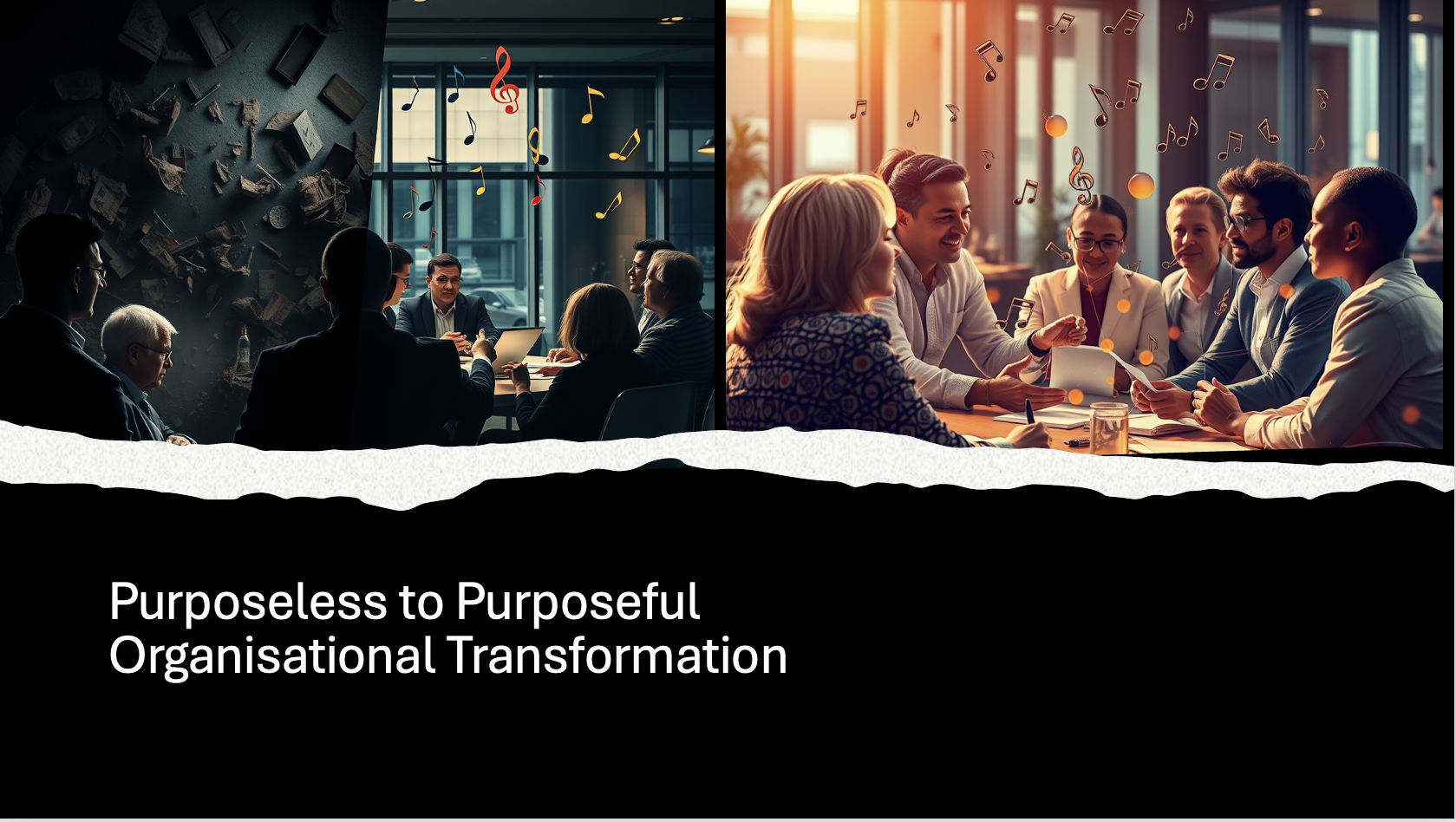







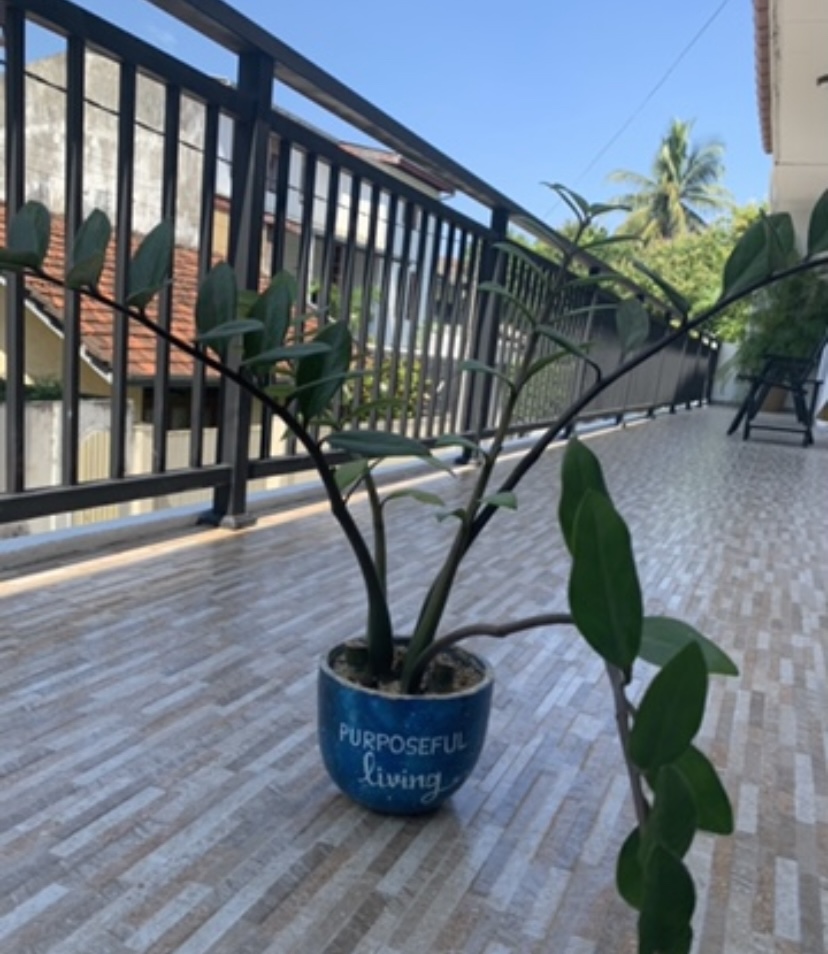





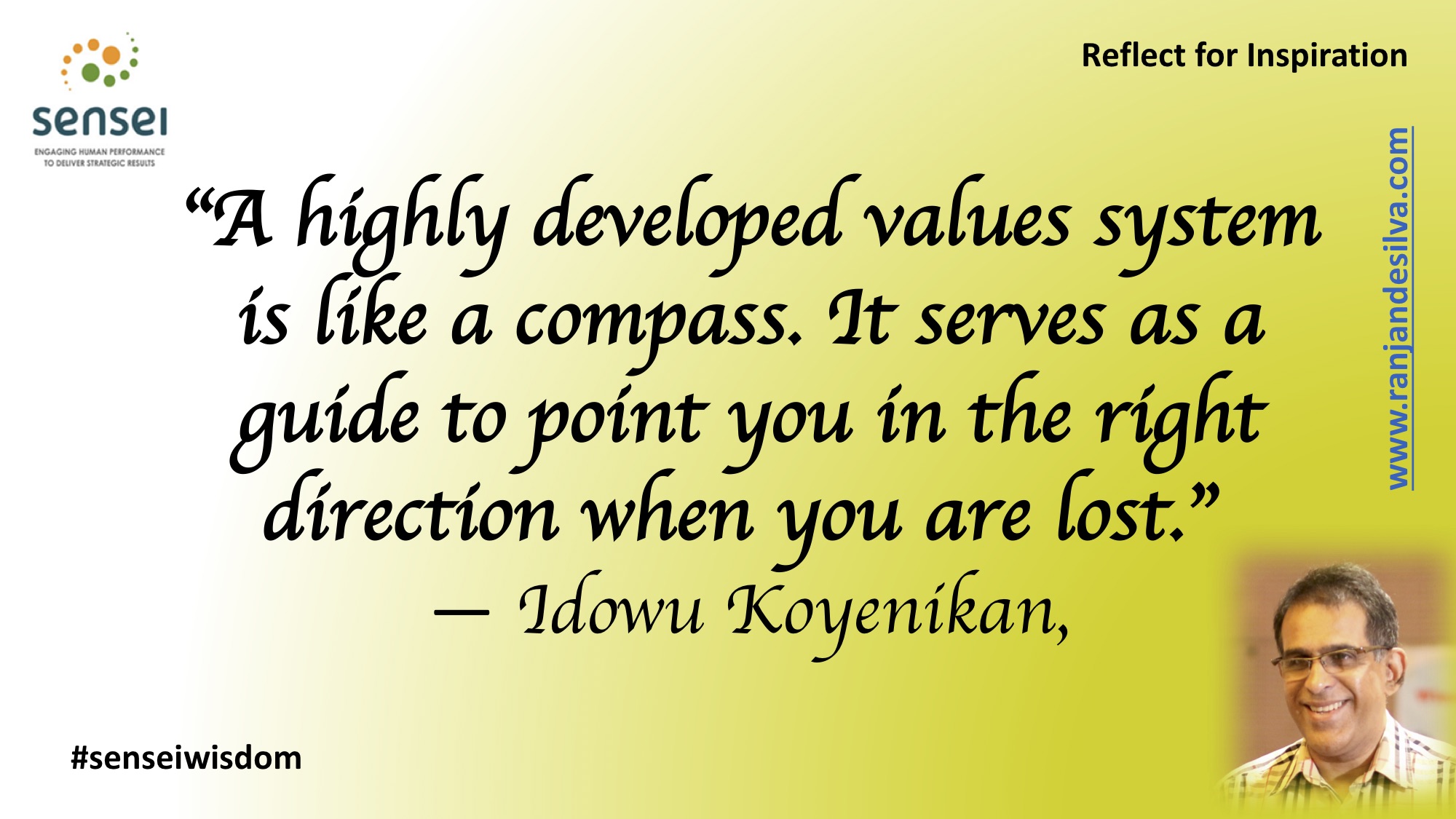
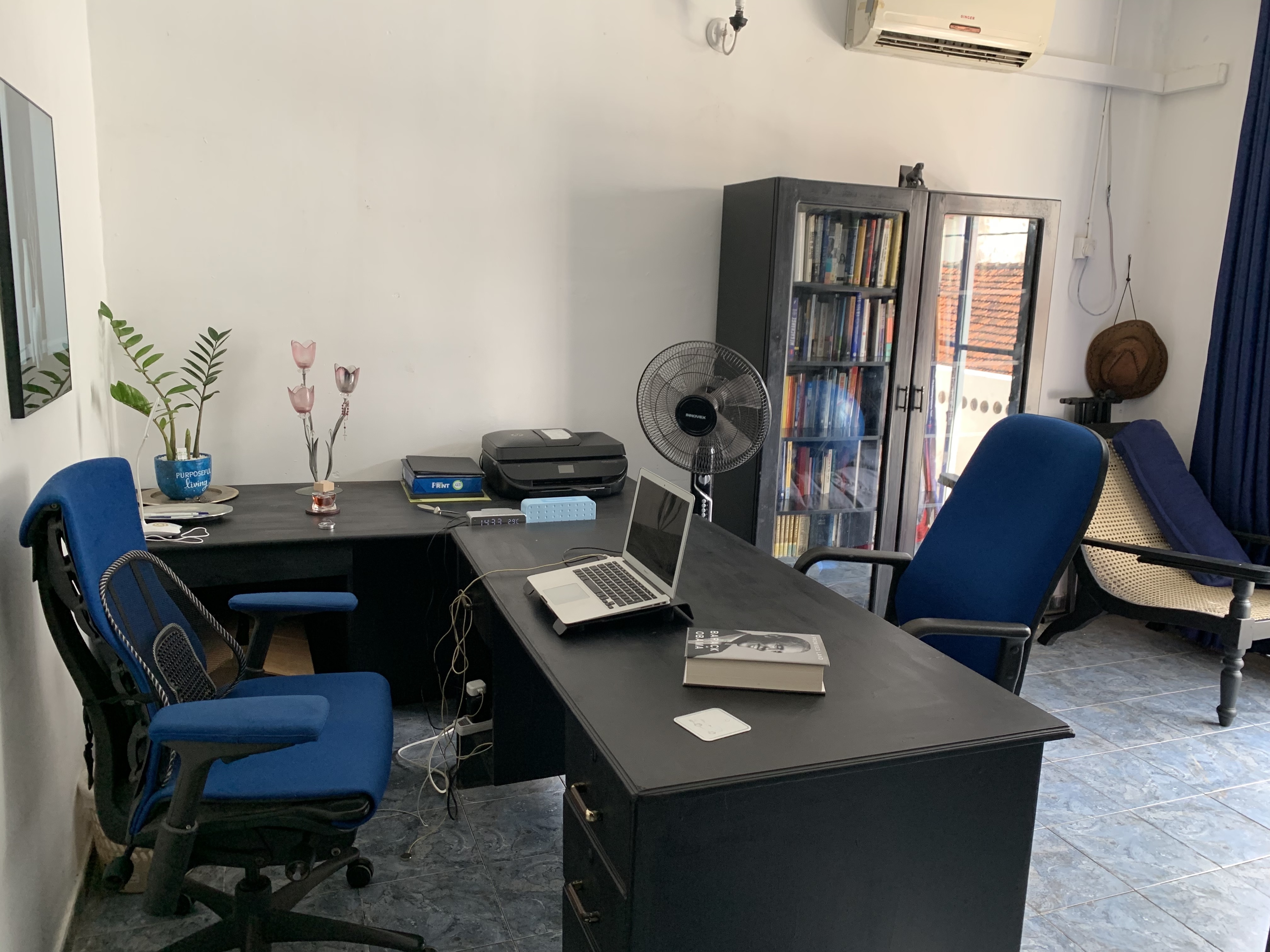
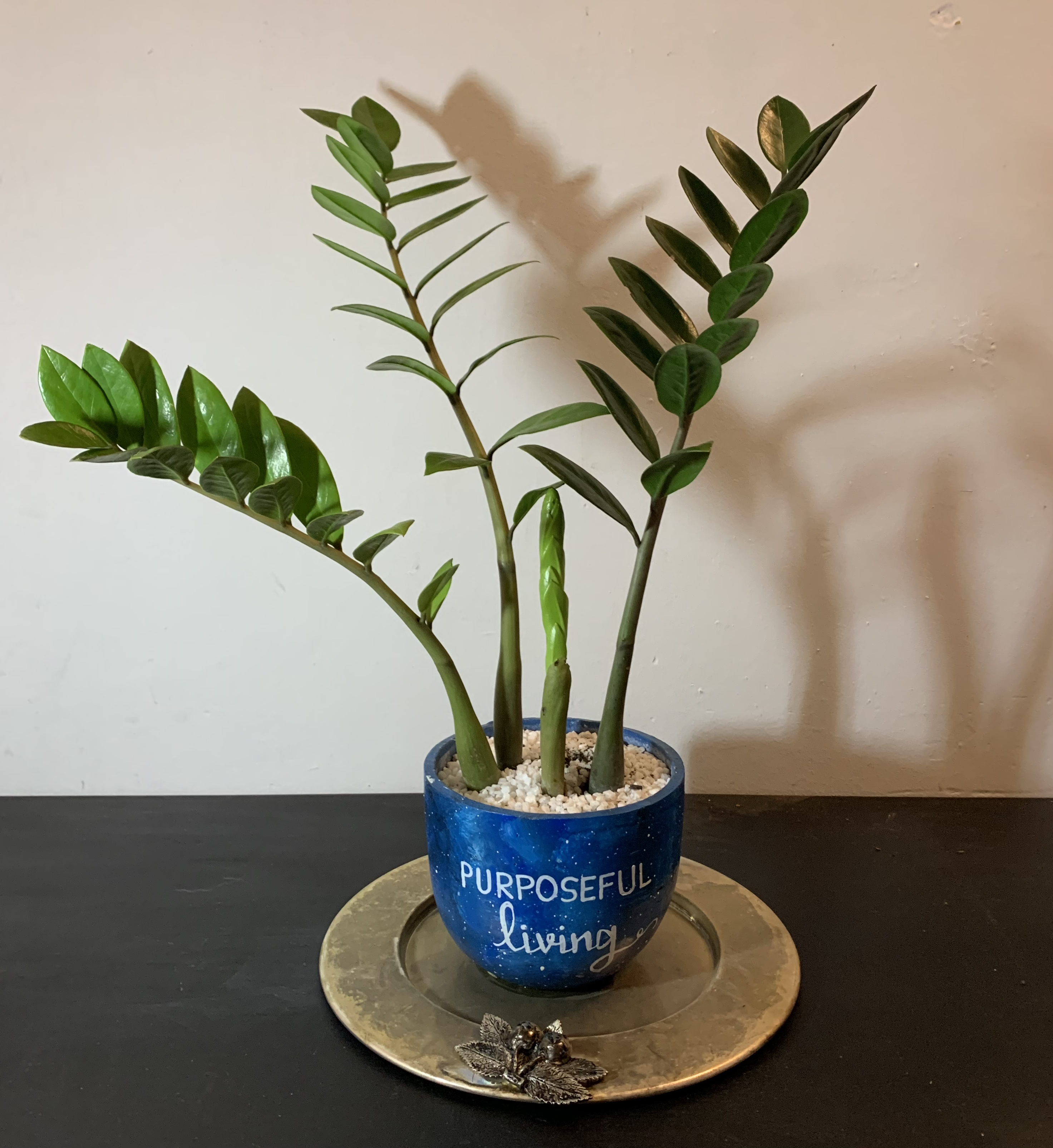




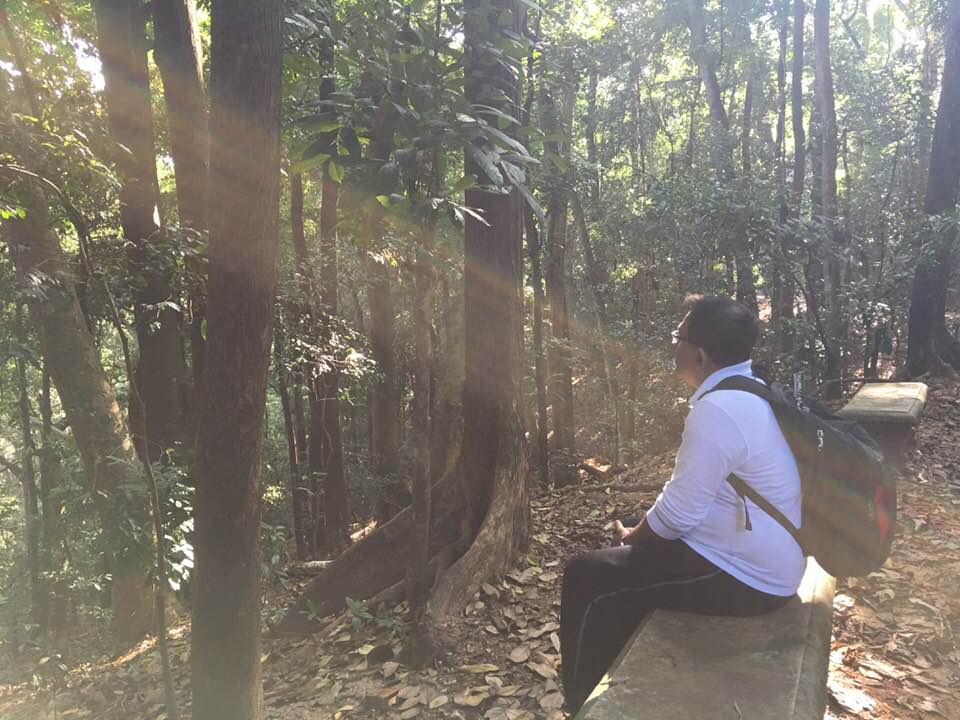






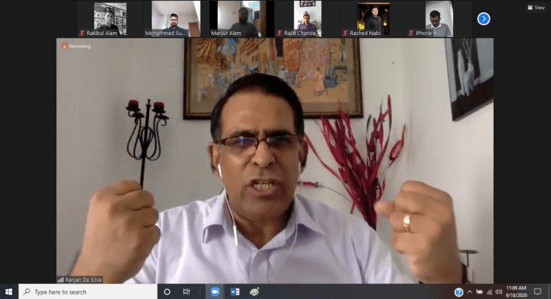








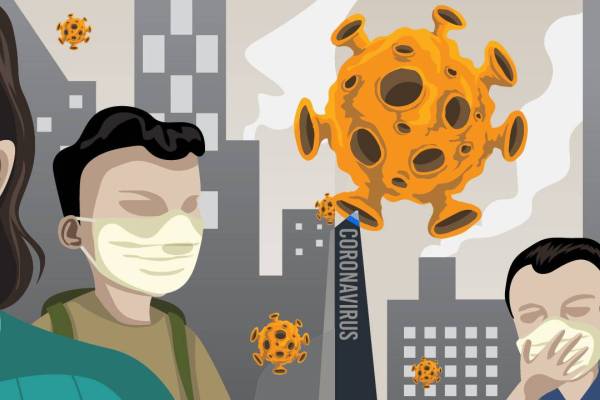











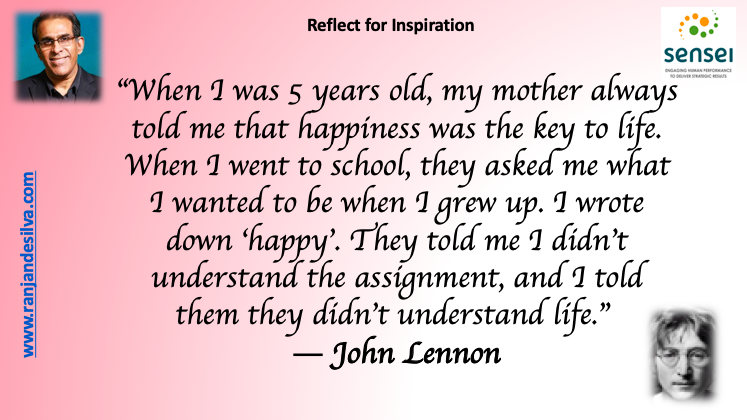 Reflection Guide
 A picture that speak of the pride and gratitude for a father. This is my father Stephen Richard Francis De Silva addressing a gathering of 500 plus buisness leaders of Sri Lanka after being presented the first copy of my first book in 2003. My mother Carmen Cordillia Maureen De Silva, who is a tower of strength for him and our family stands by during this beautiful moment as I look at my fathers performance with pride and gratitude. I pay tribute to him on his 16th death anniversary on the 5th of July.

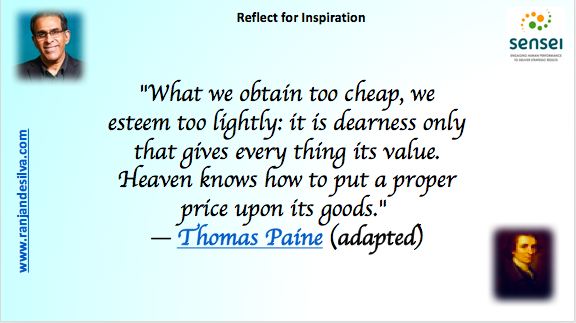

 After having arrived in Dhaka with a packed schedule of coaching, facilitation and consulting assignments for multiple clients on the 14th of March, I suddenly found myself having to make some decisions on how best to respond to the universe who decided that we need to change the way we operate.





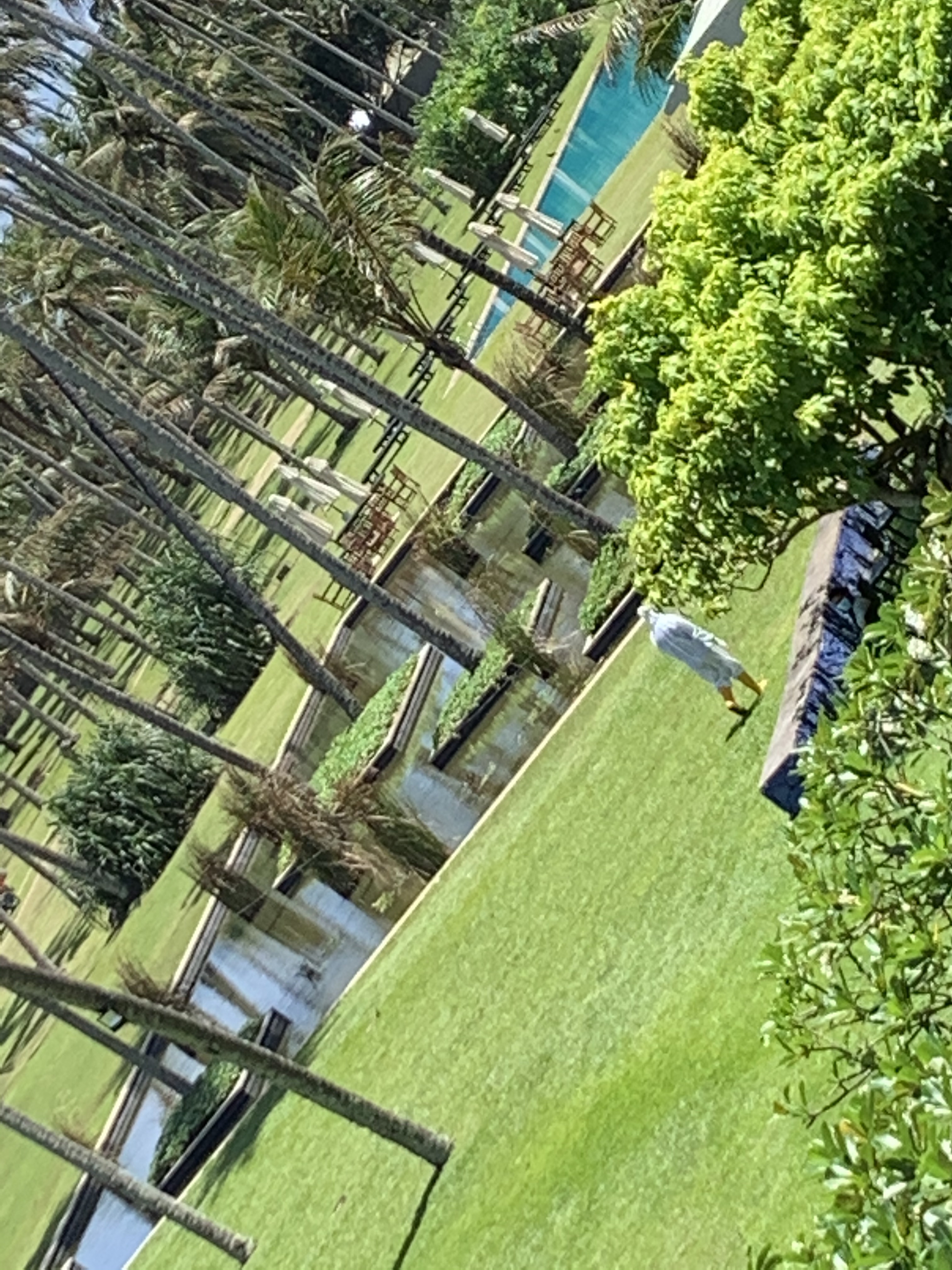








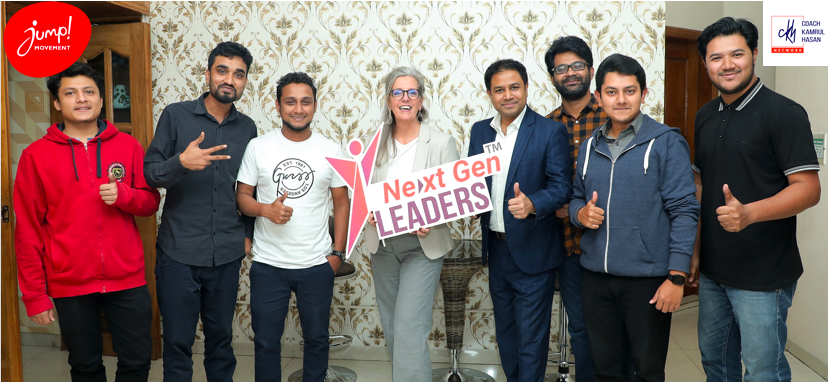 I have learnt that we keep discovering our higher purpose as we live life once we discover the notion of purpose and is conscious of its existence. This had got me in to the habit of reflecting, reviewing, refreshing and re-writing my purpose every month.






















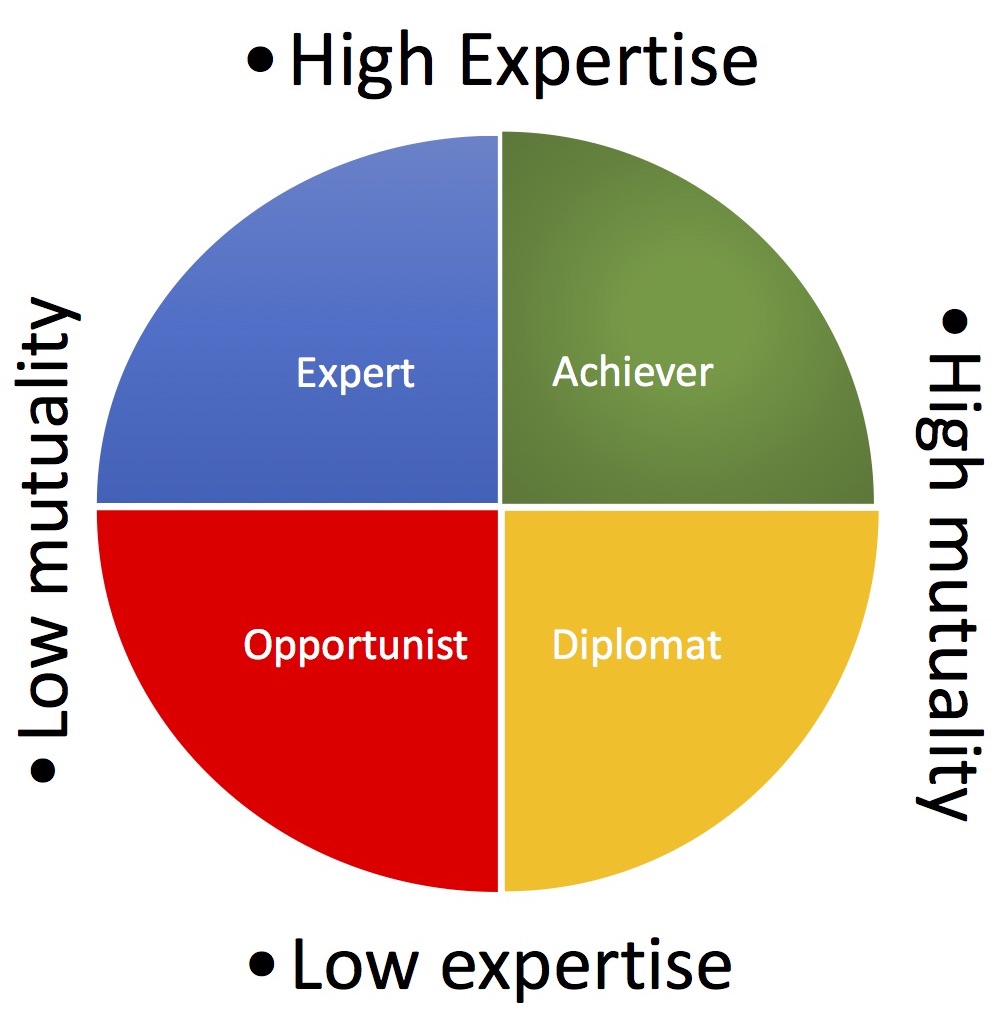


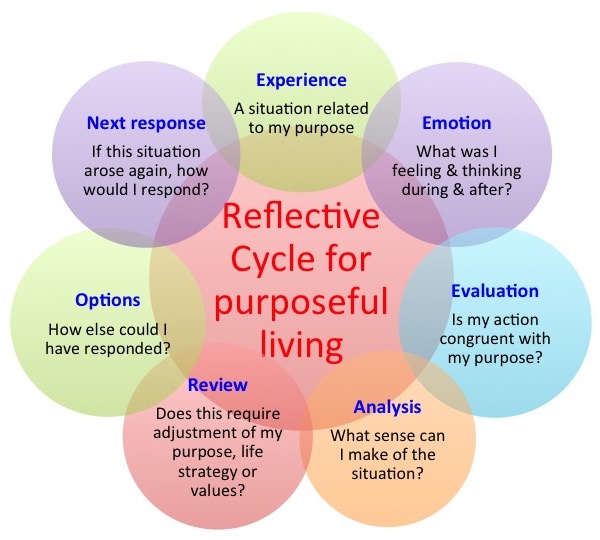


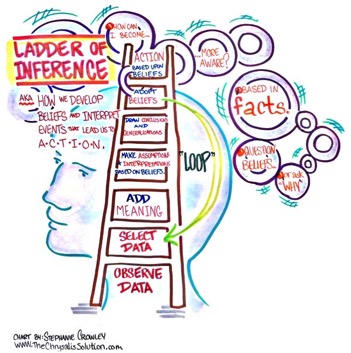 Let me use the words of the ‘Cookie Thief’ poem by Valerie Cox, I recite at trainings and the ‘ladder of inference’ developed by Coghlan & Brannick (2014, p.31) to attempt to figure out why we have misunderstandings. I will interrupt the poem and use the seven steps of the ‘ladder of inference’ model during the interludes in this attempt.

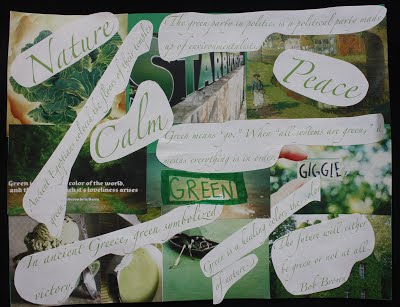 Have you ever thought about how you know what you know? When this question was first asked from me, the answers that came to my mind was; from books, from parents, from teachers, from the learned. But when confronted with the next question, so do you believe that all that you know was true, I felt yes, it must be true, if not these will not be thought to me by those who I respect as learned, honest and well-meaning. But when I thought deeper, I felt that what is true to them, does not have to be true to me, because they come from different backgrounds, eras, conditions, cultures, religion, and would be driven by different purposes etc. Therefore for us to claim that we know what we know requires a kind of self-validation. John Heron provides a theoretical framework that helps make sense of the way we know. He names it extended epistemology, which has four interwoven ways of knowing (Heron 1992, 1999):
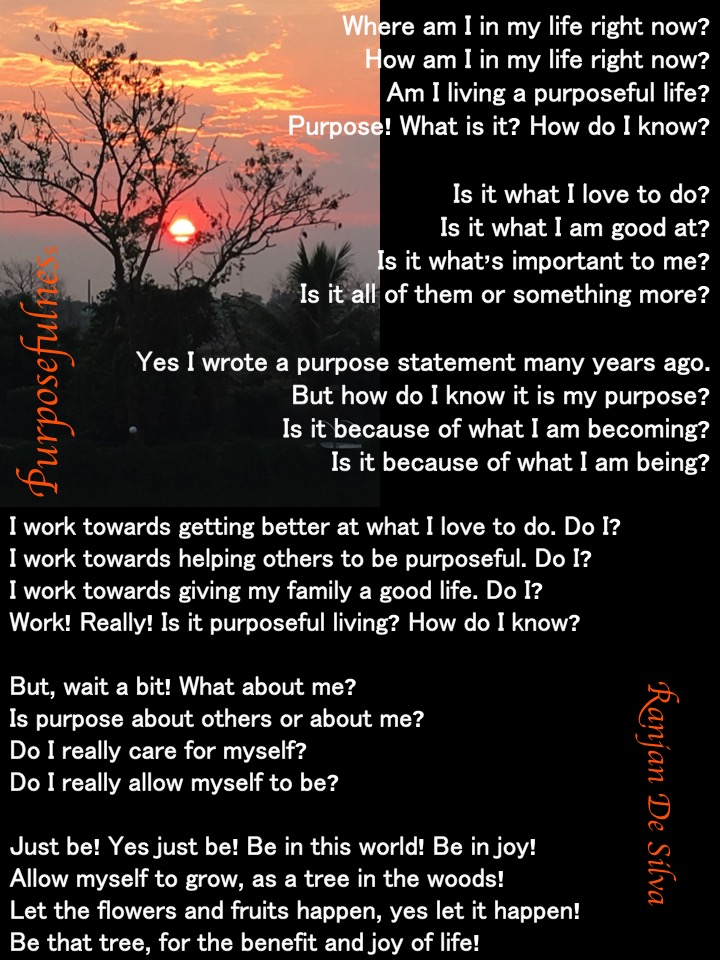


 We are one of seven billion people in this world and each one of us sees the world from our own paradigm. This short blog post will examine the dangers of getting imprisoned in a paradigm and the benefits of becoming a prism as prisons are restricting and prisms are reflecting.




 We all look forward to the New Year and celebrate it in different ways. There are those who clean up and pain their houses to give a new beginning. There are those who wear new cloths as the New Year dawns. There are those who go to a place of worship and take part in religious celebrations to usher in the New Year. There are those who eat, drink and dance at hotels, home or parks to usher in the New Year. There are those who stay at home and do traditional rituals such as boiling a pot of milk for good luck. There are those who do not do any of these or sometimes don’t even know it’s a dawn of a New Year. Whichever group you belong to, it is interesting to reflect on the deeper change that happens in you during the transition in to the New Year.
 Christmas is here again. Let me wish each and everyone of my network a merry Christmas.
 We may have heard this word tons of times from our childhood. You are wrong! That’s the wrong answer! You have wronged me! that’s the wrong way to do it! I have many times wondered about the meaning of this word. What impact does this word have on our lives? What impact does this word have on our relationships?

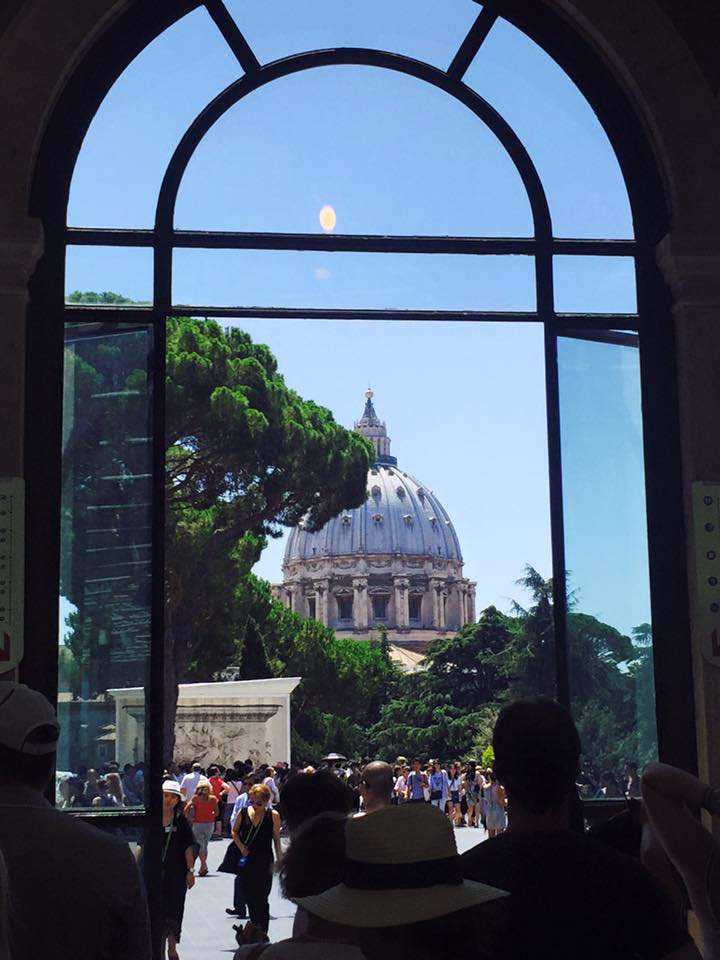





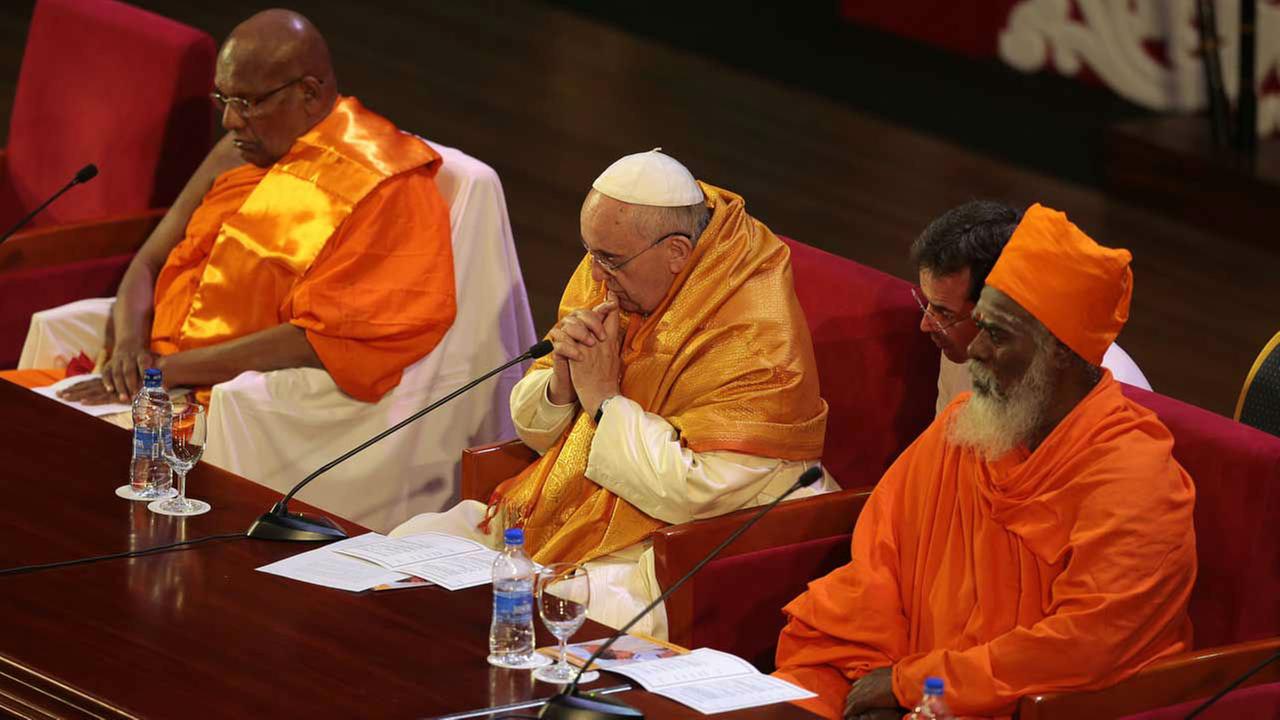
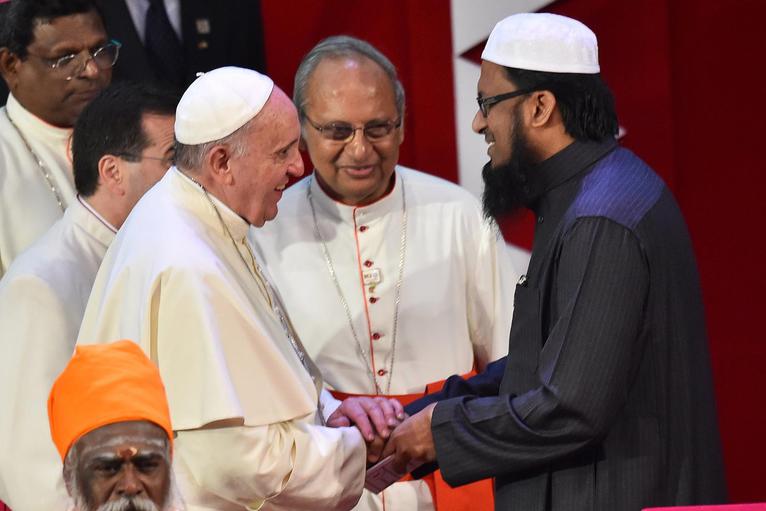

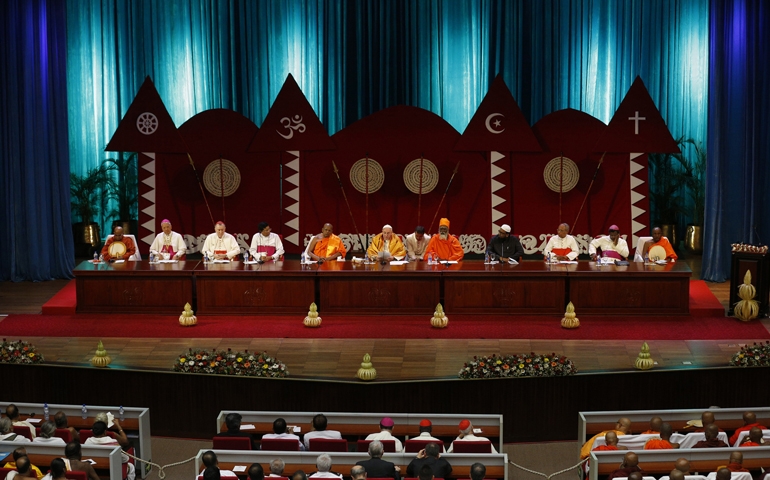
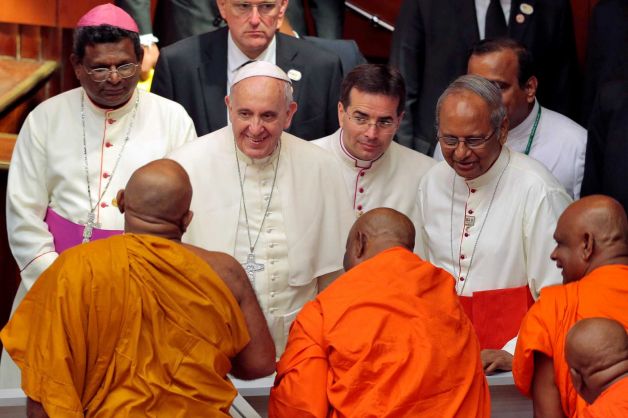
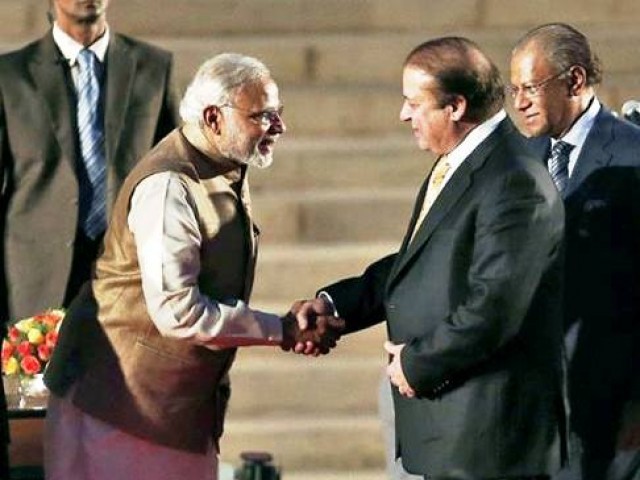







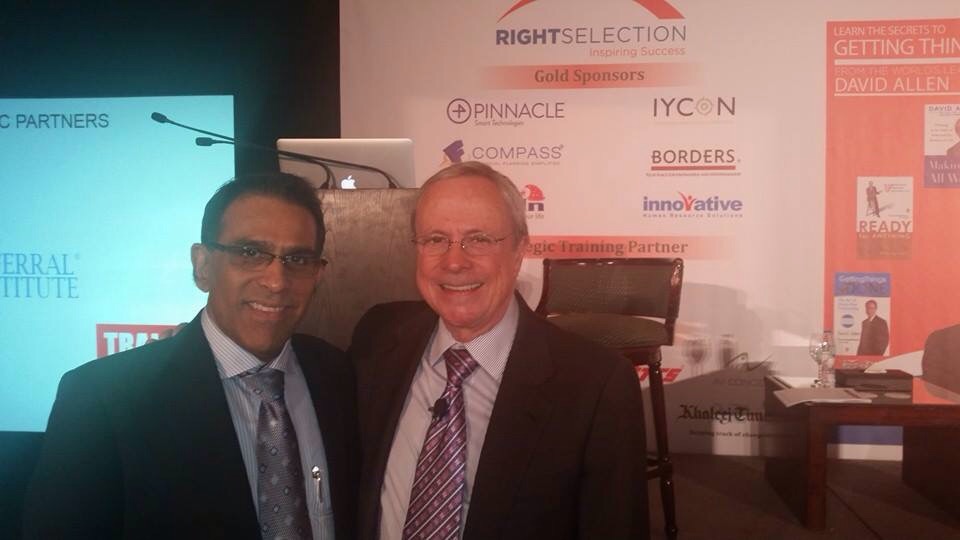





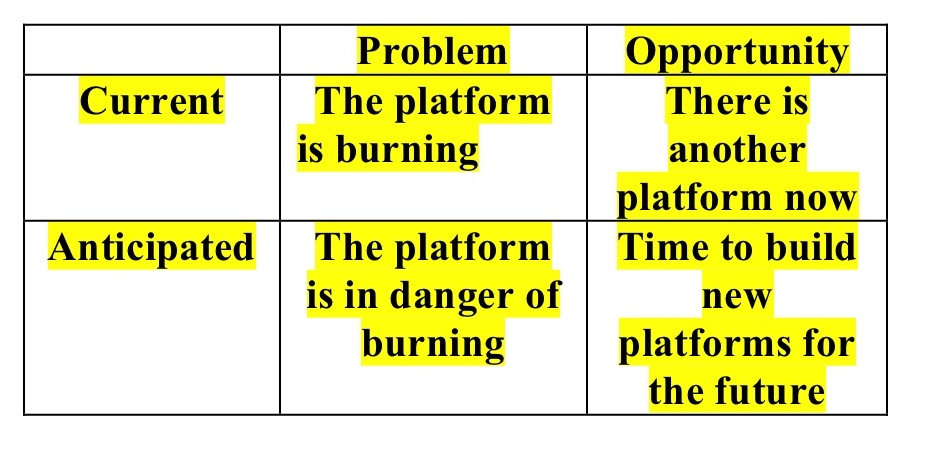






 New years every year brings so much hope to so many people. This is the time we think of giving up bad habits and making a fresh start. Most people take a fresh step with a good intention, only to find themselves slipping back to their old habits very quickly.