
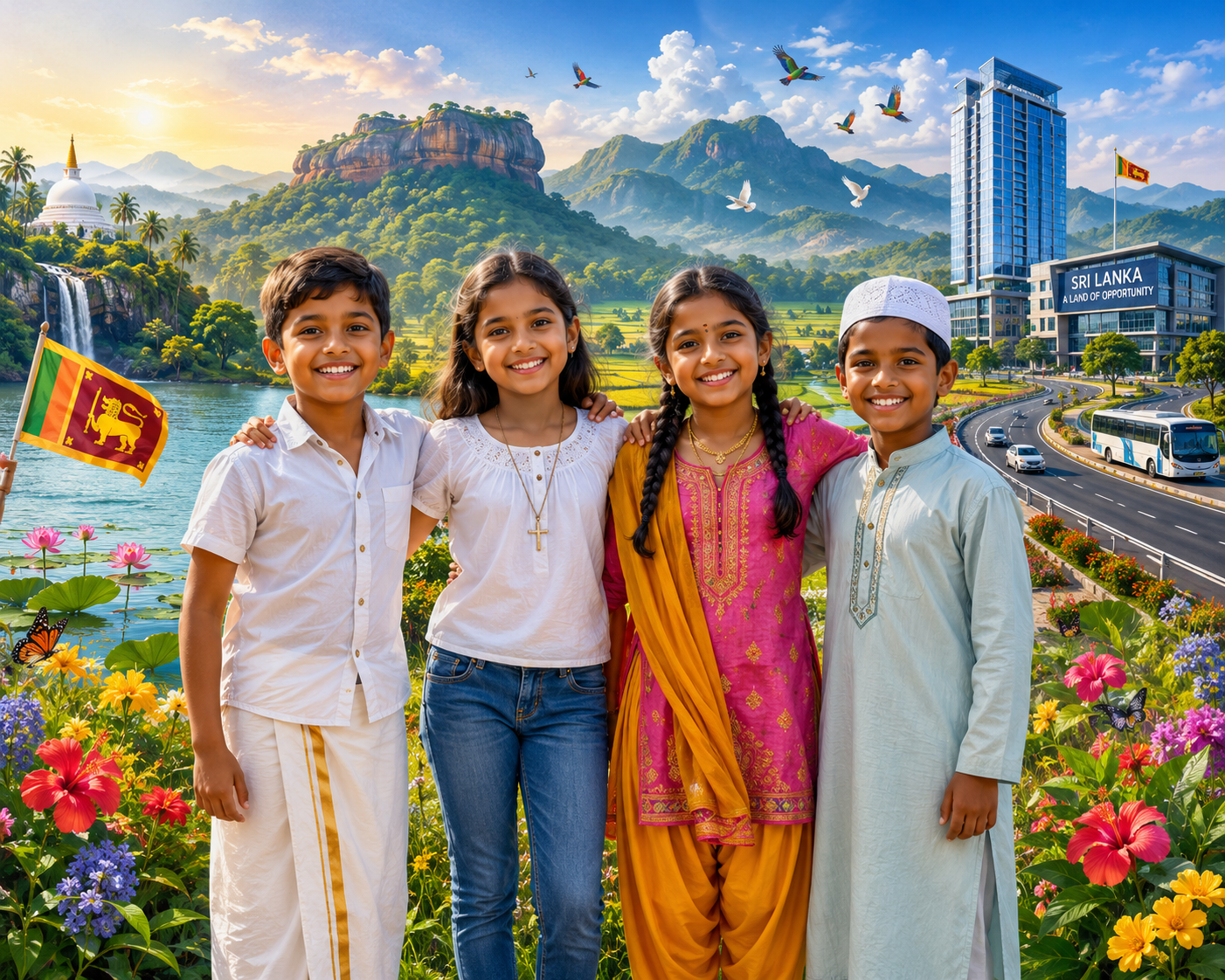
Over the past few weeks, Sri Lanka has quietly witnessed something quite remarkable. In the space of just days, Vesak was celebrated across the country, while Muslims observed Eid al-Adha, known locally as Hajj. Christians celebrated Easter earlier in the month, and Hindus observed Thai Pongal, Maha Shivaratri and Deepavali earlier in the year. This sense of unity is further strengthened through shared moments such as the New Year on the first of January, and when Sinhala and Tamil communities celebrate a traditional New Year in April.
At its heart, this is a collective pause, a moment to reset, express gratitude and step into the year ahead with renewed intention. These moments unfold not in competition, but in coexistence. They serve as a gentle reminder that, despite different expressions of belief, there is a shared rhythm in how communities seek meaning, connection and purpose.
This reveals something deeper than a series of celebrations. It reflects a pattern of alignment around renewal, reflection and purposeful living. This unity becomes particularly visible in times of difficulty. One recent example is the Ditwah cyclone, which affected many parts of the country, where people came together to support each other in survival and recovery, irrespective of their spiritual beliefs.
Across traditions, there is a shared inquiry: Why are we here, and how should we live?
This understanding is shaped not only by experience but also by my doctoral research into purposefulness, through which I explored these questions academically. In the autoethnographic part of this inquiry, I engaged with these traditions experientially, through fasting during Ramadan, visiting Buddhist and Hindu temples, and engaging deeply with my own Christian faith.
These experiences have not blurred differences. Rather, they have revealed a deeper alignment.
Each tradition, in its own language, invites us towards a life that transcends self-interest. Whether it is living in alignment with a higher will, acting with compassion and non-attachment, fulfilling one’s duty with integrity, or restoring balance in the world, there is a consistent call towards intentional living. Even beyond religious frameworks, some individuals pursue lives of meaning through contribution, responsibility and growth.
And yet, despite these shared intentions, divisions persist.
Perhaps the challenge lies not in belief systems themselves, but in how we hold them. When identities become rigid, they divide. When they are lived as pathways to meaning and contribution, they connect.
From a Purposeful Leadership perspective, this opens a powerful possibility. What if we moved beyond defending belief systems and instead focused on embodying their shared intent? What if purpose became the meeting point, engaging with complexities and tensions not as obstacles, but as catalysts for growth?
Sri Lanka, in its own quiet way, continues to demonstrate that coexistence is not merely an aspiration. It is already a lived reality.
Perhaps the world does not need greater agreement in belief. It needs greater alignment in purpose and, more importantly, a deeper commitment to living purposefully for the flourishing of life.
Reference:
De Silva, R. L. G. (2024). Living Purposefully: An Inquiry into the Life of a Leadership Development Practitioner. (Doctoral dissertation, Hult Ashridge).
