
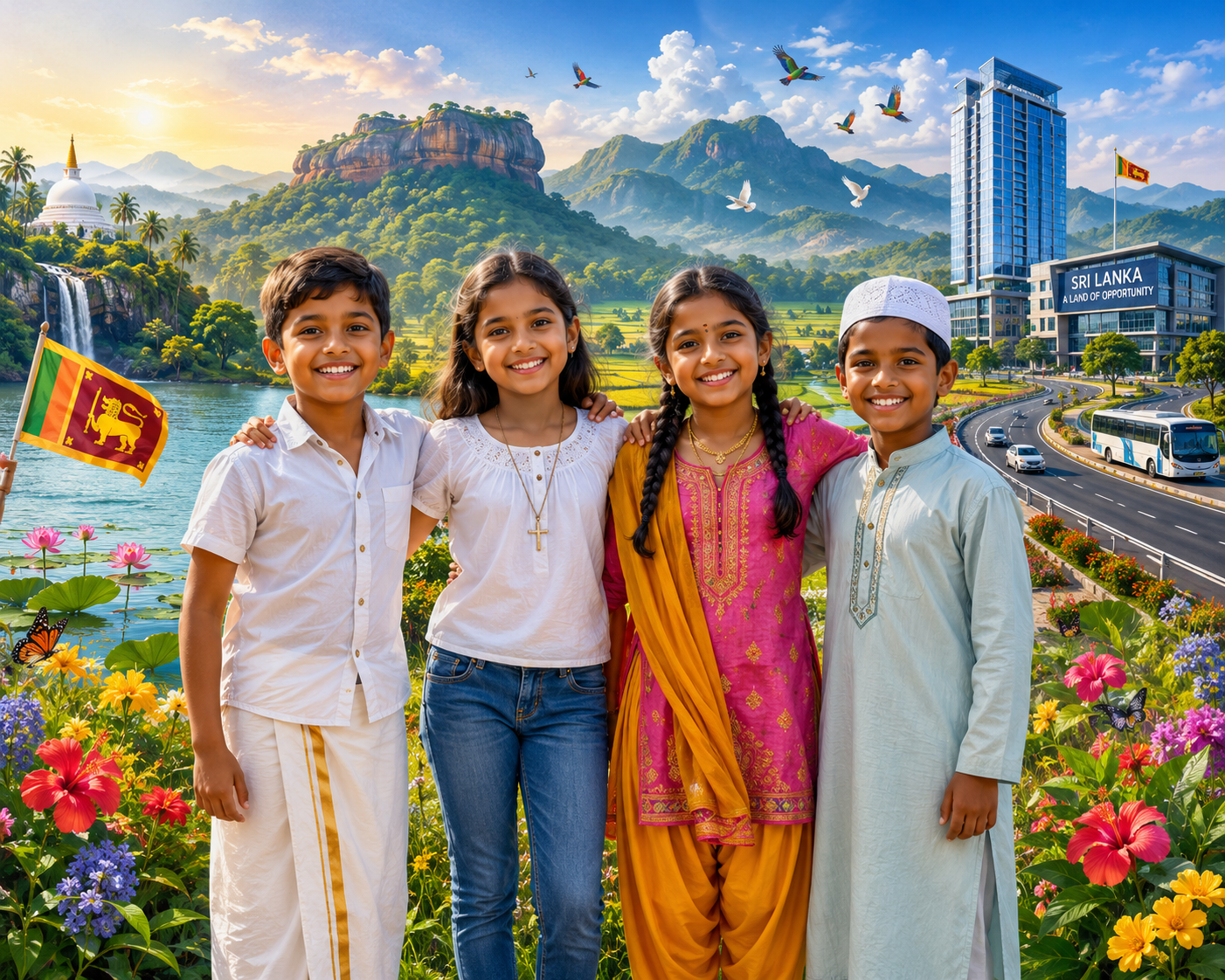
One Purpose, Many Paths

Over the past few weeks, Sri Lanka has quietly witnessed something quite remarkable. In the space of just days, Vesak was celebrated across the country, while Muslims observed Eid al-Adha, known locally as Hajj. Christians celebrated Easter earlier in the month, and Hindus observed Thai Pongal, Maha Shivaratri and Deepavali earlier in the year. This sense of unity is further strengthened through shared moments such as the New Year on the first of January, and when Sinhala and Tamil communities celebrate a traditional New Year in April.

At its heart, this is a collective pause, a moment to reset, express gratitude and step into the year ahead with renewed intention. These moments unfold not in competition, but in coexistence. They serve as a gentle reminder that, despite different expressions of belief, there is a shared rhythm in how communities seek meaning, connection and purpose.

This reveals something deeper than a series of celebrations. It reflects a pattern of alignment around renewal, reflection and purposeful living. This unity becomes particularly visible in times of difficulty. One recent example is the Ditwah cyclone, which affected many parts of the country, where people came together to support each other in survival and recovery, irrespective of their spiritual beliefs.

Across traditions, there is a shared inquiry: Why are we here, and how should we live?

Continue reading “One Purpose, Many Paths”

Purposefulness in a World at War

A glowing glass ring floats above a destroyed city with small fires and light beams.
A luminous crystalline ring hovers above a miniature landscape of urban ruins and glowing embers.

As the war in the Middle East continues to unfold, it is difficult to remain untouched by the images, stories, and consequences that surround us. Families displaced, lives lost, travellers stranded far from home, and entire societies living under sustained fear and uncertainty. In moments such as these, any reflection on leadership must begin with humility.

It is important to acknowledge something that is often overlooked in conversations about conflict: those engaged in war rarely see themselves as acting without purpose. On the contrary, every party involved believes it is acting in the service of its people, its values, and its understanding of justice or security. The challenge, therefore, is not an absence of purpose, but the narrowness of the purposes being pursued.

When purpose is defined only within national, ideological, religious, or territorial boundaries, it can legitimise actions that cause immense suffering beyond those borders. Purpose, when disconnected from a wider moral horizon, becomes a powerful justification for harm.

This raises a difficult but necessary question: What would it mean to act purposefully in a world at war?

Continue reading “Purposefulness in a World at War”

Being Human – Path to Being Religious

Reflection Guide

Reflect on the basic human qualities taught by each religion and philosophy. Reflect on the extent to which we measure up to those qualities. What changes do we need before we earn the right to call ourselves Christian, Buddhist, Muslim, Hindu or any other religion or philosophy we belong to.