
Developing Purposeful Organisational Leadership (Purposeful Leadership – Part 10)

In the previous article, we explored what purposeful organisational leadership means and why it matters. In this post, we focus on how leaders can intentionally develop purposeful organisational leadership, turning purpose from a statement into a lived reality across the organisation.

Start with Leadership Commitment

“I hold the view that leaders are better able to contribute to the flourishing of life if their actions are guided by a deeper sense of purpose” (De Silva, 2024, p.6). Therefore, purposeful organisational leadership needs to begin at the top. Senior leaders must embrace the organisation’s purpose as a guiding principle for decisions and behaviours. This commitment is not symbolic; it requires courage to prioritise purpose even when short-term pressures tempt compromise.

Make the Organisational Purpose Your Guiding Light

The starting point for developing purposeful organisational leadership is a clear purpose statement. This is not a marketing slogan; it is the organisation’s reason for being and its unique contribution to the flourishing of life. From this foundation, leaders can craft a mission statement that defines how the purpose will be delivered and set Big Hairy Audacious Goals (BHAGs) to drive long-term success.

Continue reading “Developing Purposeful Organisational Leadership (Purposeful Leadership – Part 10)”

Purposeful Organisations (Purposeful Leadership – Part 9)

In the previous articles, we explored the first two branches of purposeful leadership: self and people. In this post, we turn to the third and final branch, purposeful organisations. If purposeful leadership begins with the individual and extends to teams, its ultimate expression is in organisations that are guided by purpose rather than vision.

Beyond Vision: Why Purpose Matters

Traditional organisations often define themselves through vision statements, aspirations of what they want to become. While visions can inspire, they are frequently inward-looking, focused on growth, dominance, or profitability.

Purposeful organisations, by contrast, start with a deeper question: Why do we exist? The answer is not about market share or shareholder value; it is about contribution to the flourishing of life. “Flourishing workplaces require the re-creation of organisations to give life to a truly postmodern era of collaboration in order to facilitate organisations to flourish on this planet for future generations” (De Silva, 2024).

Purpose is not an add-on, like corporate social responsibility (CSR). It is not a department or a project. It is the organising principle of the entire enterprise. Every policy, process, and decisions flow from the purpose. Every role is designed to serve it. Every strategy is evaluated against it. Purpose becomes the compass that guides the organisation through daily decisions, complexities and change.

Continue reading “Purposeful Organisations (Purposeful Leadership – Part 9)”

Complexities of Purposeful People Leadership (Purposeful Leadership – Part 8)

In the previous article, we explored how leaders can intentionally develop purposeful people leadership, an approach that transforms teams and organisations by aligning individual purpose with collective contribution.

While this aspiration is noble and deeply impactful, it is not without its complexities. In this post, we examine the challenges, paradoxes, and tensions that arise when we choose to lead people purposefully.

Cognitive Aspects

One of the first complexities arises from how people cognitively make sense of the notion of purposefulness. The concept of “purpose” is often misunderstood or conflated with goals. While goals are specific outcomes we strive to achieve, purpose is the deeper reason behind those goals, the “why” that gives them meaning. This distinction is not always clear, and many team members may struggle to grasp its relevance. Some may view purposefulness as abstract or philosophical, disconnected from the practical realities of work.

Moreover, individuals interpret purpose through the lens of their own experiences, beliefs, and values. What feels purposeful to one person may seem irrelevant or even threatening to another. Leaders must navigate these differences with sensitivity, helping people explore and articulate their own understanding of purpose without imposing a singular definition. This requires patience, dialogue, and a willingness to embrace ambiguity.

Continue reading “Complexities of Purposeful People Leadership (Purposeful Leadership – Part 8)”

Developing Purposeful People Leadership (Purposeful Leadership – Part 7)

In the previous article, we explored the concept of purposeful people leadership and its importance. In this post, we delve into how leaders can intentionally develop purposeful people leadership, an approach that transforms teams and organisations by aligning individual purpose with collective contribution.

Purposeful people leadership begins with the leader’s own sense of purpose. When leaders connect their role to their higher purpose, they begin to see their primary responsibility not just as managing tasks, but as developing their team members, purposefully. This shift in perspective changes everything. The team is no longer a means to an end; it becomes the very reason for leadership. The leader’s purpose expands to include helping team members discover their own purpose and align it with meaningful roles.

This development process starts with purposeful conversations. Leaders engage with team members to understand their aspirations, strengths, struggles, concerns about their world and values they aspire to live by. They help individuals reflect on their personal purpose, articulate a purpose statement and explore how it can be expressed through their work. When people are placed in roles that resonate with their purpose, they flourish. Their contribution becomes authentic, passionate, and sustainable.

Continue reading “Developing Purposeful People Leadership (Purposeful Leadership – Part 7)”

The Three Branches of Purposeful Leadership (Purposeful Leadership – Part 2)

In the first article of this series, published last month, we explored the two keywords of the concept of purposeful leadership: purposefulness and leadership. As I mentioned earlier, I allow the series to unfold as in the process of finding purposefulness. Being purposeful means creating a positive impact on the people and environment one encounters (De Silva, 2024). As I reflected on this series, the idea of writing about the three branches of purposeful leadership emerged.

I use the metaphor of ‘branches’ rather than categories, boxes, or containers because I see the three core areas of purposeful leadership growing in unison, but at different speeds and proportions, much like the branches of a tree. The bigger branches grow stronger but perhaps more slowly, while the smaller branches grow faster but are not as strong. However, all branches, big or small, have a purpose in the growth of the tree.

Continue reading “The Three Branches of Purposeful Leadership (Purposeful Leadership – Part 2)”

Something Old, Something New, Something Borrowed and Something Green (Purposeful Leadership – Part 1)

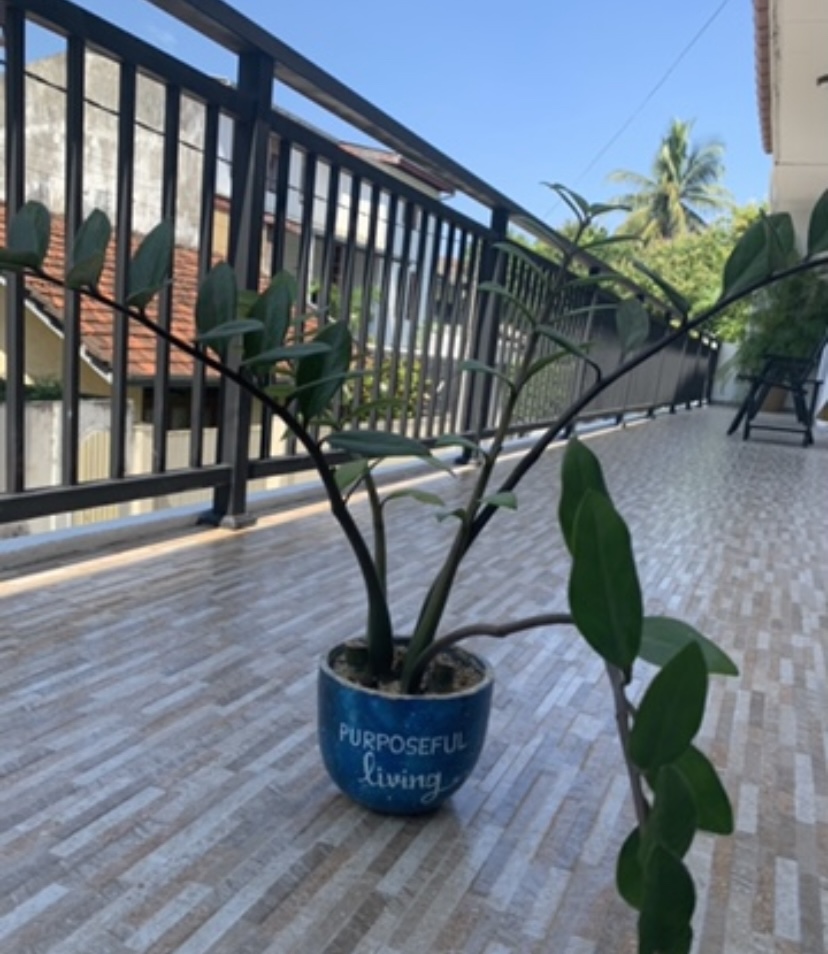
A plant with the words Purposeful Living on the pot, given by my eldest daughter for Christmas 2020.  This is a photo of it on the 1st of January 2023. It has grown with the thesis.

Purposeful Leadership contains two ideas, purposefulness and leadership, which cannot be simplified or explained using a short definition. This is substance for a book or many. I commence this series of blog posts, not knowing the nature of articles nor the number of articles. I allow the series to unfold as in the process of finding purposefulness

I must start somewhere, hence let me explain purposefulness in an over-simplistic manner. Purposefulness is a mindset that guides thinking, decisions and actions, with the flourishing of life being given importance.  Flourishing of life begins with one’s own life, that of family, team, organisational stakeholders, environment, society, and the world at large. It’s simply for the flourishing of all forms of life. Being purposeful is a challenging aspiration, given the cognitive, practical, psychosocial and contextual complexities of the world we experience. Nevertheless, it is a worthwhile pursuit as discussed in my doctoral thesis; Living Purposefully:  An Inquiry into the Life of a Leadership Development Practitioner (De Silva, 2024). Leadership is about the intention and effort to influence oneself, and those connected with oneself in personal and work roles. Therefore, purposeful leadership is enacting self-, team- and organisational leadership for the flourishing of life. 

Continue reading “Something Old, Something New, Something Borrowed and Something Green (Purposeful Leadership – Part 1)”