
Developing Purposeful Organisational Leadership (Purposeful Leadership – Part 10)

In the previous article, we explored what purposeful organisational leadership means and why it matters. In this post, we focus on how leaders can intentionally develop purposeful organisational leadership, turning purpose from a statement into a lived reality across the organisation.

Start with Leadership Commitment

“I hold the view that leaders are better able to contribute to the flourishing of life if their actions are guided by a deeper sense of purpose” (De Silva, 2024, p.6). Therefore, purposeful organisational leadership needs to begin at the top. Senior leaders must embrace the organisation’s purpose as a guiding principle for decisions and behaviours. This commitment is not symbolic; it requires courage to prioritise purpose even when short-term pressures tempt compromise.

Make the Organisational Purpose Your Guiding Light

The starting point for developing purposeful organisational leadership is a clear purpose statement. This is not a marketing slogan; it is the organisation’s reason for being and its unique contribution to the flourishing of life. From this foundation, leaders can craft a mission statement that defines how the purpose will be delivered and set Big Hairy Audacious Goals (BHAGs) to drive long-term success.

Continue reading “Developing Purposeful Organisational Leadership (Purposeful Leadership – Part 10)”

Purposeful Organisations (Purposeful Leadership – Part 9)

In the previous articles, we explored the first two branches of purposeful leadership: self and people. In this post, we turn to the third and final branch, purposeful organisations. If purposeful leadership begins with the individual and extends to teams, its ultimate expression is in organisations that are guided by purpose rather than vision.

Beyond Vision: Why Purpose Matters

Traditional organisations often define themselves through vision statements, aspirations of what they want to become. While visions can inspire, they are frequently inward-looking, focused on growth, dominance, or profitability.

Purposeful organisations, by contrast, start with a deeper question: Why do we exist? The answer is not about market share or shareholder value; it is about contribution to the flourishing of life. “Flourishing workplaces require the re-creation of organisations to give life to a truly postmodern era of collaboration in order to facilitate organisations to flourish on this planet for future generations” (De Silva, 2024).

Purpose is not an add-on, like corporate social responsibility (CSR). It is not a department or a project. It is the organising principle of the entire enterprise. Every policy, process, and decisions flow from the purpose. Every role is designed to serve it. Every strategy is evaluated against it. Purpose becomes the compass that guides the organisation through daily decisions, complexities and change.

Continue reading “Purposeful Organisations (Purposeful Leadership – Part 9)”

Complexities of Purposeful People Leadership (Purposeful Leadership – Part 8)

In the previous article, we explored how leaders can intentionally develop purposeful people leadership, an approach that transforms teams and organisations by aligning individual purpose with collective contribution.

While this aspiration is noble and deeply impactful, it is not without its complexities. In this post, we examine the challenges, paradoxes, and tensions that arise when we choose to lead people purposefully.

Cognitive Aspects

One of the first complexities arises from how people cognitively make sense of the notion of purposefulness. The concept of “purpose” is often misunderstood or conflated with goals. While goals are specific outcomes we strive to achieve, purpose is the deeper reason behind those goals, the “why” that gives them meaning. This distinction is not always clear, and many team members may struggle to grasp its relevance. Some may view purposefulness as abstract or philosophical, disconnected from the practical realities of work.

Moreover, individuals interpret purpose through the lens of their own experiences, beliefs, and values. What feels purposeful to one person may seem irrelevant or even threatening to another. Leaders must navigate these differences with sensitivity, helping people explore and articulate their own understanding of purpose without imposing a singular definition. This requires patience, dialogue, and a willingness to embrace ambiguity.

Continue reading “Complexities of Purposeful People Leadership (Purposeful Leadership – Part 8)”

The Complexities of Purposeful Self-Leadership (Purposeful Leadership – Part 5)

The image depicts the complexities encountered when attempting to enact purposeful self-leadership
Illuminating Purpose Amidst Complexity

In the last post, we explored how to develop purposeful self-leadership by articulating a purpose statement and taking small, meaningful steps to live in alignment with it. While this process is deeply enriching, it is not without its challenges. In this post, we explore the complexities of attempting to enact purposeful self-leadership in our lives (De Silva, 2024).

Understanding the Notion of Self-Leadership

The idea of self-leadership is inspiring. It suggests that we can take charge of our lives, lead ourselves with clarity and conviction, and live in alignment with our purpose. However, understanding this notion deeply can be complex. Many mix purpose with goals when in fact it is not. A goal becomes more meaningful when it is based on a purpose. It requires us to accept responsibility for our thoughts, emotions, and actions—something that can feel both empowering and intimidating. The concept may seem abstract or idealistic, especially when life feels uncertain or overwhelming.

Continue reading “The Complexities of Purposeful Self-Leadership (Purposeful Leadership – Part 5)”

The Three Branches of Purposeful Leadership (Purposeful Leadership – Part 2)

In the first article of this series, published last month, we explored the two keywords of the concept of purposeful leadership: purposefulness and leadership. As I mentioned earlier, I allow the series to unfold as in the process of finding purposefulness. Being purposeful means creating a positive impact on the people and environment one encounters (De Silva, 2024). As I reflected on this series, the idea of writing about the three branches of purposeful leadership emerged.

I use the metaphor of ‘branches’ rather than categories, boxes, or containers because I see the three core areas of purposeful leadership growing in unison, but at different speeds and proportions, much like the branches of a tree. The bigger branches grow stronger but perhaps more slowly, while the smaller branches grow faster but are not as strong. However, all branches, big or small, have a purpose in the growth of the tree.

Continue reading “The Three Branches of Purposeful Leadership (Purposeful Leadership – Part 2)”

Something Old, Something New, Something Borrowed and Something Green (Purposeful Leadership – Part 1)

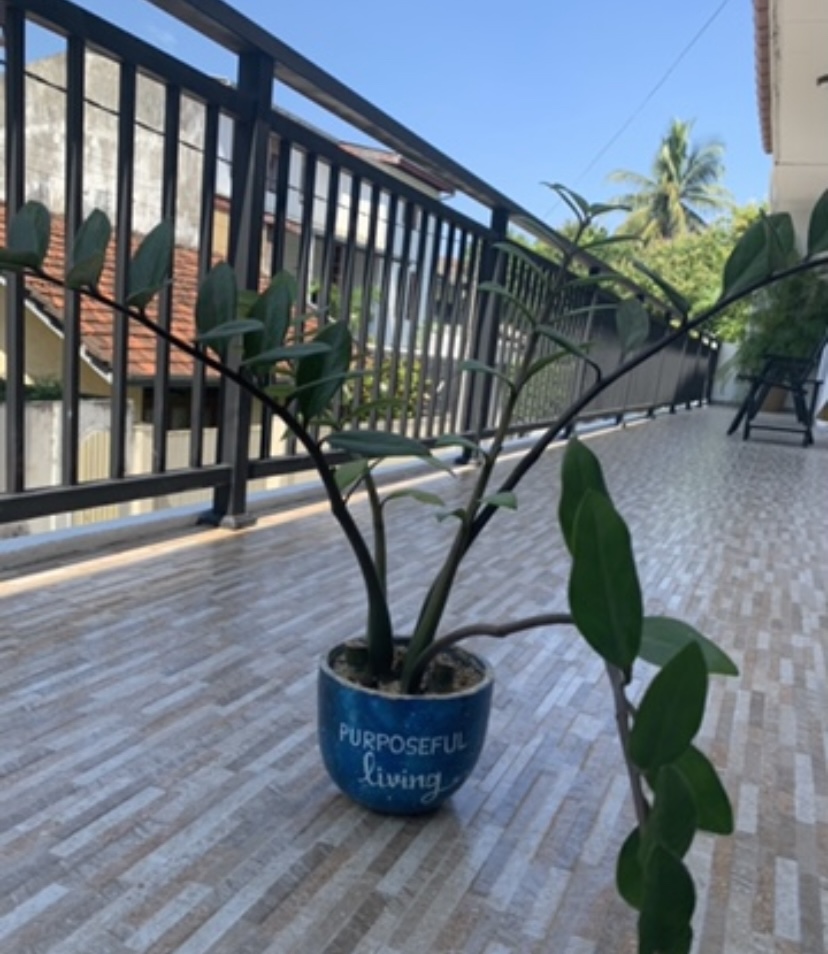
A plant with the words Purposeful Living on the pot, given by my eldest daughter for Christmas 2020.  This is a photo of it on the 1st of January 2023. It has grown with the thesis.

Purposeful Leadership contains two ideas, purposefulness and leadership, which cannot be simplified or explained using a short definition. This is substance for a book or many. I commence this series of blog posts, not knowing the nature of articles nor the number of articles. I allow the series to unfold as in the process of finding purposefulness

I must start somewhere, hence let me explain purposefulness in an over-simplistic manner. Purposefulness is a mindset that guides thinking, decisions and actions, with the flourishing of life being given importance.  Flourishing of life begins with one’s own life, that of family, team, organisational stakeholders, environment, society, and the world at large. It’s simply for the flourishing of all forms of life. Being purposeful is a challenging aspiration, given the cognitive, practical, psychosocial and contextual complexities of the world we experience. Nevertheless, it is a worthwhile pursuit as discussed in my doctoral thesis; Living Purposefully:  An Inquiry into the Life of a Leadership Development Practitioner (De Silva, 2024). Leadership is about the intention and effort to influence oneself, and those connected with oneself in personal and work roles. Therefore, purposeful leadership is enacting self-, team- and organisational leadership for the flourishing of life. 

Continue reading “Something Old, Something New, Something Borrowed and Something Green (Purposeful Leadership – Part 1)”

Purpose of Living – Part 5: The Viewpoint from Modern Sciences

purpose - modern science3
Image Credits: http://www.powepresive.com

We explored the notion of purpose from the perspective of Abrahamic Religions, Eastern Philosophies and early sciences in the last few blog posts in this series. Let’s now have a look at this notion from some of the modern scientific viewpoints.

Modern sciences have developed new theories, from the findings of the early sciences, about the evolution of life. An initial review of this literature does not provide specific answers regarding the purpose of life and the purposeful living of beings, specifically human beings. Therefore, this body of knowledge needs to be further analysed for deeper and wider understanding, which could lead to a theory regarding purposefulness (major theme in my doctoral inquiry). The discovery of Nuclein and Double Helix Structure of DNA by Crick, Watson and Wilkins (Olby, 1974) has helped deeper understanding of its role in the makeup of human beings, providing potential to understand the purpose of our lives.

Continue reading “Purpose of Living – Part 5: The Viewpoint from Modern Sciences”

Power of Purpose for Leadership Success!

Purposeful Leadership
Image Credits: salitabacchi.com

What makes a difference between an ordinary leader and an extra ordinary leader?

While there could be many reasons for this difference, I would like to propose the idea of ‘Purpose’.

I remember the time where I was responsible for business results in a company before I found my purpose. My primary focus is to achieve profit target of the company. This was pursuing a goal set by my company; it was not even a purpose. My life was about going to work every day, making decisions on how best to be better than competitors and using (yes using them without thinking of their growth & welfare) the people allocated to me in achieving these goals. Unknowingly I was neglecting my health, spirituality, my relationships, my financial health and I was squandering my time. I remember those days where I was hospitalized with stress attacks, struggling to pay my bills, gaining weight and working long hours. Fortunately I had a drive to educate myself, perhaps to overcome the fear of financial challenges and the passion to spend time with my children, perhaps because blood is thicker than water and, as they were such adorable children.

My life changed when I was fortunate enough to write a purpose during the first Mastery of Self playshop I attended. What was powerful about the purpose was it helped me to know myself deeper and to see the life I am designed to live. Formulating a realistic five year and Continue reading “Power of Purpose for Leadership Success!”