As we welcome 2026, many of us feel the familiar mix of gratitude, exhaustion, and anticipation. The year has given us moments we are proud of, and moments that remind us how imperfect, human and evolving we are. Before we rush into 2026, this is a valuable moment to pause, to breathe, and to reflect on how purposefully we lived in 2025.
Over the years, through the Purposeful Leadership series, I have written about the importance of aligning who we are, how the quality of our leadership begins with the quality of our inner world and how we lead. As I look back on 2025, I am reminded again that purposefulness is not a grand concept; it is a daily practice.
A simple way to explore your own experience of purposeful leadership is through three lenses: purposeful self, purposeful team, and purposeful organisation.
In the previous article, we explored how to develop purposeful organisational leadership. In this post, we focus on the complexities of purposeful organisational leadership and potential remedies.
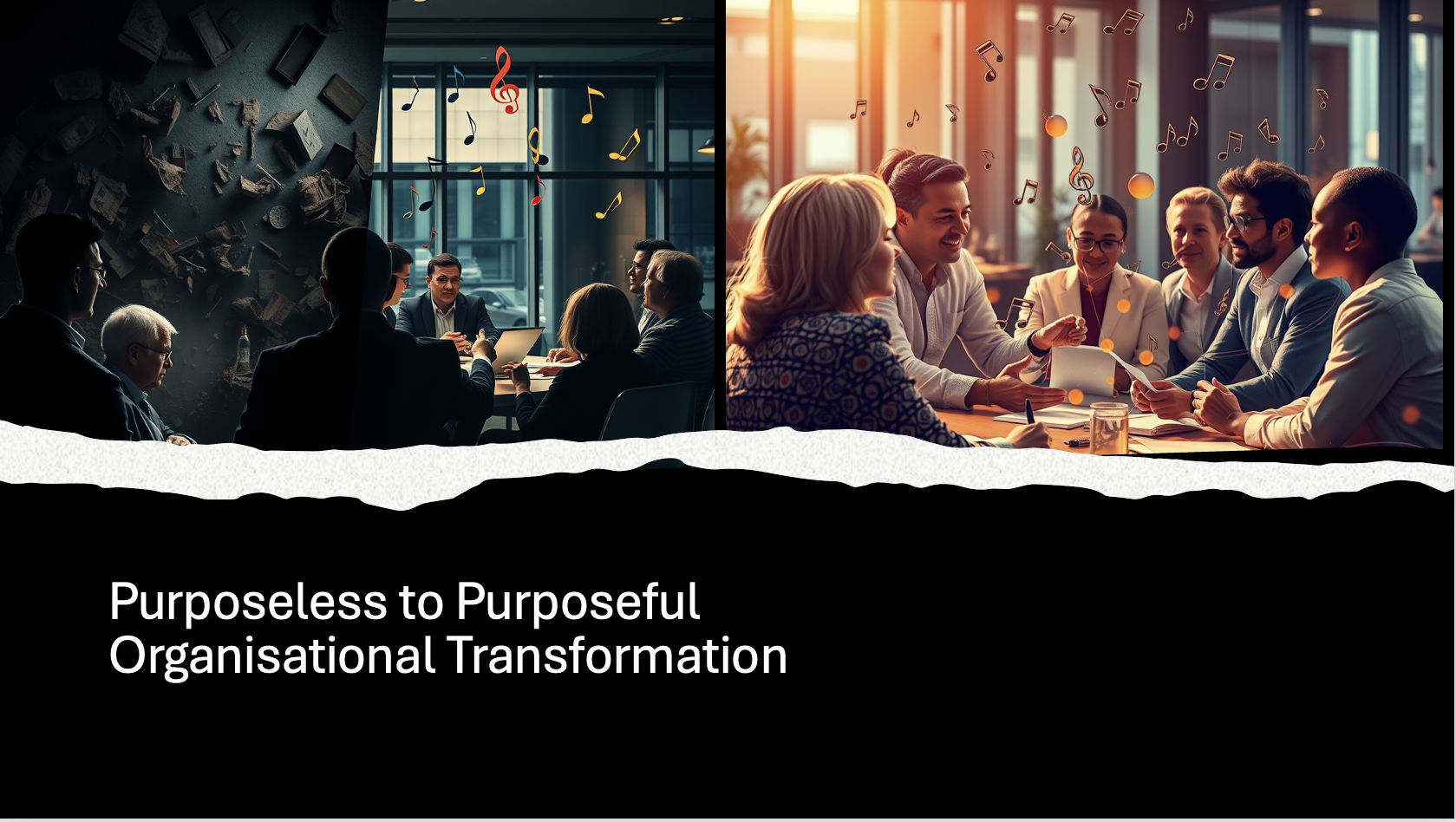
Organisations do not become purposeful by proclamation; they become purposeful by orchestration. And orchestration is complex. It asks leaders to conduct a score that balances markets and meaning, governance and grace, pace and patience. If purposeful people leadership is the dance with paradox at the human scale, then purposeful organisational leadership is that paradox amplified across systems. The stakes are higher, the variables multiplied, the pressure relentless. Yet the beauty is also greater, because purposeful organisations can hold the space where profit and flourishing meet.
The first complexity is when the purpose is only a brand. Organisations often craft eloquent purpose statements, then proceed to pursue them with methods that quietly contradict the message. Purpose is not merely narrative; it is action. When we violate this principle, people quickly learn that the banner on the wall is not the truth on the floor. To lead purposefully at the organisational level, we must ensure that strategy, structure, systems, and culture are not just aligned conceptually, but coherent behaviourally. This coherence is evident in how we behave, especially when performance pressures intensify.
In the previous article, we explored the concept of purposeful people leadership and its importance. In this post, we delve into how leaders can intentionally develop purposeful people leadership, an approach that transforms teams and organisations by aligning individual purpose with collective contribution.
Purposeful people leadership begins with the leader’s own sense of purpose. When leaders connect their role to their higher purpose, they begin to see their primary responsibility not just as managing tasks, but as developing their team members, purposefully. This shift in perspective changes everything. The team is no longer a means to an end; it becomes the very reason for leadership. The leader’s purpose expands to include helping team members discover their own purpose and align it with meaningful roles.
This development process starts with purposeful conversations. Leaders engage with team members to understand their aspirations, strengths, struggles, concerns about their world and values they aspire to live by. They help individuals reflect on their personal purpose, articulate a purpose statement and explore how it can be expressed through their work. When people are placed in roles that resonate with their purpose, they flourish. Their contribution becomes authentic, passionate, and sustainable.
Purposeful leadership extends beyond the self. Once the leader becomes purposeful, the natural next step is to help others, team members, and teams become purposeful. This is not a directive process but a deeply human one, rooted in example, empathy, and engagement. In this article, we explore the second branch of purposeful leadership: leading people purposefully.
Purposefulness in people is transformative. It improves their personal lives, relationships, health, and peace of mind, and this inevitably enhances their effectiveness and contribution at work. The workplace becomes more than a place of transaction; it becomes a space of meaning. Families benefit too, as individuals carry their sense of purpose home, influencing their roles as parents, partners, and community members.
I have experienced this transformation personally. At the age of 27, I had climbed the corporate ladder rapidly to become a director of two subsidiaries of John Keells Holdings, Sri Lanka’s leading conglomerate. At the time, I was driven by ambition and the goal of professional success. I worked long hours, including weekends, and neglected many aspects of my life. I was overweight, frequently ill and hospitalised, disconnected from my young family, absent from church, and unaware of the importance of developing and empowering my team. I had no sense of purpose, only a relentless pursuit of achievement.
Everything changed when I discovered the notion of purposefulness and wrote the draft of my first purpose statement. I began going to the gym, spending quality time with my family, returning to church, reading, cutting excessive costs, investing the savings, and cultivating emotional maturity through meditation. This personal transformation awakened a desire to help my team grow. I began teaching them about purposefulness and supporting their development. As a result, my quality of life and work improved significantly. It was no longer a choice between work and life; it became a commitment to both work and life, harmoniously.
My doctoral research reinforces this understanding. As I wrote in my thesis:
“My research suggests that being purposeful helps understand life from a more holistic and altruistic manner, leads one to conduct life with decent human values, helps make choices beneficial to the flourishing of life, improves caring for the well-being of family and self, and choosing vocations which are aligned with an evolving life-purpose. Adjusting one’s lifestyle in this manner takes courage, determination, and self-discipline. However, persisting with such an aspiration leads to an improvement in the quality of life, generating happiness which, in turn, encourages persisting in being purposeful.” (De Silva, 2024)
I invite you to reflect on how you are leading people. Are you helping them become purposeful? Are you creating conditions for their flourishing? If not, what needs to change?
You may explore literature from my blog http://www.ranjandesilva.blog, my website http://www.ranjandesilva.com, and other sources. Speak with your trusted advisor. We will further explore the notion of purposeful leadership and methods of transformation in the upcoming blog posts.
In the next article of this series, we will explore how to develop purposeful people leadership, how leaders can intentionally cultivate purposefulness in others through structured development, coaching, and empowerment.
References
De Silva, R. L. G. (2024). Living Purposefully: An Inquiry into the Life of a Leadership Development Practitioner. (Doctoral dissertation, Hult Ashridge).
We explored the notion of Purposeful Self-leadership in the last post, part 3 of this series titled ‘Start with the Self’. Today we explore how to develop Purposeful Self-Leadership and in the next post, we can explore the complexities of such an aspiration. In the first two articles of this series, we explored the two key concepts of purposeful leadership: purposefulness and leadership, and the three branches of purposeful leadership: self, people, and organisations.
Developing Purposeful Self-Leadership starts with articulating a purpose statement depicting our sense of purpose at the current stage of life. The first version of the purpose statement is only a glimpse of our purpose as finding purpose is a lifelong journey. However, having a sense of purpose begins the quest and gives us the drive and desire to be purposeful. Being purposeful improves our clarity about our life purposes and helps us fine-tune our purpose statement, leading to us being more purposeful. This cyclical process not only improves our sense of purpose and purposefulness but also attracts abundance to succeed in vocations aligned with our life purpose, gives us happiness and peace of mind (De Silva, 2024).
As your read Mahathma Gandhi’s quote above reflect on the destiny you intend manifesting and think in the reverse order. What values will help create that destiny? What Habit will help live those values? What actions will help create those habits? What words will lead you to those actions. What thoughts are needed to use those words? and what beliefs will help generate those thoughts?
Thereafter develop the required belief through reading, writing, affirmations, conversations, and teaching etc. As you keep moving forward towards destiny by converting beliefs to thoughts to, words, to actions, to habits to values to your destiny, reflect if this process has changed your sense of destiny. If so work backwards from any point in the process and start again.
While you may or may not find and/or reach your destiny in this life time, being in this process, holding it lightly, experiencing the messiness, savouring journey will give you contentment, happiness, and peace. You will feel that your life is purposeful, giving you meaning.
You might be searching for destiny your entire life, but being in this process, holding it lightly, moving forward and backwards will help you to live and happy, content, peaceful life. A Purposeful life.
Poem that reminds us never to give up and never to give in as there is an answer for everything. Live your life with an attitude of gratitude.
I hope this could be useful in nourishing your soul with hope, aspiration, positivity and confidence to deal with the present and gear up for the future.
Please feel free to share this poem with others who can benefit and communicate with me if you would like to share your thoughts.
Managing stress was at the center of a coaching discussion I had with a CEO a few months ago. He was very successful and his success is attributed to the hard work he put in to his job. He gave his job first place and was willing to work late in to the evening, work on weekends and travel extensively for the success of his organization.
He had not adequately developed his team to take over responsibilities as he preferred to get things done on his own. While this worked for a while, it was taking its toll when the organization grew to a larger scale. He was also having issues at home as his two teenage sons had lost interest in studies and sports and preferred a lazy life engrossed in video’s and games using the expensive devises the father had purchased for them. His wife had given up trying to get him involved in family matters and was trying to manage on her own, but the absence of the father’s love, guidance and attention could not be compensated adequately by her. This is a source of stress when he returns home.
Let’s examine the question; why is it important to find our purpose? Some would say; we have lived all these years without a clear purpose or we know what it is in our mind and our life is moving on well, so why do we need a purpose? I have come across a very small percentage of people who have a clearly articulate purpose, but most of them would say; I think this is my purpose, but I am not sure if it is the right purpose. The following interactive story, titled the million dollars on the mountain, helps audiences of my workshop to start understanding the importance of a purpose;
Image captured by me at the Ashridge Business School in January 2017
This image is the sunrise at the ‘Ashridge Business School’ captured earlier this month during my quarterly stay there. I consider this my spiritual home that nourishes my soul as I pursue my doctoral studies. This is a place that helps me grow towards my fullest potential, giving me real inner happiness during the process.
Perhaps you are one of those people who is always tasting success and living happily. Perhaps you are one who observes others in this way of living. Perhaps you are one who is searching for the ‘how’ to achieve such a state of life. This blog is designed to discuss how such a state of life can be achieved.
While there could be millions of ways of making sense of success and happiness, my personal belief is that success comes from improving in areas that are purposeful to me. I am refereeing to action that is driven by a higher purpose as I keep on my quest to make sense of what that higher purpose is. Happiness is what I experience when I am in the process of improving in areas important to me.
What is important to me is my purpose that helps me to be of service to the world and thereby helping me to provide a comfortable and purposeful life for my family and me. This requires me to improve my spirituality that gives me peace of mind, and improves my brain, which helps me learn and teach, improve my body, which helps me act effectively and efficiently, improve my relationships, which provides the love to live purposefully, improve my emotions to be in joy, improve my finances to help fund my purpose and improve the use of my time choosing to do purposeful work. Continue reading “Universal Energy Sync – For Success and Happiness”→
Let’s first try to understand what is ‘Natural-ability’ before trying to understand what your Natural-ability is and how to use this potent idea in improving your effectiveness individually and as a team.
Natural-Ability is a description for a level of ability. To simplify it let me offer four broad levels of ability. At the bottom is ‘Inability’, where we just can’t do a particular task. The next level is ‘Learnt-ability’, where we can do a particular task. The third level is, ‘Excellent’ where we not only can do a particular task, but we can do it well. We can get up to ‘Excellent’ level through training and developing our skills. But to get to the fourth level, ‘Natural-ability’ we would not only be really good at doing a particular task, but we are passionate about, it energizes us and it inspires others. It is simply something natural in us. Therefore I believe we cannot get to the level of Natural-ability by training ourselves, it should be within us. It is a word used to describe your natural strengths. It also highlights your responsibility to put your talents to work for the shared purposes of those with whom you make a commitment of this tremendous energy.
It is fascinating how we continue to look for the right answer. Perhaps it is because of schooling systems which expects us to know the ‘right answer’ in order to pass examinations. Perhaps it is because of interviews panels that expect us to know the right answers in order to qualify for a job. Perhaps it is because of management who expects us to make the right decisions to business problems.
But what is a ‘Right Answer’? Who decides its right? By what standards do we decide it is right? Who sets these standards? People come from different backgrounds, education, experiences, cultures, mind-sets etc. The variables are almost infinite. Therefore we are all unique and we see, hear, feel, smell and taste things differently. Furthermore each situation is different. Each situation is a collection of places, time of the year, people, infrastructure, concepts, brands, climate, culture etc. Again the variables are infinite.
How many times a week do we look at our smart phone? Do we look at it first thing in the morning? Do we look at it before 7.30 a.m.? Do we look at it during meetings? Do we feel lost without our devices? I am sure the answers to these questions might not only be interesting but it will start us thinking.
Study UK’s Daily mail (www.dailymail.com) surveyed 2,000 smartphone owners about their tech habits. They found the average user now picks up their device 1,500+ times a week, reaches for their phone at 7:31am in the morning, checks personal emails and Facebook before they get out of bed, use their phone for three hours and sixteen minutes a day and almost four in ten users admitted to feeling lost without their device. (see the 4 mts video below about these dangers)
Technology has given us so many options of interest that our mind keeps wondering from one to another at an alarming rate. We may be at a meeting and our smart phone alerts that it’s a friends’ birthday and we pick the phone to wish her. When we open Facebook to do it, we see a friend request from an old friend. As we start accepting it, we see a photo posted by another friend. Then we remember there is a customer meeting and we may be late to get home and we start messaging someone at home to pick up a child from school, and then she tells you to bring some extra cash as the plumber was coming to fix a leak the next day. All this happens in about one and half minutes. Therefore we live in a world where our mind gets more and more fickle.
Some feel this is beneficial as it helps us to do many things rapidly, become knowledgeable in many fields, be able to handle more things than ever before, be able to respond fast, be connected with more friends more often, find new opportunities be more efficient, smarter, successful etc.
One of the most valuable assets of a leader is personal credibility. Credibility is a perception and we are perceived as credible by our habits. A habit is formed when behaviours are repeated over a period of time.
Here is an opportunity for you to do a self-assessment of your credibility. Given below is a list of 8 credibility habits and a brief explanation of each. In order to know your current level of credibility, read each value and mark a score from 1 to 5 [Poor to Excellent] in front of each habit. You could also give this list to your team members and ask them to rate you to see the difference between your self-assessment and the perception of others.
Show Up On Time: Rating: ____
Questions to ponder: Do I do things on time. Do I arrive at meetings on time? Am totally present, emotionally, mentally and spiritually in addition to just my physical self.
Do What You Say: Rating: ____
Questions to ponder: Do I make promises I can definitely keep even under pressure? Do I keep the promises I make? Do I under promise and over deliver? Continue reading “How credible are you?”→
I had the fortune of helping out a person to overcome a highly stressful situation. Lets call him Frank.
He was quite a successful businessman and his success was partly due to a business partnership he forged with another individual who was more senior, who had more experience and who was more successful. Lets call him Robert. After awhile Robert had lost control of his lifestyle and had started to face some financial challenges too. Robert kept assuring Frank that it was a temporary cash flow issue that most companies go through.
After awhile Robert requested Frank for financial help and due to the gratitude he had for Robert, he responded. Frank was promised an early return of the loan. The loan amount was so big, it virtually wiped out all his savings; a part of it was reserved for his daughters’ higher education.
The promised day passed and Robert was not in a position to pay back. Many meetings with Robert and constant follow up did not help. Robert needed more financial help and mentioned that a new loan will help him seal a deal and get out of the financial mess, enabling him to pay back Frank. Frank gave the last bit of saving he had trusting his business partner who helped him to be successful.
New years every year brings so much hope to so many people. This is the time we think of giving up bad habits and making a fresh start. Most people take a fresh step with a good intention, only to find themselves slipping back to their old habits very quickly.
The reason for this is because such efforts are not supported by a bigger purpose. The reason for this is because such efforts are not done with the enlistment of the deeper subconscious mind. The reason for this is because such efforts do not have a disciplined approach.
Given below are a few simple steps that can help you to gear up for an amazing 2014.
I had the fortune of meeting a Managing Director [MD] of a large group of companies many years ago and about a year ago, over a dinner he was sharing some of the challenges faced by his organizations. Since organizational challenges excites me and gets my creative juices flowing I guided him with some initial steps to over come them.
Later on he had requested me for a proposal to carry out a culture transformation in his organization. After having given the proposal we were not able to formalize an assignment as various challenges were coming our way.
Firstly he wanted to hire an experienced CEO for the organization and that took time. However I continue to guide him and was also giving him guidance in the process. Later on once the new CEO was hired, he had his own viewpoints about bringing in an external consultant and our assignment further delayed.
When I feel blessed about what I have achieved my mind automatically takes me to people and events that I am grateful about. Whilst having a deep sense of gratitude to my parents, family, friends and social contacts, one major aspect that made the difference to me is my Alma Mater St Anthony’s College Katugastota in the hill capital of Sri Lanka.
One can’t ask for a better place than St Anthony’s to shape up a young mind and body to become prepared to take on the world. I believe great products from college would have felt the same. Beneficiaries of our alma mater are old Antonians of the calibre of Sir William Gopallawa, the first President of Sri Lanka, Mr. T B Illangaratne, renowned politician and dramatist, Justice Asoka De Silva, World famous professionals such as Prof. Malik Peiries, Dr Patrick Nugawela, Dr C. R. Panabokke, Prof C Suriyakumaran, World class sportsmen such as Mr. Muthaiah Muralitharan, Entrepreneurs such as Mr. Sumal Perera & Dr Lawrence Perera, Musicians such as Mr. Rookantha Gunatilleke & Mr. Stanley Peiris, Military officers such as Colonel A C Lafir and hundreds of other Ministers, Officers of the armed forces and police, academics and business people.
As I look back with an attitude of gratitude to St Anthony’s, I get a deep urge within me to do what I can to help the college continue to do the good work it has done for me. This was further reinforced when I was honoured as one of the top 100 Old Antonians during the 150-year celebrations of the college. Therefore when the opportunity came for me to be a part of the Antonian Rugby Trust, I was delighted to take it; I continue to serve in the advisory committee. I also had the privilege of providing mental toughness training to the rugby team.
The motivations of different people are different. Some do it for the gratitude, some do it for the glory, some do it for social status and others do it to develop business networks. When the motives are different there is bound to be conflict. Such conflict can make those who do things with nobel motives disgruntled. When this happens some feel like walking away, minding there own business and not doing anything for the college and some others decide to persist. I always believe such obstacles helps us to further develop our goodness. Such opportunities help us to help others to become better people. Such opportunities strengthen our resolve to be more generous.
We all belong to various religions and philosophies and we learn the need to give back to the world, do good to others and do our part to make the world a better place. When we split due to differences we lose the opportunity to accumulate goodness credits. On the other hand when like minded people like us who have walked the nooks and corners of the college, who have sat in the same class rooms, who have listened to the same teachers and who have sung our college anthem proudly gets together we can do wonders. So lets get together re-energize ourselves with nostalgia and do what we can do to uplift the standards of our alma mater so that we can celebrate the successes from a far and accumulate stories of before, during and after our time to tell our children and grandchildren.
The Motto of our alma mater ‘Lux De Coelo’ means light from heaven and was taken from a prayer sent from the Vatican when college was inaugurated. I consider this true when it comes to my life. So let the light from heaven that has brightened our being continue to shine in us, our families and the generations of Antonians to come. May god bless you all.
In my ‘Self Mastery’ trainings I teach the importance of a balanced life for success of happiness. It is important to have a balance in caring for our being, body, brain, people, time and money and growing all these areas simultaneously. While I was sharing this good advice at my trainings and practicing them to a great extent, I always felt there was more room for improvement.
I always believe we get the required knowledge and inspiration when we are open to it. I was fortunate to meet up with a friend of mine Nalaka Hewamadduma who had migrated to Canada, when he made a visit to Sri Lanka many months ago. He gifted me a copy of his new book ‘Art of Well-being’ when we met.
Nalaka and I had many things in common and we were both interested in enhancing human performance. While Nalaka helped people to become successful using eastern philosophies such as yoga and other wellness methods, I used more western leadership and self-mastery philosophies, Neuro Linguistic programming and Transformational learning.
Nalaka’s book is well written. It is easy to read due to his story approach and the descriptions are practical and inspiring. While I was following exercise, rest and nutritional habits, the big take away for me was how to adjust our lives to be in sync with the universal energy system. This was not a new concept to me but Nalaka’s book helped me discover a simple method of putting it in to practice and reminded me of the importance of it.
Family units, social infrastructure [such as our places of worship, schools, mass media and social networks] is set up to develop our children to be great assets to our world. These institutions help our children gain the right attitudes, beliefs, behaviours, values, knowledge and skills. We are who we are because of the sacrifices made by so many who have touched our lives and I am ever-grateful to them.
When I first attended the personal transformation ‘playshop’ Mastery of Self [MS] through Neuro Linguistic Programming [NLP] I was amazed at the tools that are available to unleash our god-given potential in a balanced systematic and purposeful manner. While I got so much out of it to make my life a success from that programme, I felt I should have attended this programme when I was leaving school or even during school.
Watching Malala Yousofzai speaking at the UN on her 16th birthday about a year after she was shot on the head and neck by the Taliban, motivated me to write this blog on Courage.
While her entire speech was inspiring and can be watched in the embedded video, I would like to quote the following part to illuminate this blog;
“Dear brothers and sisters; do remember one thing. Malala day is not my day. Today is the day of every woman, every boy and every girl who have raised their voice for their rights. There are hundreds of human rights activists and social workers who are not only speaking for human rights, but who are struggling to achieve their goals of education, peace and equality. Thousands of people have been killed by the terrorists and millions have been injured. I am just one of them.
So here I stand… one girl among many. I speak – not for myself, but for all girls and boys. I raise up my voice – not so that I can shout, but so that those without a voice can be heard. Those who have fought for their rights: Their right to live in peace. Their right to be treated with dignity. Their right to equality of opportunity. Their right to be educated.
Dear Friends, on the 9th of October 2012, the Taliban shot me on the left side of my forehead. They shot my friends too. They thought that the bullets would silence us. But they failed. And then, out of that silence came, thousands of voices. The terrorists thought that they would change our aims and stop our ambitions but nothing changed in my life except this: Weakness, fear and hopelessness died. Strength, power and courage was born.”
Ignacy J. Paderewski – Image credit: en.wikipedia.org
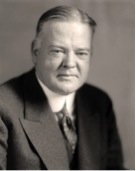
Herbert Hoover – Image credits: old-picture.com
I recently received an email from a friend that had an inspiring story. On researching the story for authenticity I had to do a few amendments to it to make it more factual. An article by General Edward L. Rowny confirms the authenticity of the meeting of the two great men featured in the story. While I cannot confirm the authenticity of the details of the story the overall event is factual and worth sharing.
A young, 18 year old student and a friend of his decided to host a musical concert in Stanford University in 1892 to raise money for a worthy cause.
They reached out to the great pianist Ignacy J. Paderewski. His manager demanded a guaranteed fee of $2,000 for the piano recital. A deal was struck. And the boys began to work to make the concert a success.
I was moved by the ‘Empathy’ video on ‘YouTube’ [see the embedded video]. This is a video every health care provider, be it a medical practitioner or non-medical practitioner must watch. The CEO of Cleveland Clinic, Ohio, USA, Dr. Toby Cosgrove, MD, showed this video during his 2012 state of the clinic address.
Dr. Cosgrove, who I had the fortune of meeting during a 2 week intense healthcare leadership course I attended in this magnificent hospital in April 2013 says; Patient care is more than just healing – it is building a connection that encompasses mind, body and soul. If you stand in someone else’s shoes, hear what they hear, see what they see, feel what they feel, would you treat them differently?
Anger is one of the most common negative behaviours in human beings. Anger makes people act in an irrational manner. And therefore anger causes tremendous amounts of unnecessary destruction. Many who are connected with me have asked me how to manage anger. While I teach many tools on how to manage anger in my learning experiences and in my books, I felt this is an issue where many people need help and I need to find faster methods of reaching more people, hence this blog post.
Firstly we must realize that anger is a behaviour we learn and therefore it is not something permanent in us. We learn new behaviours when we see benefits in such behaviours. Therefore for example at a tender age when we observe our dad getting angry and everyone else doing as per his demands in an attempt to make him calm down, we learn that anger has the power of controlling and we quickly learn to use anger as a tool ourselves.
I first heard the saying; ‘Jack of all trades, is a master of none’ from my dad. While I took this as face value and later felt it is valuable mindset to have, I now wonder if this is true or false. On one hand it is humanly possible to be the best in all trades as there are millions of them. We would not have the time to master everything in a lifetime or just even explore them. Anyway I don’t think this statement suggests that anyone attempts to be a master of all trades.
We also don’t have the time in our lifetime to be a Jack-of-all-trades as well. But what do you think the original writer meant by the use of the word Jack. If it is the Jack from the pack of cards, then we are referring to the person who does all the work for the King and Queen. Therefore, by doing all the tasks required he learns many things, but will he ever be the master of any of those subjects.
Recounting my experience, I was in the collage rugby, athletic and chess teams. I was also a Boy Scout and I studied the subjects required to be an engineer. I believe I excelled in the engineering class when I lead a team of my classmates to make a electronic scale in the late 70’s. While it was very primitive and shabby we believe it was one of the first such attempts in Sri Lanka. It was viewed by the then President of the country J R Jayawardena and a later Prime Minister Ranil Wickremasinghe.
As I was sitting on my flight out of Dhaka and reflecting on the 4 full days of 9 hours each that I spent on my feet inspiring over 100 souls, I was moved from within to share my experience in my next blog. At that point I received an AHA (a term we used for an inner learning that happens to us when we are open to inspiration) about the power of emotions.
I was fortunate to learn about the power of emotions when I first attended the life changing learning experience, ‘Mastery of Self’ many years ago. Up to that point I knew that I was emotional and I felt it is weak to be emotional.
I recounted many incidents in my early childhood where I was bullied by schoolmates, ridiculed, insulted and laughed upon. I remember going to a safe place and crying to ensure that I was not seen by them and be more ridiculed. Sometimes I could not hold my emotions in front of them and it was visible in my voice as I responded. Nevertheless I excelled in sports and scouting while being an average student despite this improvement area and it helped me to make progress in life.
Perhaps it is the culmination of these experiences that prepared me to totally accept the teachings of Mastery of Self and later make it a powerful factor in vocation of helping people and organizations to find a better way to live and work.
The idea that people get motivated when they feel good, when they feel valued, when they are appreciated, when they are engaged, when their needs are met is so obvious, so simple and so powerful but it had to presented in a manner which deeply penetrated my soul for me to start seeing the obvious and doing the required.
Emotion is Energy in Motion. The Chinese word for energy is Woolee, which means patterns of living energy. Therefore when energy is in motion we can influence it to form the patterns that create positive energy. We can use that energy to create positive results.
Easter is a time that reminds us of how Jesus Christ suffered, died and rose from death. This has a lot of meaning for all of us to live a meaningful life.
Firstly as Jesus who was all good and helped so many people through simple acts and miracles was accused and was branded as a criminal. That is because those who judged him used different yardsticks to judge Jesus and had ulterior motives. We may also do all good, help people and do an honest job, but there will always be people who find ways of showing us that we are criminals or having committed mistakes in companies, personal life etc. We may be punished in an unwarranted manner.
Secondly Jesus had the power to save himself as he has performed so many miracles. But he did not use that power without the approval of the god almighty. He knew there was a bigger plan and he had to go through the suffering to achieve greater growth. We too may have the power to save ourselves, but we should not use it without the right authority. When we are put through challenges we must have faith that we are put through it for a bigger reason that we may even not understand.
Thirdly Jesus rose from his death. While we do not have the power to rise from a physical death, we have the power to rise from the depths that we fall to. We may lose our valuable possessions but we can re-gain them. We may lose our health to sickness but we can recover from it. We may fall into a bad, self-destructing habit but we can recover from it. We may lose our job but we can recover and get a better job. We may lose in a relationship but we can start a better relationship. In short we have the power to rise from any depth and this Easter is a reminder of this powerful truth.
So let me wish you happy rising from your depth this Easter.
I took over the leadership of Apollo Hospital in Dhaka a few months ago to continue to stretch my self, to learn a new industry domain [health care] and to learn to lead a team of over 1700 consisting of some of the best medical consultants, specialist, doctors, nurses, patient care assistants, health care managers and other non-medical staff from this part of the world.
It is also a complex and highly responsible job and requires maintaining world-class operations in line with the JCI [joint commission international] standards the foremost health care accreditation in the world. It is only my hospital in Bangladesh and a hand full of hospitals in India, Singapore, Thailand and Malaysia can boast of this standard that is tough to get and maintain.
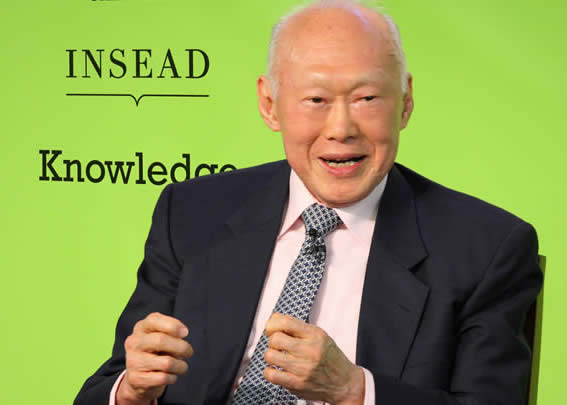
In addition to the above objective the spin off benefit I have got is the ‘wake up call’ regarding life in general. The knowledge I gather everyday being in this operation is amazing and that has made me more pay more attention to myself as well. It is in this backdrop that I received an email from one of my friends on getting the best out of life by Lee Kuan Yew.
One of the profound lines in a speech given by him was; “The human being needs a challenge, and my advice to every person in Singapore and elsewhere: Keep yourself interested, have a challenge.This made me read the rest of the article, leaving a side a list of other things I had planned to do and I felt really good that I found the time to read it. I am happy to share the entire article in its totality below. Please do take the time to read it. I do not know the source of this article, but I give credit to whoever wrote it and seek permission to re-produce it for the greater good of humanity.
If you’re not interested in the world and the world is not interested in you, the biggest punishment a man can receive is total isolation in a dungeon, black and complete withdrawal of all stimuli, that’s real torture.”
With the Mayan Calendar reaching the end of its current cycle, 2012 was eventful with the economic downturn continuing and there were many efforts in many countries around the world to get out of it. Then there were the various natural and human made disasters such as the various storms, earthquakes, wars and killings that added more burdens on the leaders grappling with the economic crisis. Political leaders had new challenges to deal with, dividing their attention between the economy and the new challenges. There were elections in many countries such as the USA, Russia, France, Spain, Egypt and it is hoped that the new leadership will have new vision and a new mindset to solve the challenges faced by the world.
Then there were the celebrations with the Diamond Jubilee of the Queen, The London Olympics, the re-election of Obama, the launch of path breaking communication technology [Quad Core] for smart phones and tablets such as the iPhone 5, iPad 4th Generation, iPad mini, Samsung Galaxy note and Windows 8. And of course the first video on You Tube to reach a billion hits; Gangnam Style!
Yes the job interview is one of the critical hurdles in our lives. So let me try and share some tips from my experience of facing some critical interviews in my life as well as being in hundreds of interview panels.
Once the euphoria of getting invited for the interview settles down you need to get on with getting to know the company and the job you are applying for. When I applied for a job as marketing manager of Keells Foods in the late 80’s there was no access to information at our finger tips like we have now. I found out a friend of mine who is a shareholder of this company, visited him and collected the past 3 years of annual reports and started getting to know the company, reading them in detail. I then got myself introduced to a person who was working in John Keells Holdings [the parent company of Keells Foods] and understood details of the corporate culture and the type of team members they like to have. I immersed myself into the company and started living it in my mind the next few meetings before the final interview with the main board of directors of John Keells Holding. The preparation I went through made me feel comfortable and at home when I went for the interview and it was no surprise that I got the job of Marketing Manager of Keells Foods at the age of 24.











 New years every year brings so much hope to so many people. This is the time we think of giving up bad habits and making a fresh start. Most people take a fresh step with a good intention, only to find themselves slipping back to their old habits very quickly.