There is a compelling seduction in goal setting. A tidy metric. A date on the calendar. A trophy on the shelf. Goals promise clarity and certainty in a complicated world. Yet, as I have often observed in leadership work and personal reflection, the same mechanism that energises performance can also distort judgement, corrode relationships, and narrow our field of vision until only the finish line seems to matter.
This is the problem with goals; not that they exist, but that they so easily become all that exists.
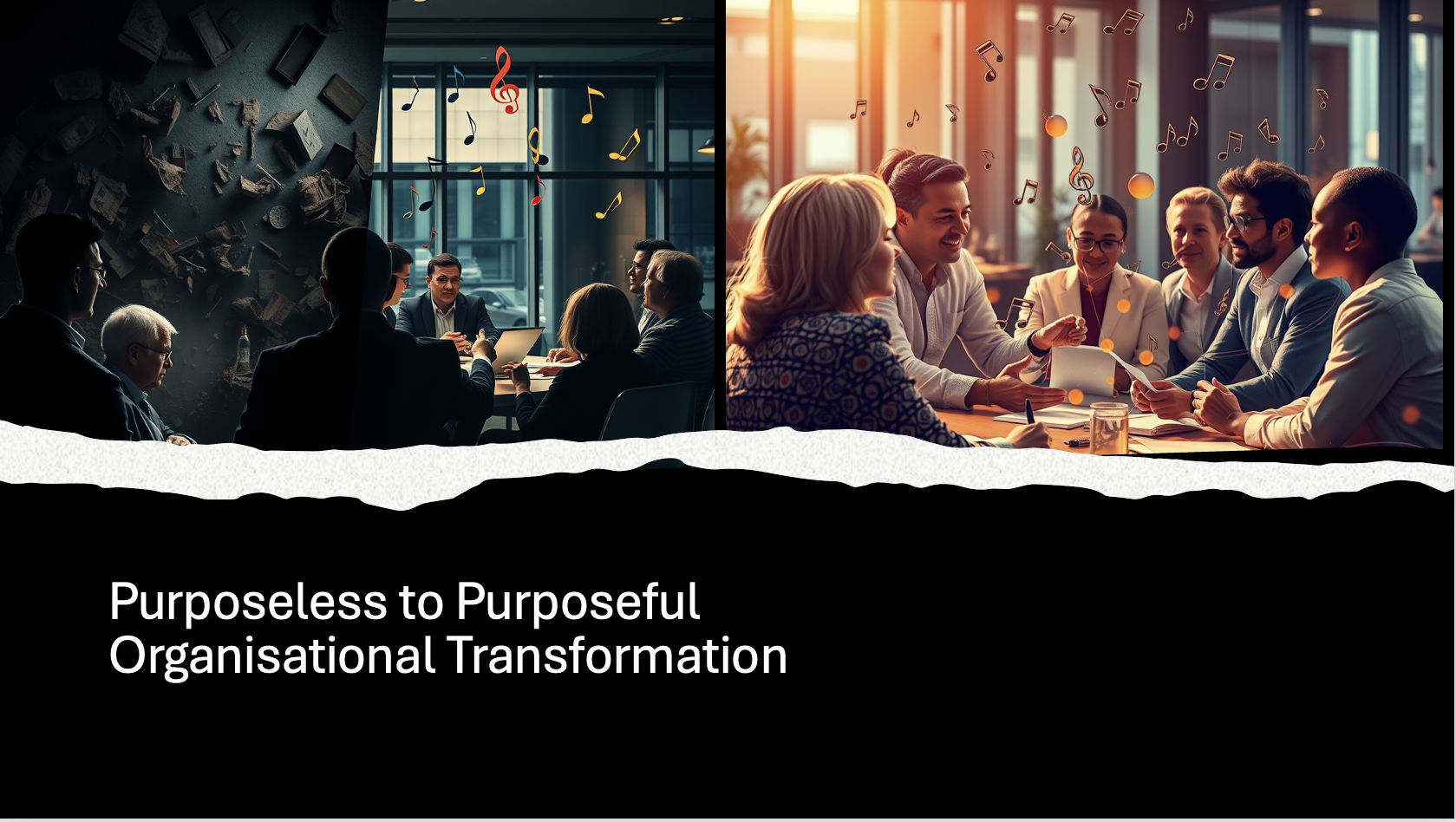
When organisations get obsessed with goals, people begin to feel the heat of retribution and repercussions. Meeting the number eclipses meeting the need. Targets become a test of capability rather than a tool for learning. Under pressure, talented individuals often drift into unhealthy competition and, at times, resort to unethical means. Collaboration gives way to territorialism. Short-term wins get overvalued; long-term consequences get discounted. Leaders unwittingly convert their teams into anxiety machines, characterised by being busy, brittle, and perpetually braced for impact.
Purposeful leadership is often understood as a progression: purposeful self-leadership, followed by purposeful people leadership, and eventually purposeful organisational leadership. While this sequence is a helpful entry point, it does not reflect how leadership is actually lived. In practice, purposeful leadership is not linear. It is cyclical, relational, and complex. Each form of purposeful leadership both shapes and is shaped by the others, forming a living system rather than a developmental ladder.
Purposeful self-leadership is the inner anchor of this system. It is the ongoing practice of aligning values, beliefs, intentions, and actions with a deeper sense of purpose. This inner work is not private or abstract. It shows up most clearly when leaders are under pressure, navigating ethical tension or difficult trade-offs. When leaders lack inner coherence, purpose becomes performative. When they are grounded in purposefulness, they are better able to act with integrity, resist expedient compromises, and hold responsibility with maturity.
Purposeful people leadership is where inner purpose meets relational reality. Purpose is tested not in declarations, but in conversations, decisions, and everyday interactions. The way leaders listen, build trust, address conflict, and hold accountability reveals whether purposeful self-leadership is truly embodied. Purposeful people leadership translates inner alignment into lived experience, shaping how people feel, engage, and commit to the organisation.
As we welcome 2026, many of us feel the familiar mix of gratitude, exhaustion, and anticipation. The year has given us moments we are proud of, and moments that remind us how imperfect, human and evolving we are. Before we rush into 2026, this is a valuable moment to pause, to breathe, and to reflect on how purposefully we lived in 2025.
Over the years, through the Purposeful Leadership series, I have written about the importance of aligning who we are, how the quality of our leadership begins with the quality of our inner world and how we lead. As I look back on 2025, I am reminded again that purposefulness is not a grand concept; it is a daily practice.
A simple way to explore your own experience of purposeful leadership is through three lenses: purposeful self, purposeful team, and purposeful organisation.
In the previous article, we explored how to develop purposeful organisational leadership. In this post, we focus on the complexities of purposeful organisational leadership and potential remedies.
Organisations do not become purposeful by proclamation; they become purposeful by orchestration. And orchestration is complex. It asks leaders to conduct a score that balances markets and meaning, governance and grace, pace and patience. If purposeful people leadership is the dance with paradox at the human scale, then purposeful organisational leadership is that paradox amplified across systems. The stakes are higher, the variables multiplied, the pressure relentless. Yet the beauty is also greater, because purposeful organisations can hold the space where profit and flourishing meet.
The first complexity is when the purpose is only a brand. Organisations often craft eloquent purpose statements, then proceed to pursue them with methods that quietly contradict the message. Purpose is not merely narrative; it is action. When we violate this principle, people quickly learn that the banner on the wall is not the truth on the floor. To lead purposefully at the organisational level, we must ensure that strategy, structure, systems, and culture are not just aligned conceptually, but coherent behaviourally. This coherence is evident in how we behave, especially when performance pressures intensify.
In the previous article, we explored what purposeful organisational leadership means and why it matters. In this post, we focus on how leaders can intentionally develop purposeful organisational leadership, turning purpose from a statement into a lived reality across the organisation.
Start with Leadership Commitment
“I hold the view that leaders are better able to contribute to the flourishing of life if their actions are guided by a deeper sense of purpose” (De Silva, 2024, p.6). Therefore, purposeful organisational leadership needs to begin at the top. Senior leaders must embrace the organisation’s purpose as a guiding principle for decisions and behaviours. This commitment is not symbolic; it requires courage to prioritise purpose even when short-term pressures tempt compromise.
Make the Organisational Purpose Your Guiding Light
The starting point for developing purposeful organisational leadership is a clear purpose statement. This is not a marketing slogan; it is the organisation’s reason for being and its unique contribution to the flourishing of life. From this foundation, leaders can craft a mission statement that defines how the purpose will be delivered and set Big Hairy Audacious Goals (BHAGs) to drive long-term success.
In the previous articles, we explored the first two branches of purposeful leadership: self and people. In this post, we turn to the third and final branch, purposeful organisations. If purposeful leadership begins with the individual and extends to teams, its ultimate expression is in organisations that are guided by purpose rather than vision.
Beyond Vision: Why Purpose Matters
Traditional organisations often define themselves through vision statements, aspirations of what they want to become. While visions can inspire, they are frequently inward-looking, focused on growth, dominance, or profitability.
Purposeful organisations, by contrast, start with a deeper question: Why do we exist? The answer is not about market share or shareholder value; it is about contribution to the flourishing of life. “Flourishing workplaces require the re-creation of organisations to give life to a truly postmodern era of collaboration in order to facilitate organisations to flourish on this planet for future generations” (De Silva, 2024).
Purpose is not an add-on, like corporate social responsibility (CSR). It is not a department or a project. It is the organising principle of the entire enterprise. Every policy, process, and decisions flow from the purpose. Every role is designed to serve it. Every strategy is evaluated against it. Purpose becomes the compass that guides the organisation through daily decisions, complexities and change.
In the previous article, we explored how leaders can intentionally develop purposeful people leadership, an approach that transforms teams and organisations by aligning individual purpose with collective contribution.
While this aspiration is noble and deeply impactful, it is not without its complexities. In this post, we examine the challenges, paradoxes, and tensions that arise when we choose to lead people purposefully.
Cognitive Aspects
One of the first complexities arises from how people cognitively make sense of the notion of purposefulness. The concept of “purpose” is often misunderstood or conflated with goals. While goals are specific outcomes we strive to achieve, purpose is the deeper reason behind those goals, the “why” that gives them meaning. This distinction is not always clear, and many team members may struggle to grasp its relevance. Some may view purposefulness as abstract or philosophical, disconnected from the practical realities of work.
Moreover, individuals interpret purpose through the lens of their own experiences, beliefs, and values. What feels purposeful to one person may seem irrelevant or even threatening to another. Leaders must navigate these differences with sensitivity, helping people explore and articulate their own understanding of purpose without imposing a singular definition. This requires patience, dialogue, and a willingness to embrace ambiguity.
In the previous article, we explored the concept of purposeful people leadership and its importance. In this post, we delve into how leaders can intentionally develop purposeful people leadership, an approach that transforms teams and organisations by aligning individual purpose with collective contribution.
Purposeful people leadership begins with the leader’s own sense of purpose. When leaders connect their role to their higher purpose, they begin to see their primary responsibility not just as managing tasks, but as developing their team members, purposefully. This shift in perspective changes everything. The team is no longer a means to an end; it becomes the very reason for leadership. The leader’s purpose expands to include helping team members discover their own purpose and align it with meaningful roles.
This development process starts with purposeful conversations. Leaders engage with team members to understand their aspirations, strengths, struggles, concerns about their world and values they aspire to live by. They help individuals reflect on their personal purpose, articulate a purpose statement and explore how it can be expressed through their work. When people are placed in roles that resonate with their purpose, they flourish. Their contribution becomes authentic, passionate, and sustainable.
Purposeful leadership extends beyond the self. Once the leader becomes purposeful, the natural next step is to help others, team members, and teams become purposeful. This is not a directive process but a deeply human one, rooted in example, empathy, and engagement. In this article, we explore the second branch of purposeful leadership: leading people purposefully.
Purposefulness in people is transformative. It improves their personal lives, relationships, health, and peace of mind, and this inevitably enhances their effectiveness and contribution at work. The workplace becomes more than a place of transaction; it becomes a space of meaning. Families benefit too, as individuals carry their sense of purpose home, influencing their roles as parents, partners, and community members.
I have experienced this transformation personally. At the age of 27, I had climbed the corporate ladder rapidly to become a director of two subsidiaries of John Keells Holdings, Sri Lanka’s leading conglomerate. At the time, I was driven by ambition and the goal of professional success. I worked long hours, including weekends, and neglected many aspects of my life. I was overweight, frequently ill and hospitalised, disconnected from my young family, absent from church, and unaware of the importance of developing and empowering my team. I had no sense of purpose, only a relentless pursuit of achievement.
Everything changed when I discovered the notion of purposefulness and wrote the draft of my first purpose statement. I began going to the gym, spending quality time with my family, returning to church, reading, cutting excessive costs, investing the savings, and cultivating emotional maturity through meditation. This personal transformation awakened a desire to help my team grow. I began teaching them about purposefulness and supporting their development. As a result, my quality of life and work improved significantly. It was no longer a choice between work and life; it became a commitment to both work and life, harmoniously.
My doctoral research reinforces this understanding. As I wrote in my thesis:
“My research suggests that being purposeful helps understand life from a more holistic and altruistic manner, leads one to conduct life with decent human values, helps make choices beneficial to the flourishing of life, improves caring for the well-being of family and self, and choosing vocations which are aligned with an evolving life-purpose. Adjusting one’s lifestyle in this manner takes courage, determination, and self-discipline. However, persisting with such an aspiration leads to an improvement in the quality of life, generating happiness which, in turn, encourages persisting in being purposeful.” (De Silva, 2024)
I invite you to reflect on how you are leading people. Are you helping them become purposeful? Are you creating conditions for their flourishing? If not, what needs to change?
You may explore literature from my blog http://www.ranjandesilva.blog, my website http://www.ranjandesilva.com, and other sources. Speak with your trusted advisor. We will further explore the notion of purposeful leadership and methods of transformation in the upcoming blog posts.
In the next article of this series, we will explore how to develop purposeful people leadership, how leaders can intentionally cultivate purposefulness in others through structured development, coaching, and empowerment.
References
De Silva, R. L. G. (2024). Living Purposefully: An Inquiry into the Life of a Leadership Development Practitioner. (Doctoral dissertation, Hult Ashridge).
In the last post, we explored how to develop purposeful self-leadership by articulating a purpose statement and taking small, meaningful steps to live in alignment with it. While this process is deeply enriching, it is not without its challenges. In this post, we explore the complexities of attempting to enact purposeful self-leadership in our lives (De Silva, 2024).
Understanding the Notion of Self-Leadership
The idea of self-leadership is inspiring. It suggests that we can take charge of our lives, lead ourselves with clarity and conviction, and live in alignment with our purpose. However, understanding this notion deeply can be complex. Many mix purpose with goals when in fact it is not. A goal becomes more meaningful when it is based on a purpose. It requires us to accept responsibility for our thoughts, emotions, and actions—something that can feel both empowering and intimidating. The concept may seem abstract or idealistic, especially when life feels uncertain or overwhelming.
We explored the notion of Purposeful Self-leadership in the last post, part 3 of this series titled ‘Start with the Self’. Today we explore how to develop Purposeful Self-Leadership and in the next post, we can explore the complexities of such an aspiration. In the first two articles of this series, we explored the two key concepts of purposeful leadership: purposefulness and leadership, and the three branches of purposeful leadership: self, people, and organisations.
Developing Purposeful Self-Leadership starts with articulating a purpose statement depicting our sense of purpose at the current stage of life. The first version of the purpose statement is only a glimpse of our purpose as finding purpose is a lifelong journey. However, having a sense of purpose begins the quest and gives us the drive and desire to be purposeful. Being purposeful improves our clarity about our life purposes and helps us fine-tune our purpose statement, leading to us being more purposeful. This cyclical process not only improves our sense of purpose and purposefulness but also attracts abundance to succeed in vocations aligned with our life purpose, gives us happiness and peace of mind (De Silva, 2024).
In the first article of this series, published last month, we explored the two keywords of the concept of purposeful leadership: purposefulness and leadership. As I mentioned earlier, I allow the series to unfold as in the process of finding purposefulness. Being purposeful means creating a positive impact on the people and environment one encounters (De Silva, 2024). As I reflected on this series, the idea of writing about the three branches of purposeful leadership emerged.
I use the metaphor of ‘branches’ rather than categories, boxes, or containers because I see the three core areas of purposeful leadership growing in unison, but at different speeds and proportions, much like the branches of a tree. The bigger branches grow stronger but perhaps more slowly, while the smaller branches grow faster but are not as strong. However, all branches, big or small, have a purpose in the growth of the tree.
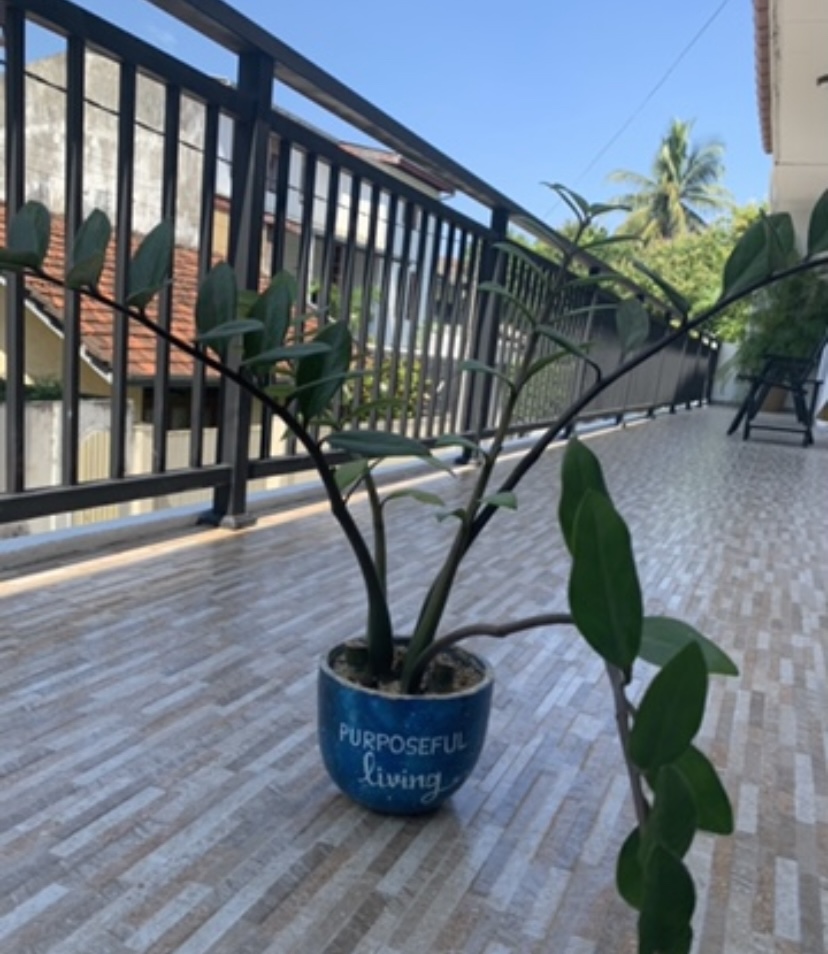
A plant with the words Purposeful Living on the pot, given by my eldest daughter for Christmas 2020. This is a photo of it on the 1st of January 2023. It has grown with the thesis.
Purposeful Leadership contains two ideas, purposefulness and leadership, which cannot be simplified or explained using a short definition. This is substance for a book or many. I commence this series of blog posts, not knowing the nature of articles nor the number of articles. I allow the series to unfold as in the process of finding purposefulness.
I must start somewhere, hence let me explain purposefulness in an over-simplistic manner. Purposefulness is a mindset that guides thinking, decisions and actions, with the flourishing of life being given importance. Flourishing of life begins with one’s own life, that of family, team, organisational stakeholders, environment, society, and the world at large. It’s simply for the flourishing of all forms of life. Being purposeful is a challenging aspiration, given the cognitive, practical, psychosocial and contextual complexities of the world we experience. Nevertheless, it is a worthwhile pursuit as discussed in my doctoral thesis; Living Purposefully: An Inquiry into the Life of a Leadership Development Practitioner (De Silva, 2024). Leadership is about the intention and effort to influence oneself, and those connected with oneself in personal and work roles. Therefore, purposeful leadership is enacting self-, team- and organisational leadership for the flourishing of life.
While trying to avoid any infections of the vulnerable is our responsibility, it is important that we do it in the most holistic and helpful manner.
Taking precautions to prevent being a conduit in spreading the virus based on social distancing and hygiene guidelines is important. This can be augmented by strengthening our immune system. Good quality and timely sleep, exercises, fresh air, nutrition and being stress free is important to keep a strong immune system.
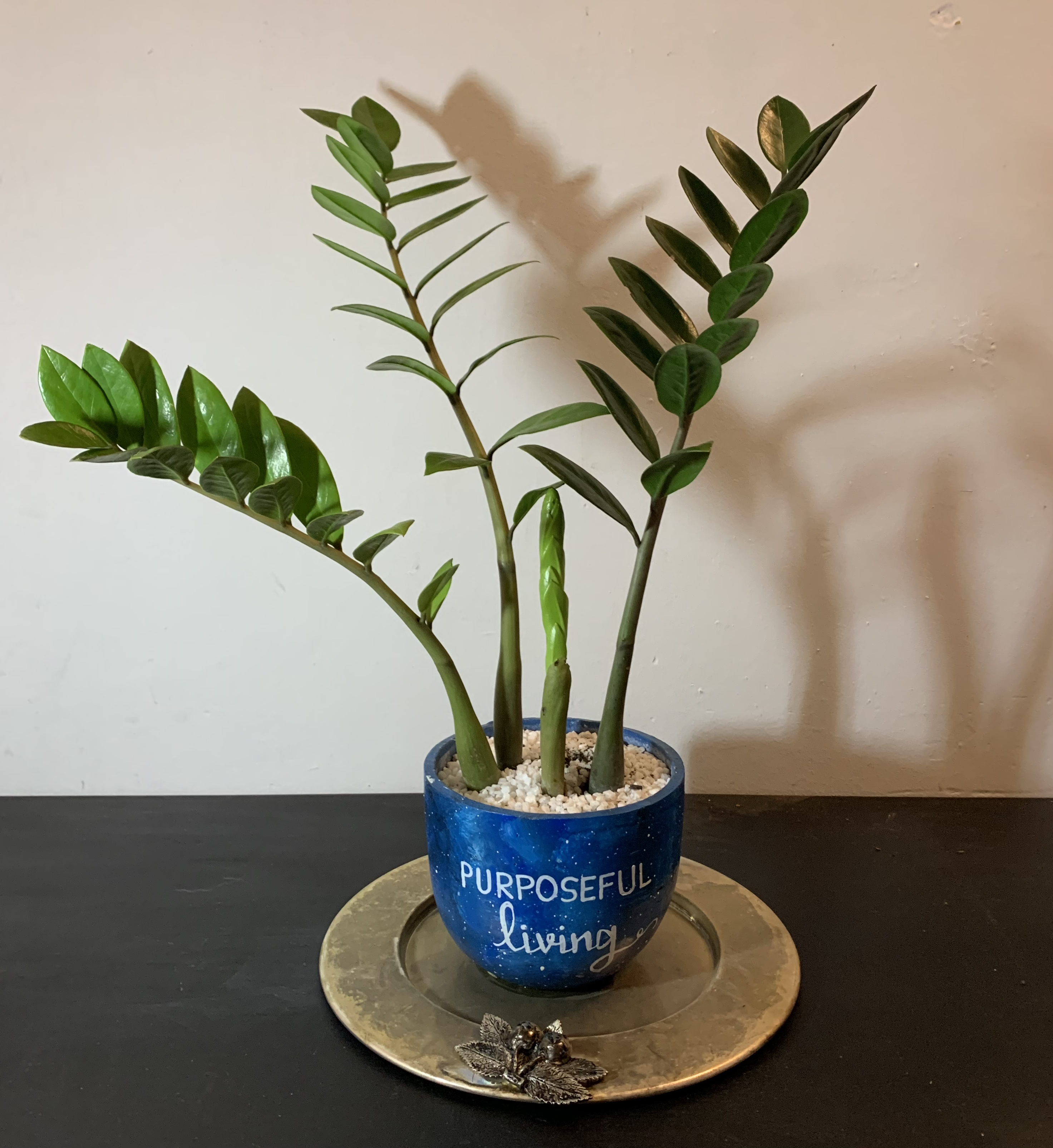
This years Christmas present from my eldest daughter – a symbol of abundance & purpose
My new year’s message last year was ‘I wish you a new year and new decade overflowing with abundance & purposefulness’. Having gone through perhaps the most ‘interesting’ year of our life, I wonder if this wish had an impact or not. I suppose it depends on how we look at 2020. While many of us had challenges in our jobs, businesses, finances, relationships and health, it is important to reflect on and find the hidden gifts.
Reflect on the deeper meaning of this poem as you listen to it and read the lyrics below. How did you respond to trouble times? What did you do when you fell down? What is real success & failure? How would you face life’s challenges from now onwards?
Read by Shane Morris – Full Poem:
Did you tackle that trouble that came your way
With a resolute heart and cheerful?
Or hide your face from the light of day
With a craven soul and fearful?
Oh, a trouble’s a ton, or a trouble’s an ounce,
Or a trouble is what you make it,
And it isn’t the fact that you’re hurt that counts,
But only how did you take it?
You are beaten to earth?
Well, well, what’s that!Come up with a smiling face.
It’s nothing against you to fall down flat,
But to lie there-that’s disgrace.
The harder you’re thrown, why the higher you bounce
Reflect on the deeper meaning of this poem as you listen to it and read the lyrics below. Who is the captain of your life? How will you live to be able to be happy on your last day feeling that that you lived it all.
O Captain, my Captain our fearful trip is done The ship has weathered every rack, the prize we sought is won The port is near, the bells I hear, the people are exulting, While follow eyes the steady keel, the vessel grim and daring But O heart! heart! heart! O the bleeding drops of red, Where on the deck my Captain lies, Fallen cold and dead.
O Captain, my Captain (x3)
O Captain, my Captain rise up and hear the bells Rise up—for you the flag is flung—for you the bugle trills For you bouquets and ribboned wreaths—for you the shores a-crowding For you they call (the swaying mass) their eager faces turning (their eager faces turning) Here Captain! dear father! This arm beneath your head It is some dream that on the deck, You’ve fallen cold and dead. Dead.
My Captain does not answer, his lips are pale and still My father does not feel my arm, he has no pulse nor will The ship is anchored safe and sound, its voyage closed and done From fearful trip, the victor ship, comes in with this object won Exult, O shores, and ring, O bells! But I, with mournful tread, Walk the deck my Captain lies, Fallen cold and dead. Fallen cold and dead.
It’s May 2017. I got a call from the account manager from the company that manages my Mahogany plantation in the Ratnapura district of Sri Lanka. I have some bad news to share with you. What is it? I ask. One of your Mahogany plantations in Munihinkanda has got affected by the recent landslides. We have not been able to access the plantation yet as the authorities have restricted access to the plantations until they are able to confirm that it is secure. What is the extent of the damage? I ask. About ten acres of the plantation has slid down to the river below and we feel it includes one of your plots too.
As I digested this news my mind went to the time that a rubber plantation of a larger extent belonging to my father was destroyed due to a cyclone about 40 years ago. I remembered my involvement in the process of transporting the fallen trees to help my father recover at least a part of the losses. My mind wonders to the hundreds of lives lost due to this storm and thousands who have lost their livelihood as a result. I have watched with dismay so many natural disasters such as hurricanes, tsunami’s, floods, landslides, forest fires and now a pandemic.
The question is, when will we humans learn to stop destroying nature? How many more disasters are needed before we stop damaging Mother Nature so that we can live in harmony with nature.
In the last 4 blog posts, we explored how the pandemic impacted four important pillars for purposeful living; spiritual, mental, emotional and relational. Let’s explore the fifth pillar, the ‘physical’ related to the health of people in this blog.The health pillar consist of three aspects exercise, nutrition and rest. As in the past four blog posts let me describe my experience during the pandemic.
After I got standard in dhaka, ehe time I spent converting delivery methods of our intellectual services online, engaging with the authorities about arranging passage home, conducting webinars, taking part in webinars organised by others, catching up on the covid updates, writing recommendations, and being in touch with my family took more time and energy than usual.
Let’s explore the ‘rest’ aspect first. While I used to sleep one our two hours before midnight before the pandemic, the new workload resulted in me sleeping after mid night and waking late most days. While I was conscious of how detrimental this was to my health, I was not able improve this. However after returning to Sri Lanka, this changed as my work load on getting back home was eliminated. I slept by 10 pm and was awake at 6 am the entire fortnight while undergoing quarantine at the Blue Waters Beach Resort. This trend continued after returning home for a while, but with the emerging demands the sleep timings became inconsistent. In addition to sleep timings it is important to take at least one free day a week and this was a big improvement area too, until I managed ot find the time to take the family down to a beach resort last weekend and take a proper free day.
The next aspect is exercises. I used to do yoga and meditation in the morning and exercises for at least 30 minutes a day before the pandemic. The length and quality of meditation and yoga varied based on the time I had in the morning before I headed off to work. After the pandemic began, my meditation and yoga sessions were longer and exercise were more intense. I ensured these practices every day even if I woke late when I was in Dhaka. It was easier and of better quality during quarantine and for a few weeks after returning home. However with my sleep patterns becoming inconsistent the quality of my morning meditation and yoga has also got adversely affected.
Nutrition is the aspect where I have been least consistent with, during the time in Dhaka and after returning home. Thankfully the quality and quantity of nutrition during quarantine was very good as we were provided well balanced meals planned by the medical experts.
The sense I make from this exploration is that the challenges of the pandemic has had an adverse effect on my health related practices although I am aware of what is required, have practiced such disciplines regularly in the past and have the intention get back to an ideal routine.
People I speak to lament about challenges in the various aspects. Many could not sleep on time or sleep well due to the information overload and the anxiety as as the lockdowns began in March. Many could not exercise as they were not allowed to leave home. However this should not be an excuses as I exercised indoors most of the days. Its only in the last 2 months that I started taking walks by the lake near my home in Sri Lanka. Some manage nutritious well, specially due to the compulsion of doing home gardening in the first two months with the fear of food shortages etc. This too is fading out and many find that managing the quality of food intake is also becoming challenging.
The quality of health related practices explored in this blog has a direct impact on our immunity, which has a direct impact on our ability to fight the virus. As such it is important for us to be very mindful about this aspect and I intend focusing on it more intensely and intently from now onwards.
Life is worth Living – an inspirational song by Justin Bieber
As you listen to the song, reflect on the how you feel when you look at the long road ahead in your life, on who who gave you direction and help when you were confused, and on the mistakes you made and how you responded. Moving on reflect on how would you respond to such situations and how would you help others who are on the journey of life.
Today’s learning video is for anyone who is affected in someway by the crisis
Anxiety Releasing Meditation (17 mts) by Ranjan De Silva
Guided meditation, specially done to help release anxiety related to the Covid Pandemic. Follow it closed eyed or open eyed on a laptop watching the beautiful visuals of life. Do it in quiet place, using ear phones for best effect.
I hope this could be useful in providing online or in-room learning to your team members, family, friends and self during the current down time so that they would be kept positive, motivated and sharp so that all of you would be geared to perform with excellence during the crisis and after.
Click on the above link for the presentation related to the keynote speech to be given by me at NAFLIA 2019. Conference participants are invited to download the presentation and use it to follow the keynote speech.
This blog is written in service of life-Insurance Advisors in Sri Lanka, specifically the members attending NAFLIA 2019, the National Forum for Life Insurance Advisors scheduled for the 2ndof September. My attempt is to articulate the key messages of the keynote speech that will be delivered by me.
As I was reflecting on the topic for the annual conference, ‘Assuring Tomorrow Dream Today’. The questions that come up are, what is the action we need to take today to assure our dream of tomorrow? How do we know the action we choose to take today will assure our dream tomorrow? I realised this is a very complex question and that there is no standard answer to this as the action to be taken depends of the world each person lives in. What I mean by the ‘world’ is the immediate world of each person starting with him/herself, family, friends, organisations they belong to, organisations and people they interact with etc. The answer is personal.
We explored the notion of purpose from various viewpoints in the first ten blog posts in this series. We then started making sense of our purpose in the last blog post, the eleventh in the series. I invited you to explore a model of purposefulness that has been developed over the past three years of my doctoral studies. This is still work in progress and will continue to evolve in this year of writing my thesis and beyond. However, I believe it has potential to help us make sense of our purpose because my professional practice over the past 20 years and my doctoral inquiry so far over the past three years has informed me of possible ways of making sense of our purpose.
The model as it stands now, presented in the previous (eleventh) blog post is based on the notion that our sense of purpose, that may evolve with life, is related to making a positive impact on the process of life using the talent, passion and compassion of each living being. I used the metaphor of the sun that provides us energy and inspiration, to explain purpose and the nine planets as the various aspects related to living purposefully. These aspects are related to each other through the space it resides in and I have a hunch that the space is the real thing. Continue reading “Purpose of Living – Part 12: Making Sense of our purpose – the space”→
We explored the notion of purpose from the viewpoints of Abrahamic Religions, Eastern Philosophies, Early Sciences, Modern Sciences, Philosophy, Psychology, Ecology and Action Logics (pre-conventional) viewpoints in the past blog posts in this series. Let’s now have a look at this notion from an ‘Action Logics (post-conventional)’ viewpoint.
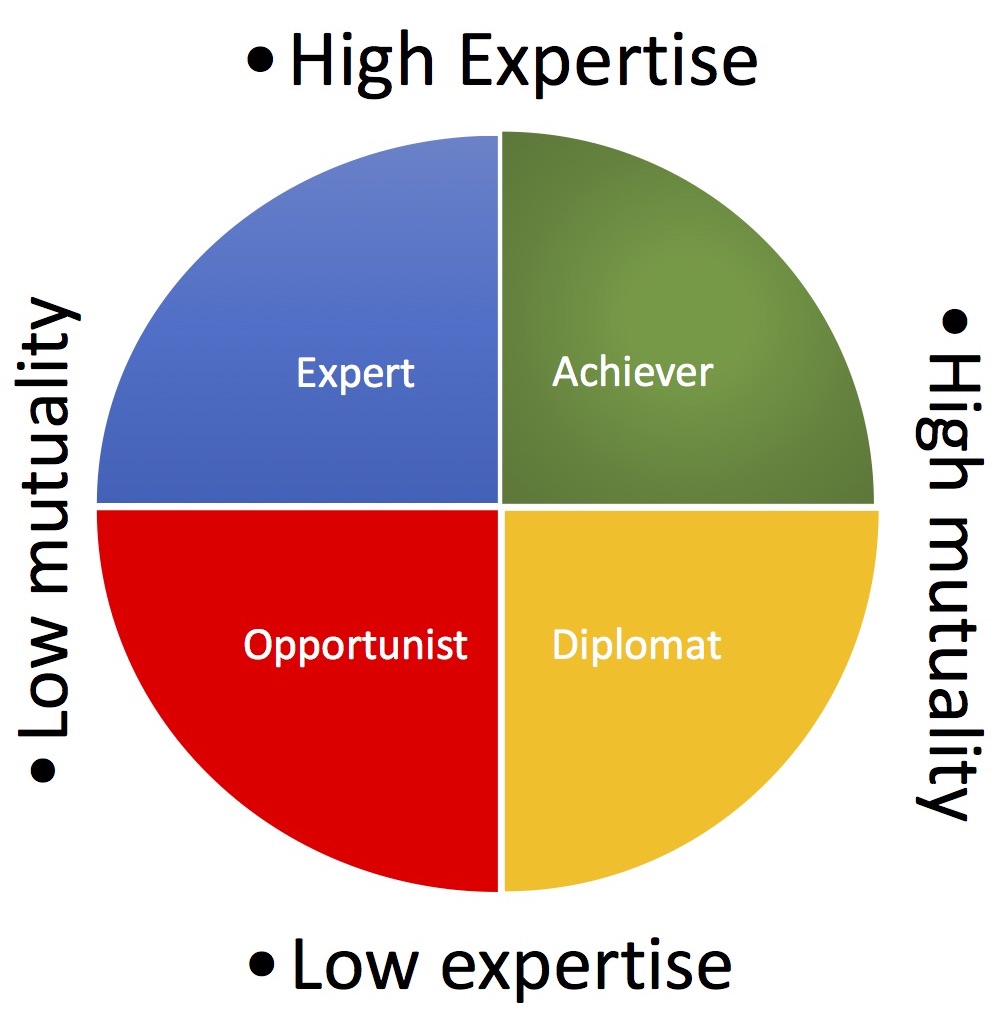
I started the previous blog post with an attempt to understand the notion of ‘Action Logics’, which tries to explain the ‘logic’ behind the ‘action’ we take. Most unspontaneous actions are based on decisions, which are rational, and therefore they could be based on an intention, reason or purpose. The four pre-conventional action logics; opportunist, diplomat, expert and achiever, explored in the last blog post was based on the degree of mutuality and expertise.
Let’s attempt to explore post-conventional action logics in this blog post based on the proposition by Greuter Cooke (2002). According to a research study in the USA of about 4300 adults, it was found that 18.2% belong to the post-conventional group. While it is difficult to define post-conventional, to me it seems like those who are more mature, wiser, selfless, seeking happiness through harmony, simplicity, generosity and spirituality, would fall into this group. Continue reading “Purpose of Living – Part 10: The Action Logics (Post – Conventional) Viewpoint”→
We explored the notion of purpose from the viewpoints of Abrahamic Religions, Eastern Philosophies, Early Sciences, Modern Sciences, Philosophy, Psychology & Ecology in the last few blog posts in this series. Let’s now have a look at this notion from an ‘Action Logics (pre-conventional)’ viewpoint.
Let’s first try to understand the notion of ‘Action Logics’. It tries to explain the ‘logic’ behind the ‘action’ we take. Most action is based on decisions unless it is spontaneous. If decisions are well thought out and rational, they could be based on an intention, reason or purpose. This shows that actions can be based on a reason or purpose.
Therefore, the logic behind decisions we make that determine actions we take, could have an impact on the quality of the decision and the resultant action. The notion of action logics[1] has some potential in understanding this phenomenon.
The developers of the ‘Action Logics’ model proposes two broad categories of Action Logics: pre-conventional and post conventional. According to a research study in the USA of 4300 plus adults, it was found that 85% belong to the pre-conventional group. While it is difficult to define pre-conventional, to me it seems like those who are more materialistic, achievement oriented, less mature, younger and competitive would fall in to this group. Let me try to make sense of the four pre-conventional ‘Action-Logics’ in relation to purposeful living. Continue reading “Purpose of Living – Part 9: The Action Logics (pre-conventional) Viewpoint”→
We explored the notion of purpose from the viewpoints of Abrahamic Religions, Eastern Philosophies, Early Sciences, Modern Sciences, Philosophy and Psychology in the last few blog posts in this series. Let’s now have a look at this notion from some of the Ecological viewpoints.
It’s May 2017. I got a call from the account manager from the company that manages my Mahogany plantation in the Ratnapura district of Sri Lanka. I have some bad news to share with you. What is it? I ask. One of your Mahogany plantations in Munihinkanda has got affected by the recent landslides. We have not been able to access the plantation yet as the authorities have restricted access to the plantations until they are able to confirm that it is secure. What is the extent of the damage? I ask. About ten acres of the plantation has slid down to the river below and we feel it includes one of your plots too. Interestingly I was calm as I heard this news, although the financial loss was going to be quite severe. As I digested this news my mind went to the time that a rubber plantation of a larger extent belonging to my father was destroyed due to a cyclone about 40 years ago. I remembered my involvement in the process of transporting the fallen trees to help my father recover at least a part of the losses. My mind wonders to the hundreds of lives lost due to this storm and thousands who have lost their livelihood as a result. Perhaps the reason for me to be emotionally unmoved by my financial loss could be because these are more severe than the personal financial loss I have incurred. I have watched with dismay so many natural disasters such as hurricanes, tsunami’s, floods, landslides, forest fires etc. happening in various parts of the world. It seems like it is getting more and more intense.
We explored the notion of purpose from the view point from Abrahamic Religions, Eastern Philosophies, Early Sciences, Modern Sciences and Philosophy in the last few blog posts in this series. Let’s now have a look at this notion from some of the Psychological viewpoints.
Although having been appointed to boards of two of the companies of John Keells Holdings, at the age of 27, after having been appointed Marketing Manager of that company at the age of 24, largely due to the gold medal I won at the final examination of the UK based Chartered Institute of Marketing examination, and many corporate successes, I had a sense of emptiness and meaninglessness in my life during my early thirties. The various solutions applied to deal with this emptiness were related to attempting to think and act positively after having attended the ‘Mastery of Self’ playshop during that period. I also find many of the participants attending workshops I facilitate grappling with such emptiness.
Positive psychology – A science of positive subjective experience, positive individual traits, and positive institutions promises to improve quality of life and prevent the pathologies that arise when life is barren and meaningless – addresses this feeling of emptiness, described with the word ‘barren’. The exclusive focus on pathology that has dominated so much of our discipline results in a model of the human beings lacking the positive features that makes life worth living. Hope, wisdom, creativity, future mindedness, courage, spirituality, responsibility, and perseverance are ignored or explained as transformations of more authentic negative impulses (Seligman, Csikszentmihalyi, 2014, p.5).
We explored the notion of purpose from the viewpoint from Abrahamic Religions, Eastern Philosophies, early sciences and modern sciences in the last few blog posts in this series. Let’s now have a look at this notion from some of the Philosophical viewpoints.
An early proponent of the concept of purpose was Aristotle. His thinking of purpose tends to summarise the viewpoints of this diverse group of people. He suggests that the most basic meaning of quality of life refers to the ability of humans to formulate and implement purpose. Adoption of a good lifestyle that includes good health, social wellbeing and environmental safety or their promotion is purposeful activity (Jonsen,1976). While concepts of health, social wellbeing and environment is alluded by Aristotle, he does not talk about skills, knowledge and vocation, as echoed in some of the conversations I have had, and from my first-person knowing.