While trying to avoid any infections of the vulnerable is our responsibility, it is important that we do it in the most holistic and helpful manner.
Taking precautions to prevent being a conduit in spreading the virus based on social distancing and hygiene guidelines is important. This can be augmented by strengthening our immune system. Good quality and timely sleep, exercises, fresh air, nutrition and being stress free is important to keep a strong immune system.
Think of the last time you had to make a difficult decision. A time where options were difficult to pick from. A time where the more materialistically profitable option did feel right. I have faced many such situation. I would like to share my personal experiences to help shed some light on this dilemma.
When I have such a dilemma I reflect on my aspired values to find direction as per the quote by Idowu Koyenikan in the visual above. The five values I attempt to live by are summarised I the following statement.
Do you really know who you are? Well, I am still discovering who I am and I am not sure if I will ever find the answer. However, everyday I live with this question in my mind, I see a little bit more of who I am.
In the one before the last blog post (two Wednesdays ago) in the ‘Purpose Quest’ series, I attempted to list down questions that came up during my various interactions with various audience over the last 6 months of the pandemic. I started attempting to write about how I responded to those question and the insights I had regarding the first two questions related to goals, in last Wednesdays blog post. Let me attempt to respond to the third questions;
What is the purpose of the pandemic? How is it serving us?
In the last blog post in the ‘Purpose Quest’ series, I attempted to list down questions that came up during my various interactions with various audience over the last 6 months of the pandemic. I will attempt to write about how I responded to those question and the insights I had, in the next few blog posts. So let’s begin with the first two questions. Both of them are related to goals;
My goals have become irrelevant due to the pandemic? What do I do now?
Why do I need to have goals when they can become irrelevant due to uncontrollable situation?
This was such a common view, having been on a flight at least twice a month, over the past 15 year until the pandemic arrived. I was on a flight only once in the last 6 months and that too a special flight that repatriated standard Sri Lankan’s home. I feel relived that I don’t have to pack my bags every fortnight and this is likely to continue for many more months. Stumbling upon this picture that I had taken on one of my flights, evoked mixed feelings. I am not sure if I am actually relieved or if I am going to miss my travel. Well I suppose this is food for thought dished out by the pandemic.
The last six month opened up amazing opportunities for me to reflect on the notion of purpose. These opportunities arose during conversations with family, team and clients in trying to make sense of the pandemic. These opportunities arose during webinars conducted to help people with their concerns, anxieties, stress and other psychological challenges. These opportunities arose from the 150 plus participants from 15 countries taking part in the four ‘Mastery of Self’ through NLP, online certificate courses over the past few months.
In this blog post I will attempt to list down the questions that came up. Some of these questions were already asked earlier, some of these are modifications to the old questions and some of these are new questions.
My goals have become irrelevant due to the pandemic? What do I do now?
Why do I need to have goals when they can become irrelevant due to uncontrollable situation?
What is the purpose of the pandemic? How is it serving us?
Is our purpose changed due to changing realities?
I am struggling more due to the pandemic. Is it helping me to find purpose?
Am I struggling more during the pandemic because I try to live purposefully?
Do our values change with situations? Arn’t they supposed to be fixed?
Isn’t values an important component of our purpose?
My purpose is clashing with the purpose of some of my family. It is prominent now because I spend a lot of time with them. How do it deal with them?
Are religious people more purposeful than non-religious people?
Does spirituality become more important than religion for purposeful people?
Does the notion of Purposeful living taken a new meaning with the pandemic?
Are world leaders being purposeful in the way they are handling the pandemic?
I will reframe from answering these questions to provide you the opportunity to reflect and answer these questions. I am not sure what that process will do. I will be delighted to hear from you the answers that came up and how these questions and answers served you.
A Poetic spoken word piece that explore the question: what is the purpose of life? and explores the decisions we make that shape our lives.
As you reflect on these words, a powerful line within it to reflect is; “Just keep writing, keep filling in the chapters on the pages of your life and don’t look back because if you keep regretting and rereading you won’t move past and you miss that final ending at last”.
What has passed has passed. Everything that happened has given us some insights to assist us in our quest for our purpose. The next step we take, using the learnings of the past or not, will help us get more insights in our quest. Turning the page and moving on seems more meaningful that turning back and regretting.
Reflect on your life so far to make sense of your higher purposes and use that information to take your next step in your quest for purpose.
As you listen to this song, reflect on those things which you believed were possible, when you were a child. Those beliefs are still embedded deep inside you. We may believe such dreams are impossible now. However the mind has amazing potential. Think of baby steps you can take today to make those dream come true.
Lyrics:
I used to think that I could not go on And life was nothing but an awful song But now I know the meaning of true love I’m leaning on the everlasting armsIf I can see it, then I can do it If I just believe it, there’s nothing to itI believe I can fly I believe I can touch the sky I think about it every night and day (Night and day) Spread my wings and fly away I believe I can soar I see me running through that open door I believe I can fly I believe I can fly I believe I can fly hooSee I was on the verge of breaking down Sometimes silence can seem so loud There are miracles in life I must achieve But first I know it starts inside of me, ho ohIf I can see it hoo, then I can be it If I just believe it, there’s nothing to itI believe I can fly I believe I can…
In the last 6 blog posts in the ‘purpose quest series’, we explored how the pandemic impacted six important pillars for purposeful living; spiritual, mental, emotional, relational, health and money. Let’s explore the seventh pillar, the ecological aspect in this blog post. As in the past six blog posts let me attempt to describe my personal experience during the pandemic.
With lockdowns being imposed, offices closed, and people starting to work from home vehicles movement reduced drastically. With airports restricting flights there were less flights in the sky. With demand for non-essential products reducing factories were operating at lower capacity reducing environmental damage. All this made the air cleaner, water cleaner, skies bluer and grass greener.
Unlike in the earlier six aspects, there was not much for me to do, the earth was healing itself. I had to only participate by using the freshness for my well being and helping others to use this Knowladge to make sense of the positive aspects of the pandemic. Therefore I used the webinars I was conducting and conversations I was having with people to show these benefits and to use this opportunity to adjust lifestyles, so that even after the pandemic, we live in a manner that is beneficial to the environment.
With life coming back to normal in Sri Lanka, I am concerned to see that the amount vehicles on the road have gone back to pre-pandemic levels. Our airways are still clean as the flights are still restricted, but with the envisaged opening up of the skies end of this month, the air pollution levels are likely to start increasing again. Work from home is getting lesser, and in person activities are increasing. I am attempting to keep at least half of my learning experience delivered online even when things are back to normal. I need the other half to interact with people as we cant be totally devoid of human interactions to help them in their learning, growth and transformation.
So lets continue to communicate and role model to help people at least adjust to a mid-way level between total lockdowns and total free movement with their free will so that we can bring this planet to liveable conditions. If not nature will hit back with a bigger pandemic and will keep doing it more regularly to save the planet.
As you read on these words of wisdom by Theodore Roosevelt, reflect on the natural wonders, history and the romance of our heritage. Reflect on steps you can take to save these wonders from the selfish and the greedy.
It’s May 2017. I got a call from the account manager from the company that manages my Mahogany plantation in the Ratnapura district of Sri Lanka. I have some bad news to share with you. What is it? I ask. One of your Mahogany plantations in Munihinkanda has got affected by the recent landslides. We have not been able to access the plantation yet as the authorities have restricted access to the plantations until they are able to confirm that it is secure. What is the extent of the damage? I ask. About ten acres of the plantation has slid down to the river below and we feel it includes one of your plots too.
As I digested this news my mind went to the time that a rubber plantation of a larger extent belonging to my father was destroyed due to a cyclone about 40 years ago. I remembered my involvement in the process of transporting the fallen trees to help my father recover at least a part of the losses. My mind wonders to the hundreds of lives lost due to this storm and thousands who have lost their livelihood as a result. I have watched with dismay so many natural disasters such as hurricanes, tsunami’s, floods, landslides, forest fires and now a pandemic.
The question is, when will we humans learn to stop destroying nature? How many more disasters are needed before we stop damaging Mother Nature so that we can live in harmony with nature.
Everything is Waiting for You – Poem by David Whyte
As you listen to this poem, reflect on the wonders of the world that we experience every day. Reflect on how we take them for granted or just don’t notice the wonder in them. Imagine if you pay attention. Everything is waiting for you, go experience all of it.
EVERYTHING IS WAITING FOR YOU – Words
Your great mistake is to act the drama as if you were alone. As if life were a progressive and cunning crime with no witness to the tiny hidden transgressions.
To feel abandoned is to deny the intimacy of your surroundings.
Surely, even you, at times, have felt the grand array; the swelling presence, and the chorus, crowding out your solo voice. You must note the way the soap dish enables you, or the window latch grants you freedom.
Alertness is the hidden discipline of familiarity.
The stairs are your mentor of things to come, the doors have always been there to frighten you and invite you, and the tiny speaker in the phone is your dream-ladder to divinity.
Put down the weight of your aloneness and ease into the conversation.
The kettle is singing even as it pours you a drink, the cooking pots have left their arrogant aloofness and seen the good in you at last. All the birds and creatures of the world are unutterably themselves.
Good Timber by Douglas Malloch – Read by Mark O’Keeffe
As you listen to this poem (words below), reflect on what your challenges and struggles have done for you?
The tree that never had to fight For sun and sky and air and light, But stood out in the open plain And always got its share of rain, Never became a forest king But lived and died a scrubby thing.
The man who never had to toil To gain and farm his patch of soil, Who never had to win his share Of sun and sky and light and air, Never became a manly man But lived and died as he began.
Good timber does not grow with ease, The stronger wind, the stronger trees, The further sky, the greater length, The more the storm, the more the strength. By sun and cold, by rain and snow, In trees and men good timbers grow.
Where thickest lies the forest growth We find the patriarchs of both. And they hold counsel with the stars Whose broken branches show the scars Of many winds and much of strife. This is the common law of life.
When the world started changing due to the pandemic it had a big impact on my focus on my intellectual development process. This blog post tells my story and I hope this will help you to reflect on how the pandemic affected your intellectual development.
Image Credit: medspace.com
Let’s start with the question, what is the meaning of intellectual? While different people may make sense of the word ‘intellectual’ in different ways, based on their thinking, to me intellectual is the quality of my thinking and understanding aspects I am concerned with. The stronger my intellectuality becomes, I tend to understand aspects I am concerned with and the related complexities in a deeper manner. The shift in priorities brought about by the pandemics resulted in some interesting changes to my intellectual development processes.
A compilation of five powerful Short Speeches by Jay Shetty, Brendon Burchard, Tom Bilyeu, Robert Quinn, and David Rutherford.
Reflect on when you felt or lazy or asked yourself “what to do with my life” or “what is my purpose”. Have you ever felt it is not time yet or its too late. Reflect on these questions and beliefs again while watching or after watching this video.
Defeat – a Thought Provoking Poem by Kahlil Gibran – Read by Shane Morris
Reflect on the sweetness of your defeats as you listen to this poem.
Defeat, my Defeat, my solitude and my aloofness;
You are dearer to me than a thousand triumphs, And sweeter to my heart than all world-glory.
Defeat, my Defeat, my self-knowledge and my defiance,
Through you I know that I am yet young and swift of foot, and not to be trapped by withering laurels, and in you I have found aloneness, and the joy of being shunned and scorned.
Defeat, my Defeat, my shining sword and shield, In your eyes
I have read That to be enthroned is to be enslaved, and to be understood is to be levelled down, and to be grasped is but to reach one’s fullness, and like a ripe fruit to fall and be consumed.
Defeat, my Defeat, my bold companion,
You shall hear my songs and my cries and my silences, and none but you shall speak to me of the beating of wings, and urging of seas, and of mountains that burn in the night, and you alone shall climb my steep and rocky soul.
Defeat, my Defeat, my deathless courage,
You and I shall laugh together with the storm, And together we shall dig graves for all that die in us, And we shall stand in the sun with a will, And we shall be dangerous.
Kahlil Gibran was the key figure in a Romantic movement that transformed Arabic literature in the first half of the twentieth century.
Reflect on the value you put on simple things of life, those things we take for granted, things given to us free or we obtained cheaply. Look at such things from someone less fortunate than you. Would you see a different value? Perhaps thats heavens way of helping us see the proper price of goods. Feel the attitude of gratitude.
Reflect on what you felt and thought differently during the pandemic. What are the new relationships you formed and new action you took? Did you notice a different you? Was that different you a better version of You? A Deeper Version of You? The original version that was pushed away due to the way the world was operating? Reflect on what you would do with the version of you that got revealed during the pandemic?
In the name of psychology and neuroscience, Daniel Goleman shares his insights on why IQ is not an accurate predictor of how well one does in life. A new metric is called for, one he calls, ‘Emotional Intelligence’. Everyone has the capacity to develop their emotional skills and improve their EQ. This video shows you some examples of ways to cultivate your emotional intelligence so you can put them to work at home, in the workplace, and in your relationships.
Attention! The word ‘depression’ in this video simply refers to feelings of sadness and not ‘clinical depression’.
Image credits: lightworkerhealing.com
Last week I wrote about how we can become an Abundance Magnet as a part of the weekly ‘Purpose Quest’ series I commenced two weeks ago. Today I focus on an aspect of the story that I wrote last week, releasing anxiety’.
Anxiety was arising due to my inability to return home to Sri Lanka and impending drop in revenue when the reality of the pandemic was getting clearer. This blog post is dedicated to illustrate how I released such emotions using Releasing Techniques that I was learning and teaching since October last year.
When we have an emotion, we either repress it, express it or escape from it. Initially I repressed it by telling myself that this will pass soon, flights will be arranged for me to return and clients will continue their work. My sleep that night was not comfortable as something from within was nudging me to take this more seriously.
So how did I respond to this call?
Continue reading “Releasing Anxiety”→
Reflect on where you are today and how you got here. Was your journey well planned an choreographed. Connect the dots backward and noticed the amazing plans of a higher power. Reflect on how you would respond to opportunities and choices of the future.
As you read this poem, listening to the soothing music in the background, reflect on the lille things that gives you hope. Imagine how our collective hope can make this world a better place.
Reflect on what you saw, heard and felt during the past few months of the pandemic. How was it different to what you experienced before. Did something from within urge you to reach out, help out, ask for help, leave your ego aside, reprioritise what was important in life. This reflection could help you understand how your soul was tested during these challenging times.
Gardens of the Blue Waters resort, usually filled with holidaying tourist, quietly healing.
The lone healer, in the boiling hazmat suit symbolic of the amazing medical team, setting up Covid tests for another batch of quarantined returnees from overseas.
I watch from the balcony of my little ashram (hotel room) in anticipation for my turn to clear the final hurdle, before I am cleared to return home to my family.
Although missing the dip in the sea, soaking in the pool and relaxing on the lawn, experiencing the cool breeze, sounds of the ocean and view of the sea, beach, pool and the gardens is a confirmation I am back in my motherland.
Yes! I am back, it’s not a dream anymore.
Full of love for the universes and all its living beings, I feel so thankful and hopeful.
The Cookie Thief – A Poetic Story – Recited by Ranjan De Silva
I have experienced many ‘Cookie Thief Moment’ in my life. What about you? What was yours? What did you learn about your Beliefs, Attitudes and Values from that moments? Is there any over-due actions that must be taken now to respond to that moment. What ‘baby steps’ would you take to respond to the old ‘Cookie Thief Moment’ and prevent new ‘Cookie Thief Moments’ from happening?
These are a set of pictures taken by me in Bangladesh during a leadership retreat for a client. The contrast of the four pictures provided me a great sense making opportunity.
Photograph 1 was at dusk, photograph 2 was at dawn and photograph 3 was at noon. After taking photograph 3, I realise the angle of photograph 1 was not the same as photograph 2 and 3. So I go back at dusk next day and try to re-capture photograph 1 and end up taking photograph 4. So what sense do I make from this?
The sense I make is that same way the tree looks different in different conditions but is not affected by the conditions, I may look different to different people given their conditions. Seeing the tree at dusk differently the second time informs me that I could look different to people as live evolves. The fact that the tree continues to grow in all conditions irrespective of ecological condition that supports and destructs and people who care for it and harm it. The people who consume from it are not necessarily those who nurture it and experience it. This shows me that life is dynamic and I need to choose my from the feedback I receive and respond appropriately to allow myself to grow in sync with the universal energy system.
I invite you to reflect on these pictures and make sense of it with regard to the dynamic nature of your life, the feedback you need to take and how to respond to the call of the universe to grow in a synchronic manner.
This series of ‘Purpose Quest’ will be illustrated with narratives of how we search for purpose. The question is, Are we searching for ‘purpose’ or is ‘purpose’ searching for us?
On the 14th of March, when I boarded the Sri Lankan airlines flight UL 189 to Dhaka I did not realise that I will have to stay in Dhaka for 10 weeks due to flight restrictions. The WHO had declared Covid-19 as a pandemic a few days ago. My mother was encouraging me to stay back without going as I had just recovered from a cough. I was hearing how passengers coming in to Sri Lanka from Europe were being taken to quarantine centres. Was the universe trying to inform me and help me make a purposeful choice?
Reflect what you need in the minimum for sustain yourself and meet your commitments till the next assured cash inflow. Reflect on what you need and what you can give, how you can give and when you will give.
Meditate on the poem and reflect how you make sense of the notion of Love. Does this prompt you to re-think the way you make sense of Love. Does the new way make you feel more peaceful internally. Reflect on baby steps you would like to take to test in reality your new way of making sense of love.
Enjoy Bette Midler’s song recited in a poetic manner, defining ‘Love’ by Ranjan De Silva
Reflect on how you knowingly or unknowingly destroy nature. Reflect on how it is directly or indirectly an act of destroying God’s creation and disrespecting God grand plan to help all living being live in peace and harmony.
Has the pandemic given you the opportunity to take a road not taken? Imagine the positive difference it can make for you and your little world. What baby steps would you take today in identifying that road and the baby steps you need to take today.
Reflect on what you used to wish for before the pandemic and what you wish for now? How has that helped you to make sense of your purpose in this world? Reflect on what steps you need to take to live your life with your renewed wish list and renewed purpose.
Reflect on the greater disease of humanity, the hunger for Love and hunger for God. Reflect on what we can do to show a little LOVE to those who need it so that we can ensure the greater disease is not forgotten in the pandemic. Reflect on how to protect your family, friends and self from the spiritual disease, in addition to the medical disease.
We all have felt broken, let down, and practically shattered to pieces specially during this pandemic. How do you build yourself back up from such a low point? In this inspirational poem, Jon Jorgenson talks about how there is beauty to be found in every downfall. This poem is for Anyone going through a trial of any kind.
I hope this could be useful in nourishing your soul with hope, aspiration, positivity and confidence to deal with the present and gear up for the future.
Please feel free to share this poem with others who can benefit and communicate with me if you would like to share your thoughts.
Reflect on the divisions in your life such as interests, beliefs, geographic boarders, status, economics etc. that has become irrelevant in your life due to the Pandemic. Reflect on how such blurring of the boarders are affecting you positively and negatively, in the short term and the long term. Reflect on baby steps you can take to power-up the positives and negate the negative.
The Most Beautiful Poem of All Time by Nefthali Hoyos Barrena
Discover the secret to happiness in this soul nourishing poem
I hope this could be useful in nourishing your soul with hope, aspiration, positivity and confidence to deal with the present and gear up for the future.
Please feel free to share this poem with others who can benefit and communicate with me if you would like to share your thoughts.
A Mental Vacation through Alpha Meditation (35 mts) – by Ranjan De Silva
A simple explanation of the benefits of meditation and a guided meditation session to help you take your brain to the alpha brainwave frequency, that provides you a deep mental relaxation at a conscious state. Take your mind away from the turbulence of the current world, improve health & well being , quality of sleep, focus, creativity, relationships, peace of mind and purposefulness.
I hope this could be useful in providing online learning to your team during the current down time so that they would be kept positive, motivated and sharp so that all of you would be geared to perform with excellence during the crisis and after.
The following process can help you get good value from this video:
Reflect on what we have done to create the medical crisis that is curing the ecological crisis and causing an economic crisis. Reflect on the change in consciousness we need. Reflect on one simple step we can take to make this world a better place, medically, ecologically and economically.
Love is Separateness is Soul Nourishing Poem by Khalil Gibran written by M. Scott Peck in his book The Road Less Travelled. Parents sometimes fail to appreciate the individuality of their children, and instead regard their children as an extension of themselves. It is a mild but nonetheless destructive forms of parental narcissism. These are perhaps the finest words ever written about child rearing,
I hope this could be useful in nourishing your soul with hope, aspiration, positivity and confidence to deal with the present and gear up for the future.
Please feel free to share this poem with others who can benefit and communicate with me if you would like to share your thoughts.
For Leaders at all levels and Sales & customer service Professionals
Interaction Personalities (10 mts) by Ranjan De Silva
Helps understand your quality of interactions by understanding the five interaction personalities of yourself and others. This in turn helps improve the way they interact with others, especially when dealing with conflicts. Includes free self assessment to find out your interaction personality.
I hope this could be useful in providing online learning to your team during the current down time so that they would be kept positive, motivated and sharp so that all of you would be geared to perform with excellence during the crisis and after.
The following process can help you get good value from this video:
Reflect on what you can do to create contagious laugher and good humour. Use this great immune booster in addition to all the other steps you are taking to boost immunity and precautions you are taking to fight cover-19. Stay safe, stay positive, stay hopeful.
A Poem dedicated for winners. This poem describes behaviours of real winners and appreciates them. This poem is an ideal gift for those in your life you consider real winners.
I hope this could be useful in nourishing your soul with hope, aspiration, positivity and confidence to deal with the present and gear up for the future.
Please feel free to share this poem with others who can benefit and communicate with me if you would like to share your thoughts.
JUMP method is a simple but powerful 7-step process. It’s a world-class method to bring your inside out for your self-empowerment.In this video, you will learn about the 7-step process and guidelines to perform it.
I hope this could be useful in providing online learning to your team during the current down time so that they would be kept positive, motivated and sharp so that all of you would be geared to perform with excellence during the crisis and after.
The following process can help you get good value from this video:
A poem that helps change the perspective of life. Experience how different our perspective of life is when you look at it from up there.
I hope this could be useful in nourishing your soul with hope, aspiration, positivity and confidence to deal with the present and gear up for the future.
Please feel free to share this poem with others who can benefit and communicate with me if you would like to share your thoughts.
The determination of an Extra-Ordinary man: recited by Ranjan De Silva
A poem for all the men and the men in the lives of women who sees this poem. Reminds us of what it takes to be a real hero. Please share this as a thank you gift with the special men in your life such as your grandfather, father, husband, brother, son, friend, teacher and guide.
I hope this could be useful in nourishing your soul with hope, aspiration, positivity and confidence to deal with the present and gear up for the future.
Please feel free to share this poem with others who can benefit and communicate with me if you would like to share your thoughts.
Today’s learning video – for people at all levels in organisation
EQ-IQ Balance by Ranjan De Silva (6 mts)
Helps understand the importance of having the right balance between our Intelligence Quotient (IQ) and Emotional Quotient (EQ). It helps understand the reason why we think, make sense, decide and act the way we do. It also helps in understanding others better and how they think, make sense, decide and act, thereby improving relationships.
Includes free self assessment to find out your EQ-IQ balance.
I hope this could be useful in providing online learning to your team during the current down time so that they would be kept positive, motivated and sharp so that all of you would be geared to perform with excellence during the crisis and after.
The following process can help you get good value from this video:
If by Rudyard Kipling – narrated by Tom O’ Bedlam.
A poem that shows how the word ‘IF’ opens up possibilities in our mind.
I hope this could be useful in nourishing your soul with hope, aspiration, positivity and confidence to deal with the present and gear up for the future.
Please feel free to share this poem with others who can benefit and communicate with me if you would like to share your thoughts.
Today’s Soul Nourishing Poem is: The Hero’s cry by – Eddie Pinero
Dedicated to all heroes in our lives. We remember their names not because of a lack of mistakes but because they looked the universe dead in the eye and dared to give what it takes”
I hope this could be useful in nourishing your soul with hope, aspiration, positivity and confidence to deal with the present and gear up for the future.
Please feel free to share this poem with others who can benefit and communicate with me if you would like to share your thoughts.
Today’s learning video is for anyone who is affected in someway by the crisis
Anxiety Releasing Meditation (17 mts) by Ranjan De Silva
Guided meditation, specially done to help release anxiety related to the Covid Pandemic. Follow it closed eyed or open eyed on a laptop watching the beautiful visuals of life. Do it in quiet place, using ear phones for best effect.
I hope this could be useful in providing online or in-room learning to your team members, family, friends and self during the current down time so that they would be kept positive, motivated and sharp so that all of you would be geared to perform with excellence during the crisis and after.
Today’s Soul Nourishing Poem is: If You Think You Can You Can – recited by Ranjan De Silva
I hope this could be useful in nourishing your soul with hope, aspiration, positivity and confidence to deal with the present and gear up for the future.
Please feel free to share this poem with others who can benefit and communicate with me if you would like to share your thoughts.
Today’s Soul Nourishing Poem is: Little Cloud – recited by Eric Carle
I am pleased to provide you a series of videos containing soul nourishing poems. There will be one every other day for the next few weeks.
I hope this could be useful in nourishing your soul with hope, aspiration, positivity and confidence to deal with the present and gear up for the future.
Please feel free to share this poem with others who can benefit and communicate with me if you would like to share your thoughts.
Today’s learning video is for employees at all levels.
Fight Covid-19 – 7 Simple Steps (7.35 mts.)
A 7 minute video with 7 tips on how to deal with the present and gear for the future.
I hope this could be useful in providing online learning to your team members, family, friends and self during the current down time so that they would be kept positive, motivated and sharp so that all of you would be geared to perform with excellence during the crisis and after.
Today’s Soul Nourishing Poem is: Forgive Me When I Whine
I am pleased to provide you a series of videos containing soul nourishing poems. There will be one every other day for the next few weeks.
I hope this could be useful in nourishing your soul with hope, aspiration, positivity and confidence to deal with the present and gear up for the future.
Please feel free to share this poem with others who can benefit and communicate with me if you would like to share your thoughts.
Wish you all a happy new year, Subho nababarsho [Bengali], Sawatdii pimaï [Thai], Hnit thit ku mingalar pa [Burmese], Naya Barsa Ko Hardik Shuvakamana [Nepali], Nav varsh ki subhkamna [Hindi], Iniya puthandu nal Vazhthukkal [Tamil], Suba nava vasarak wewa [Sinhalese]
This is an amazing time every year for many countries in South Asia and Southeast Asia when most of us celebrate the traditional New Year. The New Year is celebrated between 13 to the 15 of April in India, Nepal, Myanmar [Burma], Laos, Thailand, Cambodia, Bangladesh and Sri Lanka.
However, this New Year is perhaps the most significant in our life time as we celebrate it during the pandemic which most of us are experiencing for the first time. Let’s explore the significance of the New Year this year from that context.
We are all in some way affected by the Covid-19 virus and wondering how it is going to affect our lives. Many of the conversations I read are about the materialistic impact such as health, economy, jobs, livelihood, etc. This is real and we need to first accept the reality and respond to it. The response needs to be at different levels; global bodies like the World bank and World Health Organisation, governments, business organisations, NGO’s, social groups, communities and individuals. It is heartening to see this happening at different levels, although much more still needs to be done. Once some of these immediate realities are responded to it could help to reflect on the bigger purpose of the pandemic.
I have learnt that we keep discovering our higher purpose as we live life once we discover the notion of purpose and is conscious of its existence. This had got me in to the habit of reflecting, reviewing, refreshing and re-writing my purpose every month.
The first part of my current purpose statement is;
Inspire others to live a purposeful life based on their own evolving beliefs, values and methods.
This is based on my discovery of how my beliefs, values and methods evolved during my first-person inquiry and my discovery of how different people have different beliefs, values and methods that evolve as they attempt to live purposefully, during my second-person inquiry. First- and second-person inquiry are methods of action research that I adopt in my doctoral research into the notion of ‘purposeful living’. Continue reading “Take a JUMP in to your purpose – Purpose of Living – Part 36”→
It was not an easy decision to take 10 days off my busy schedule and travel to the other side of the planet to be with my sister for one of her milestone birthdays. It was not easy because I had to allocate time to respond to time demanded by my clients and team.
However, I made the decision, went through many challenges getting the visa because my busy travel schedule provided me only a small window to obtain the visa, worked long hours to clear as much work as possible so that I can be with the families of my sister and brothers during this time.
I am so glad that I made this decision to see the joy in my sisters face when I arrived at her door at 7am a few days ago, with my brother who picked me up from the Toronto Airport. I am so glad that I can spend time with the families of my brother and sister, catching up on their lives, sharing nostalgic moments, visiting interesting places, and spending quality time together.
As I cherish the wonderful experiences on the day of love, peace, giving and forgiving, a profound message at the Christmas Mass last mid-night re-enters my mind. This message not only gave me a new perspective to the attitude and behaviour of the Inn keeper, it made me realise that peoples thinking and action can have a higher purpose that we may not understand, and therefore makes us misunderstand them.
We’ve grown up hearing the account that the “inn” in Bethlehem was full, with no “room” available, so Joseph and Mary ended up in a stable, with Jesus Christ born and laid in a manger there. This image has been used to promote the typical Christmas nativity scene for generations.
The question for today’s blog post is; How can we use messages from our sub-conscious mind to live more purposefully? We have been exploring the notion of purpose and purposeful living over the past 33 posts and hence I assume the notion is clear to you. Therefore, let’s directly move on to exploring the sub-conscious mind and how we can use it to live purposefully.
The idea of deeper levels of information processing was developed and extensively studied by famous Austrian psychologist Sigmund Freud (1856 – 1939). According to him, the mind could be divided into conscious, subconscious and unconscious levels. The Conscious Mind – defines all thoughts and actions within our awareness. For example, the beauty and pleasance of the smell of a red tulip. The Unconscious Mind– defines all past events and memories, inaccessible to us no matter how hard we try to remember to bring things up. For example, the first time you had ice cream, or how it felt to be able to speak for the first time. The Subconscious Mind defines all reactions and automatic actions we can become aware of if we think about them. For example, our ability to ride a bicycle: once we get skilled we stop thinking about balancing, when to pedal, when to break, when to speed up, when to slow down, when to bend etc., but when we think about it later, we become aware about all the action we took.
After having been a student and teacher of how to master ourselves by living a purposeful life and programming our own mind, for the past twenty five years and believing that this is one of the best methods available to help us live a happy and successful life, finding ‘Releasing’ (or did Releasing find me?) has opened possibilities I thought never existed.
Sometimes opportunities find us when we welcome them. And perhaps it was such serendipitous moments when the notion of Purposefulness found me about 25-years ago and the notion of Releasing found me 25-years later. Releasing, also presented under the rubric of The Sedona Method (same methodology with a different presenter), has been hailed by people like Jack Canfield and Mark Victor Hansen, was showcased in the best-selling The Secret, has been the subject of numerous testimonials from leading authorities like Dr. David Hawkins, Michael Singer and others in terms of being an exemplar of “inside out” breakthroughs. Continue reading “Purposeful Living through Releasing – Purpose of Living – Part 32”→
I was at a cocktail party listening to an interesting conversation between two other guests who were in the same huddle as me.
Person A: What do you do?
Person B: I sell financial services.
Person A: What do you really want to do?
Person B: I want to be banker.
I asked A why he asked that question, and B why he responded that way. A said, “isn’t selling a profession that is not respected?” B said “yes”, it is so difficult to sell because customers look at him with suspicion. In my three decades of being in business and playing the roles of seller, buyer, leader, trainer, consultant and coach of sales professionals, I have encountered this attitude towards sales on many occasions.
However, my personal attitude towards sales is the opposite. As I reflect on the questions – how is it that people have developed this attitude towards sales, and what would be the best way to help people to look differently at sales? – the notion of purposefulness continues to come to my mind. Perhaps if I can find out if ‘sales’ is a purposeful profession, then it might help me to engage with people who have diverse viewpoints regarding this question.
Answering the above question requires understanding what is a purposeful profession. While I have attempted to answer this question in the earlier blog posts regarding purposefulness, there is no definite answer due to the complexity of this question. I believe that a purposeful profession needs to be of service to the flourishing of life and supported by noble values. Let’s examine these two aspects in relation to the sales profession. Continue reading “Is Selling a Purposeful Profession – Purpose of Living – Part 29”→
Over a billion people have been engaged with the ongoing Men’s Cricket World Cup over the last month. It all started with everyone hoping the cricket teams of their respective countries will become the world champions. The fact remains that only one team will be the eventual world champions. This blog is not about trying to predict the eventual champs, it is to discuss the impact of such sports extravaganza has on the lives of people.
The International Cricket Council organizes the Men’s Cricket World Cup as well as other global competitions related to Cricket to propagate cricket as well as raise funds. I am not sure which comes first. Is it to raise funds to propagate cricket or propagate cricket to raises funds. Well it doesn’t matter, perhaps both ends feed each other. There could be other reasons, for example to raise the standards of the sport and of those who are involved in it such as the players, coaching staff, umpires, referees, cricket boards and administrators. These aims could have a higher purpose that impacts the lives of people and I would like to address such issues in this blog post.
My blog post of the last two months addressed the impact of violence, religion and politics on the lives of people in the aftermath of the Easter Sunday bomb attacks in Sri Lanka, one of the former world champions who are now at the bottom of the table, struggling for form. Yet the entire nation was hoping that they will become the champs again. Teams from other countries besieged by violence such as Pakistan and Afghanistan are also in contention. The founders of cricket, England, is amid perhaps their worst political crisis related to Brexit. They entered the tourney as one of the favourites. Countries such as South Africa, Bangladesh and the West Indies are besieged with their own political and economic crises.Continue reading “The Purpose of the Mens Cricket World Cup – Purpose of Living – Part 28”→
My blog post of last month addressed the notion of purpose of violence in the aftermath of the Easter Sunday bomb attacks in Sri Lanka. We saw the involvement of religion and politics in the aftermath of the incident, over the past month. The intention of this blog post is to help us to understand how religion and politics positively and negatively impacted the lives of people.
Since I am not an intelligence, theological or political science expert to make judgements about what happened, and who was responsible for what happened, I request you not to take the assumptions I make in this post as truth. I am far away from the inner circles to know the truth and I am basing this blog post on what I have heard from trusted personalities such as the Cardinal of Sri Lanka, the Commander of the Army, and a retired intelligence experts known to me personally.
It was Easter Sunday (21 April 2019). I was in my flat in Dhaka, attending to some important business matters when I got a message that a bomb had gone off at St Anthony’s Church in Kochchikade, Colombo. Having not heard of bombings and terrorist violence for the past ten years, since the end of the civil war in Sri Lanka, I hoped it was a hand grenade thrown by a business rival involved in unscrupulous business, with no injuries; these were the rare occurrences we heard of over the past ten years. Then the news started pouring in with photos and videos of simultaneous bomb attacks in two other churches and luxury hotels as well. My immediate concern was for my family who would have been at an Easter Mass at the same time. After calling and ensuring they were safe, my thoughts went out to the victims. I started hearing news of people known to me or families of people known to me having lost their lives or being injured, among the 253 souls that departed and 500 plus injured. I had visited St Anthony’s Church many times and I could picture the carnage as if I was there. It is considered a miraculous church and people from all religions visit to reflect on their challenges and ask help from St Anthony to resolve them.
Have you ever faced a situation where you have a purpose that clashes with the purpose of a colleague, such as your boss, peer or a direct report? Has this situation led to misunderstandings, arguments, anger, click formation, politicking and even violence that starts affecting the business of the organisation? How did you handle the situation? Has it made you become disgruntled about the notion of ‘purposeful living’ and even resulted in discouraging team members in living purposefully. I will try to address this issue in this blog post from the experience I have had in dealing with such situations as a team member from within the organisation or as a consultant and coach from outside the organisation. Continue reading “When purposes clash at the workplace – Purpose of Living – Part 25”→
Have you ever had a situation where you have a purpose different to the purpose of a family member, such as a spouse, parent, sibling or child? Has this situation led to misunderstandings, arguments, anger, violence or estrangement? How did you handle the situation? Has it made you become disgruntled about the notion of ‘purposeful living’. I will try to address this issue in this blog post from the limited experience I have had in dealing with such situations.
Recently I had the opportunity of counselling a couple who were facing such a situation; the husband is a successful chief executive of a company and the wife is a senior manager in a bank. They have two adorable children. The family is financially sound with means of passive income. The husband was very caring to the family and they were always happy. The wife had always been supportive of the husband, specially in the early days of their marriage when he was struggling to move up the corporate ladder, while caring for the children. Continue reading “When Purposes Clash in Families – Purpose of Living – Part 24”→
We explored the notion of purpose from various viewpoints in the first ten blog posts in this series. We then started making sense of our purpose in the next ten blog posts. I invite you now to reflect on the ninth aspect in the model of purposeful living– inspiring (the dark blue colour circle in the model). While this is the ninth and final circle, in real life it can happen anywhere in the nine circles, it’s not necessarily chronological. There could be also other circles that are yet to be discovered. Once we gather momentum in living purposefully, we start inspiring others to live purposefully as well.
This blog-post deals with our responsibility to inspire others to live a purposeful life. We can inspire others by design or by accident. On one hand, others can get inspired when they see the improvement of our quality of life as we attempt to live a purposeful life. Living a purposeful life includes; living with a set of positive values, engaging in spiritual activities, looking after our health, building quality relationships, building financial stability, developing intellect and allocating time for purposeful activities. On the other hand, we could use our roles in life to inspire others. These roles include being a parent, sibling, relative, teacher, leader, colleague, author, speaker, and social figure such as a sportsman, entertainer, business leader, religious leader and social leader etc. Continue reading “Purpose of Living – Part 21: Inspiring others to live a purposeful life”→
We explored the notion of purpose from various viewpoints in the first ten blog posts in this series. We then started making sense of our purpose in the next nine blog posts. I invite you to now reflect on the eighth aspect in the model of purposeful living– Learning & Growing; the bronze colour circle in the model. While this is the eighth circle, in real life it can happen anywhere in the nine circle process, it’s not necessarily chronological. Learning and growth that occurs due to an experience could make us feel fully alive and of service to the world and this can make us reflect and find purpose. Continue reading “Purpose of Living – Part 20: Learning & Growing as we Struggle to be Purposeful”→
We explored the notion of purpose from various viewpoints in the first ten blog posts in this series. We then started making sense of our purpose in the next eight blog posts. I invite you to now reflect on the seventh aspect in the model of purposeful living– Responding (the dark green colour circle in the model). While this is the seventh circle, in real life it can happen anywhere in the nine circles, it’s not necessarily chronological. An opportunity received could make someone feel fully alive and of service to the world and this can make him/her reflect and find purpose.
This blog-post deals with responding to the opportunities provided to us from the universe. I use the word universe to describe the energy system, a higher power that makes this planet tick. Those who are religious would make sense of this higher power as God, Allah or the Almighty. Whatever we call this power, I feel we are not intelligent enough to understand this higher power and it requires faith or a brilliant scientific mind. I believe the opportunities can come our way or we can go looking for the opportunities. Continue reading “Purpose of Living – Part 19: Responding to the Universe”→
We explored the notion of purpose from various viewpoints in the first ten blog posts in this series. We then started making sense of our purpose in the next seven blog posts. I invite you to now reflect on the sixth aspect in the model of purposeful living– Rituals; the red colour circle in the model. While this is the sixth circle, in real life it can happen anywhere in the nine steps, it’s not necessarily chronological.
This blog-post deals with rituals for our purpose that we have now started to glimpse, based on the processes suggested in the last few blog posts. Rituals helps us to internalise the purpose, remind ourselves that we are in this world for a bigger reason, helps us decide to take some baby steps during the day towards living a purposeful life, energizes us, makes us feel more valuable, helps us to make decisions, solve problems etc.
An artefact representing my life-purpose – read the post for an explanation of how it represents my life-purpose
We explored the notion of purpose from various viewpoints in the first ten blog posts in this series. We then started making sense of our purpose in the next 6 blog posts. I invite you now to reflect on the fifth aspect in the model of purposeful living – Representation, the light beige colour circle in the model. While this is the fifth circle, in real life it can happen anywhere in the nine steps, it’s not necessarily chronological.
This blog post deals with creating a representation for our purpose that we have now started to glimpse, based on the processes suggested in the last few blog posts. A representation when seen regularly helps us to internalise the purpose, remind ourselves that we are in this world for a bigger reason, helps us decide to take some baby steps during the day towards living a purposeful life, energizes us, makes us feel more valuable, helps us to make decisions, solve problems etc.
We explored the notion of purpose from various viewpoints in the first ten blog posts in this series. We then started making sense of our purpose in the last five blog post. I invite you to now reflect on the fourth aspect in the model of purposeful living– Building – the light blue colour circle in the model. While this is the fourth circle, in real life it can happen anywhere in the nine steps; it’s not necessarily chronological.
This blog-post deals with building ourselves to be fit for purpose. I believe that God almighty or the universal energy system, or whatever way you make sense of the energy that makes life tick, would send us the opportunities to make our contribution to life. It could be a calling, a vocation, an opportunity to serve or an opportunity to further develop ourselves.
When I had a glimpse of my purpose 22 years ago, I decided to build myself by developing my spirituality through regular prayer and meditation, my health through regular visits to the gym, my relationships through spending more quality time with my family and team members, and my knowledge through re-introducing the reading habit to my life. These are four areas where we need to build ourselves; spiritual, physical, relational and mental. I started improving in these four areas and I felt successful and happy as a result, giving me peace of mind resulting in the improvement of the fifth aspect; emotional. I found I was getting less angry and was less frustrated when things did not go according to my plans. Continue reading “Purpose of Living – Part 16: Building Self to be Fit for Purpose”→
We explored the notion of purpose from various viewpoints in the first ten blog posts in this series. We then started making sense of our purpose in the last four blog post. I invite you to now reflect on the third aspect in the model of purposeful living– The choices (the orange colour circle in the model). While this is the third circle, in real life it can happen anywhere in the nine steps; it’s not chronological in real life.
This aspect deals with making choices once we have a glimpse for the beginning of what our purpose might be. When I had a glimpse of my purpose 22 years ago, I made choices such as finding opportunities to improve my knowledge regarding personal development through Neuro Linguistic Programming and organisational development through continuous improvement by reading and conducting training for my team at Keells Super, and attempting to apply this knowledge in my work and personal life. I started spending more time with my family because helping them grow and see them grow gave me joy. They are the oxygen that energized my flame. These choices were relevant to my purpose, which was about helping myself grow to my fullest potential by helping others to grow to their fullest potential. I started going to the gym regularly as I wanted to keep my body in shape so that I am fit to do purposeful work. I started to pray and meditate regularly and felt peace of mind. I also started to be more helpful to others thereby building high quality relationships. I knew all these were in some way connected to my purpose as I really felt good doing it. Continue reading “Purpose of Living – Part 15: Purposeful Choices”→
We explored the notion of purpose from various viewpoints in the first ten blog posts in this series. We then started making sense of our purpose in the last three blog post. I invite you to now reflect on the second aspect in the model of purposeful living– The glimpse, the light green circle in the model.
This aspect deals with how we start seeing a glimpse or the beginning of what our purpose might be. The reason I sound so tentative is because I feel that we may have a specific role in this world and a purpose to live by, based on the higher powers that created us, be it God or the Universal energy system or however we chose to make sense of our existence. I discovered the beginning of my purpose about 22 years ago and the more I attempt to live by the sense of my purpose at any given time, the more I become clearer about it. Therefore, my clarity of my purpose has evolved with me and I believe it will continue to evolve during the rest of my life, although I may still not know what my purpose is completely, even when I transcend. Continue reading “Purpose of Living – Part 14: A Glimpse of our Purpose”→
Image credits: Centre for disability and development – Texas A&M University a caption
We explored the notion of purpose from various viewpoints in the first ten blog posts in this series. We then started making sense of our purpose in the last two blog post. I invite you to now reflect on the first aspect in the model of purposeful living – Awareness, the grey circle.
This aspect deals with how we become aware of the notion of purpose, and realise the importance of living purposefully. There are some who are aware of the notion of purpose, but do not realise the importance of living a purposeful life. There are others who are aware of the notion of purpose and its importance as well. I believe both aspects are needed to motivate us to start seeing the glimpse of our own purpose, the second aspect of the model of purposeful living. Let’s explore these two aspects in the next two paragraphs.
We explored the notion of purpose from various viewpoints in the first ten blog posts in this series. We then started making sense of our purpose in the last blog post, the eleventh in the series. I invited you to explore a model of purposefulness that has been developed over the past three years of my doctoral studies. This is still work in progress and will continue to evolve in this year of writing my thesis and beyond. However, I believe it has potential to help us make sense of our purpose because my professional practice over the past 20 years and my doctoral inquiry so far over the past three years has informed me of possible ways of making sense of our purpose.
The model as it stands now, presented in the previous (eleventh) blog post is based on the notion that our sense of purpose, that may evolve with life, is related to making a positive impact on the process of life using the talent, passion and compassion of each living being. I used the metaphor of the sun that provides us energy and inspiration, to explain purpose and the nine planets as the various aspects related to living purposefully. These aspects are related to each other through the space it resides in and I have a hunch that the space is the real thing. Continue reading “Purpose of Living – Part 12: Making Sense of our purpose – the space”→
We explored the notion of purpose from various viewpoints in the past ten blog posts in this series. I believe it is now time to explore how we can make sense of our purpose. One reason I believe the time is right is because my professional practice over the past 20 years, and my Phd inquiry so far over the past three years has informed me of possible ways of making sense of our purpose. I believe some of the readers have already explored their purpose given various experiences and learnings in their life, and from the suggestions in the ten blog posts in this series so far.
Over the last three years the model of purposefulness has changed from having four components to nine components and from linear to loosely related. This change has happened based on an action inquiry process that took place as I tried to make sense of the notion of purpose by attempting to live a purposeful life in an inquiring manner. Inquiring into the notion in my family life, work life, social life, academic life, reflecting in to my experiences, taking new actions based on the reflection, reflecting based on action, and continuing the action-inquiry process. The model of purposefulness has evolved in this process and I believe it will continue to evolve.
The model as it stands now is presented in this blog post and I will explore the components and their relationships in depth in the blog posts to follow. I believe our purpose is something universal, related to making a positive impact on the process of life. The process of life consists of living beings, both human and other than human, the environment we live in, the resources we need to live such as food, water, fresh air, clothing etc., the infrastructure we need to live such as healthcare, education, transportation, communication, housing, and processes that ensure peace, harmony, joy and morality such as worship, entertainment, sports and marriage. Therefore, each living being has a role to play, based on their talent and passion to make a positive contribution to the process of life and I believe that would help us find our purpose.
We explored the notion of purpose from the viewpoints of Abrahamic Religions, Eastern Philosophies, Early Sciences, Modern Sciences, Philosophy, Psychology, Ecology and Action Logics (pre-conventional) viewpoints in the past blog posts in this series. Let’s now have a look at this notion from an ‘Action Logics (post-conventional)’ viewpoint.
I started the previous blog post with an attempt to understand the notion of ‘Action Logics’, which tries to explain the ‘logic’ behind the ‘action’ we take. Most unspontaneous actions are based on decisions, which are rational, and therefore they could be based on an intention, reason or purpose. The four pre-conventional action logics; opportunist, diplomat, expert and achiever, explored in the last blog post was based on the degree of mutuality and expertise.
Let’s attempt to explore post-conventional action logics in this blog post based on the proposition by Greuter Cooke (2002). According to a research study in the USA of about 4300 adults, it was found that 18.2% belong to the post-conventional group. While it is difficult to define post-conventional, to me it seems like those who are more mature, wiser, selfless, seeking happiness through harmony, simplicity, generosity and spirituality, would fall into this group. Continue reading “Purpose of Living – Part 10: The Action Logics (Post – Conventional) Viewpoint”→
We explored the notion of purpose from the viewpoints of Abrahamic Religions, Eastern Philosophies, Early Sciences, Modern Sciences, Philosophy and Psychology in the last few blog posts in this series. Let’s now have a look at this notion from some of the Ecological viewpoints.
It’s May 2017. I got a call from the account manager from the company that manages my Mahogany plantation in the Ratnapura district of Sri Lanka. I have some bad news to share with you. What is it? I ask. One of your Mahogany plantations in Munihinkanda has got affected by the recent landslides. We have not been able to access the plantation yet as the authorities have restricted access to the plantations until they are able to confirm that it is secure. What is the extent of the damage? I ask. About ten acres of the plantation has slid down to the river below and we feel it includes one of your plots too. Interestingly I was calm as I heard this news, although the financial loss was going to be quite severe. As I digested this news my mind went to the time that a rubber plantation of a larger extent belonging to my father was destroyed due to a cyclone about 40 years ago. I remembered my involvement in the process of transporting the fallen trees to help my father recover at least a part of the losses. My mind wonders to the hundreds of lives lost due to this storm and thousands who have lost their livelihood as a result. Perhaps the reason for me to be emotionally unmoved by my financial loss could be because these are more severe than the personal financial loss I have incurred. I have watched with dismay so many natural disasters such as hurricanes, tsunami’s, floods, landslides, forest fires etc. happening in various parts of the world. It seems like it is getting more and more intense.
We explored the notion of purpose from the view point from Abrahamic Religions, Eastern Philosophies, Early Sciences, Modern Sciences and Philosophy in the last few blog posts in this series. Let’s now have a look at this notion from some of the Psychological viewpoints.
Although having been appointed to boards of two of the companies of John Keells Holdings, at the age of 27, after having been appointed Marketing Manager of that company at the age of 24, largely due to the gold medal I won at the final examination of the UK based Chartered Institute of Marketing examination, and many corporate successes, I had a sense of emptiness and meaninglessness in my life during my early thirties. The various solutions applied to deal with this emptiness were related to attempting to think and act positively after having attended the ‘Mastery of Self’ playshop during that period. I also find many of the participants attending workshops I facilitate grappling with such emptiness.
Positive psychology – A science of positive subjective experience, positive individual traits, and positive institutions promises to improve quality of life and prevent the pathologies that arise when life is barren and meaningless – addresses this feeling of emptiness, described with the word ‘barren’. The exclusive focus on pathology that has dominated so much of our discipline results in a model of the human beings lacking the positive features that makes life worth living. Hope, wisdom, creativity, future mindedness, courage, spirituality, responsibility, and perseverance are ignored or explained as transformations of more authentic negative impulses (Seligman, Csikszentmihalyi, 2014, p.5).
We explored the notion of purpose from the viewpoint from Abrahamic Religions, Eastern Philosophies, early sciences and modern sciences in the last few blog posts in this series. Let’s now have a look at this notion from some of the Philosophical viewpoints.
An early proponent of the concept of purpose was Aristotle. His thinking of purpose tends to summarise the viewpoints of this diverse group of people. He suggests that the most basic meaning of quality of life refers to the ability of humans to formulate and implement purpose. Adoption of a good lifestyle that includes good health, social wellbeing and environmental safety or their promotion is purposeful activity (Jonsen,1976). While concepts of health, social wellbeing and environment is alluded by Aristotle, he does not talk about skills, knowledge and vocation, as echoed in some of the conversations I have had, and from my first-person knowing.
We explored the notion of purpose from the perspective of Abrahamic Religions, Eastern Philosophies and early sciences in the last few blog posts in this series. Let’s now have a look at this notion from some of the modern scientific viewpoints.
Modern sciences have developed new theories, from the findings of the early sciences, about the evolution of life. An initial review of this literature does not provide specific answers regarding the purpose of life and the purposeful living of beings, specifically human beings. Therefore, this body of knowledge needs to be further analysed for deeper and wider understanding, which could lead to a theory regarding purposefulness (major theme in my doctoral inquiry). The discovery of Nuclein and Double Helix Structure of DNA by Crick, Watson and Wilkins (Olby, 1974) has helped deeper understanding of its role in the makeup of human beings, providing potential to understand the purpose of our lives.
We explored the notion of purpose from the viewpoint from Abrahamic Religions and Eastern Philosophies in the last blog post. Let’s now have a look at this notion from some of the early scientific viewpoints.
The various early sciences give a scientific basis for understanding life, and consequently the purpose of life and individual purposefulness. While purpose per se is researched in a very limited way according to the literature I have examined, reading in to some of the scientific theory and the life of some of the early scientists shows the scientific basis for the evolution of life. Therefore, reflecting on some of the concepts could help understand the purpose of living beings and the purpose of life as a whole. Theories such as the Theory of Gravity discovered by Isaac Newton, Theory of Evolution discovered by Charles Darwin, early discovery of Deoxyribonucleic Acid (DNA) by Friedrich Miescher and Quantum Theory by Albert Einstein, as well as the circumstances under which such theories evolved would provide a window in to the thinking about ‘purpose’.
My work over the last 20 years around the notion of purpose has informed me of diverse viewpoints about purpose. These viewpoints are defined by the values and beliefs of different persons I was fortunate enough to interact with. Attempting to articulate at least a glimpse of one’s purpose may require an appreciation of such values and beliefs, so that such a purpose does not conflict with who the person is and his/her viewpoint of the nature of the world. Therefore, I would like to dedicate this blog post to various religious viewpoints regarding purpose of life. The next blog post will be dedicated to the scientific viewpoints regarding purpose of life. Continue reading “Purposeful Living – Part 3: The Religious Viewpoint”→
Let’s examine the question; why is it important to find our purpose? Some would say; we have lived all these years without a clear purpose or we know what it is in our mind and our life is moving on well, so why do we need a purpose? I have come across a very small percentage of people who have a clearly articulate purpose, but most of them would say; I think this is my purpose, but I am not sure if it is the right purpose. The following interactive story, titled the million dollars on the mountain, helps audiences of my workshop to start understanding the importance of a purpose;
The notion of ‘purpose’ has fascinated me, since I discovered it more than 20 years ago. I have attempted to live a purposeful life and help others to do so during my practice of helping individuals and teams live their potential. A concept in the centre of this endeavour is to help those who I am fortunate enough to interact with, discover ‘purpose’ and ‘live purposefully’. I have also chose to inquire in to the notion of purpose in my doctoral studies that I am pursuing at the moment. I invite you to read and reflect on this series of blog posts, take action that you are driven to take after reading them, reflect again on the action you take and take further action based on such reflection. I find this cycle useful and I hope it serves you too. It will also help my inquiry if you are willing to write to me about your experience.
The first of this series of blog posts is to explore the difference between a purpose and a goal? Let me take you to the second half of the first day in the ‘Mastery of Self – Through Neuro Linguistic Programming (NLP)’ playshop, where we attempt to understand the concept of purpose. We start this section by trying to clarify the difference between ‘purpose’ and ‘goal’. While there is a discussion on this question, an answer that generally comes out is; purpose is the bigger reason why we pursue various goals in our life. It is the big ‘why’ of our choices. For example, if you are attempting to get a qualification, ask your self ‘why? If you keep repeating the question ‘why’ until there is no answer remaining, that might help you understand the difference between ‘purpose’ and ‘goal’ and perhaps give a hint of your higher purpose. So lets try to find the reason for pursuing the qualification;
Joseph tends to get angry when his wife Judy asks him too many questions? He notices this tendency and realizes that his response hurts Judy. But this thought does not come to his mind when he is angry. He feels this is not helpful for their relationship, which has been deteriorating gradually.
You may have faced similar situations with family, friends, colleagues or anyone else you have regular interactions or you may know others who are facing similar challenges. Have you ever wondered why it has been sometimes very difficult to change a habit?
While I have been using techniques of Neuro Linguistic Programming (NLP) and Transactional Analysis (TA) to help myself and those who come for my guidance, to change habits, I was fascinated by the power and potential of Action Inquiry in achieving real and lasting change.
Image captured by me at the Ashridge Business School in January 2017
This image is the sunrise at the ‘Ashridge Business School’ captured earlier this month during my quarterly stay there. I consider this my spiritual home that nourishes my soul as I pursue my doctoral studies. This is a place that helps me grow towards my fullest potential, giving me real inner happiness during the process.
Perhaps you are one of those people who is always tasting success and living happily. Perhaps you are one who observes others in this way of living. Perhaps you are one who is searching for the ‘how’ to achieve such a state of life. This blog is designed to discuss how such a state of life can be achieved.
While there could be millions of ways of making sense of success and happiness, my personal belief is that success comes from improving in areas that are purposeful to me. I am refereeing to action that is driven by a higher purpose as I keep on my quest to make sense of what that higher purpose is. Happiness is what I experience when I am in the process of improving in areas important to me.
What is important to me is my purpose that helps me to be of service to the world and thereby helping me to provide a comfortable and purposeful life for my family and me. This requires me to improve my spirituality that gives me peace of mind, and improves my brain, which helps me learn and teach, improve my body, which helps me act effectively and efficiently, improve my relationships, which provides the love to live purposefully, improve my emotions to be in joy, improve my finances to help fund my purpose and improve the use of my time choosing to do purposeful work. Continue reading “Universal Energy Sync – For Success and Happiness”→
Let me use the words of the ‘Cookie Thief’ poem by Valerie Cox, I recite at trainings and the ‘ladder of inference’ developed by Coghlan & Brannick (2014, p.31) to attempt to figure out why we have misunderstandings. I will interrupt the poem and use the seven steps of the ‘ladder of inference’ model during the interludes in this attempt.
A woman was waiting at an airport one night, with several long hours before her flight. She hunted for a book in the airport shops, bought a bag of cookies and found a place to drop.
I could be the most delectable, the most delicious, the most wondrous peach in the world, and I could offer it to everybody. But there are people who are allergic to peaches. Then they may want me to be a banana.” And so often we become a banana for other people who want peaches. What a messy fruit salad. Isn’t it all right to say to them, “I am so sorry I cannot be a banana? I would love to be a banana if I could for you, but I’m a peach.” And you know what? If you wait long enough, you’ll find a peach lover. And then you can live your life as a peach, and you don’t have to live your life as a banana. All the lost energy it takes to be a banana, when you’re a peach!
This is a part of a poem I love, written by the author of ‘Love’ Leo Buscaglia. It had an amazing impact on my life and the choices I make. This has helped me to continue to search for my God-given gift by asking the questions; what do I love to do? What am I good at? What is important to me? These reflections have led me to find a sense of my ‘purpose’ and I continue to ask myself questions to inquire if that is my purpose. Such inquiry has also changed the questions and I ask and the third question above has now changed to; for what or who am I in service of?
Have you ever thought about how you know what you know? When this question was first asked from me, the answers that came to my mind was; from books, from parents, from teachers, from the learned. But when confronted with the next question, so do you believe that all that you know was true, I felt yes, it must be true, if not these will not be thought to me by those who I respect as learned, honest and well-meaning. But when I thought deeper, I felt that what is true to them, does not have to be true to me, because they come from different backgrounds, eras, conditions, cultures, religion, and would be driven by different purposes etc. Therefore for us to claim that we know what we know requires a kind of self-validation. John Heron provides a theoretical framework that helps make sense of the way we know. He names it extended epistemology, which has four interwoven ways of knowing (Heron 1992, 1999): Continue reading “How do we know what we know?”→









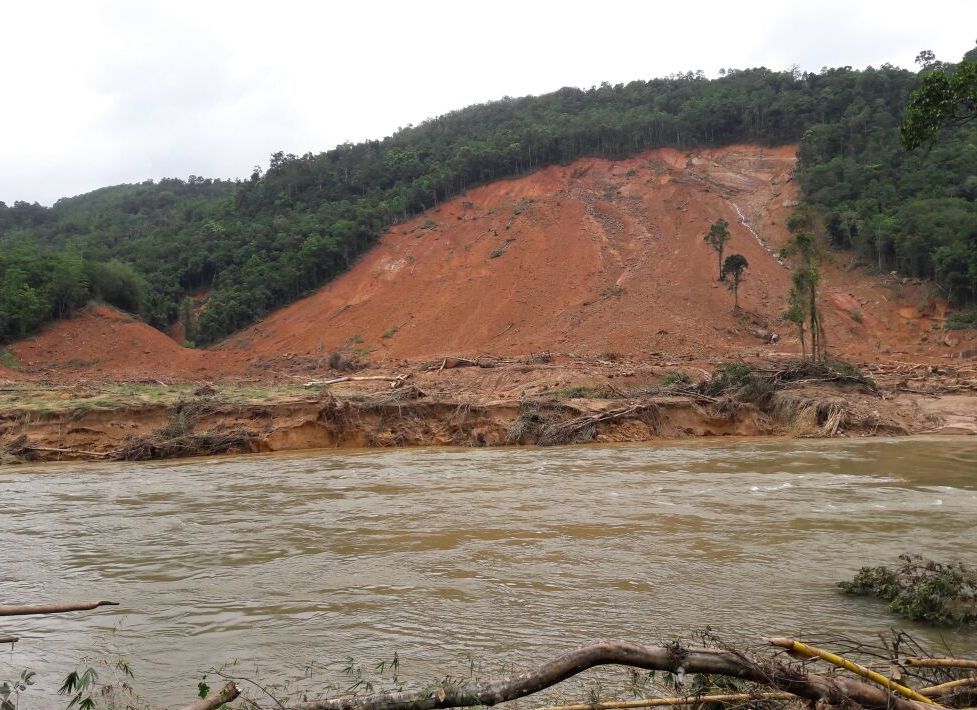
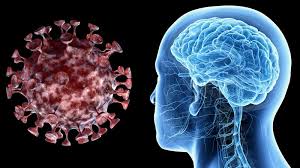


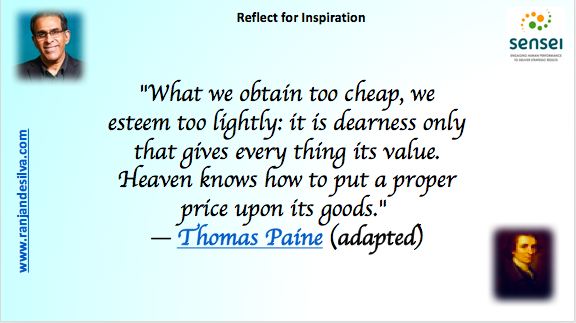



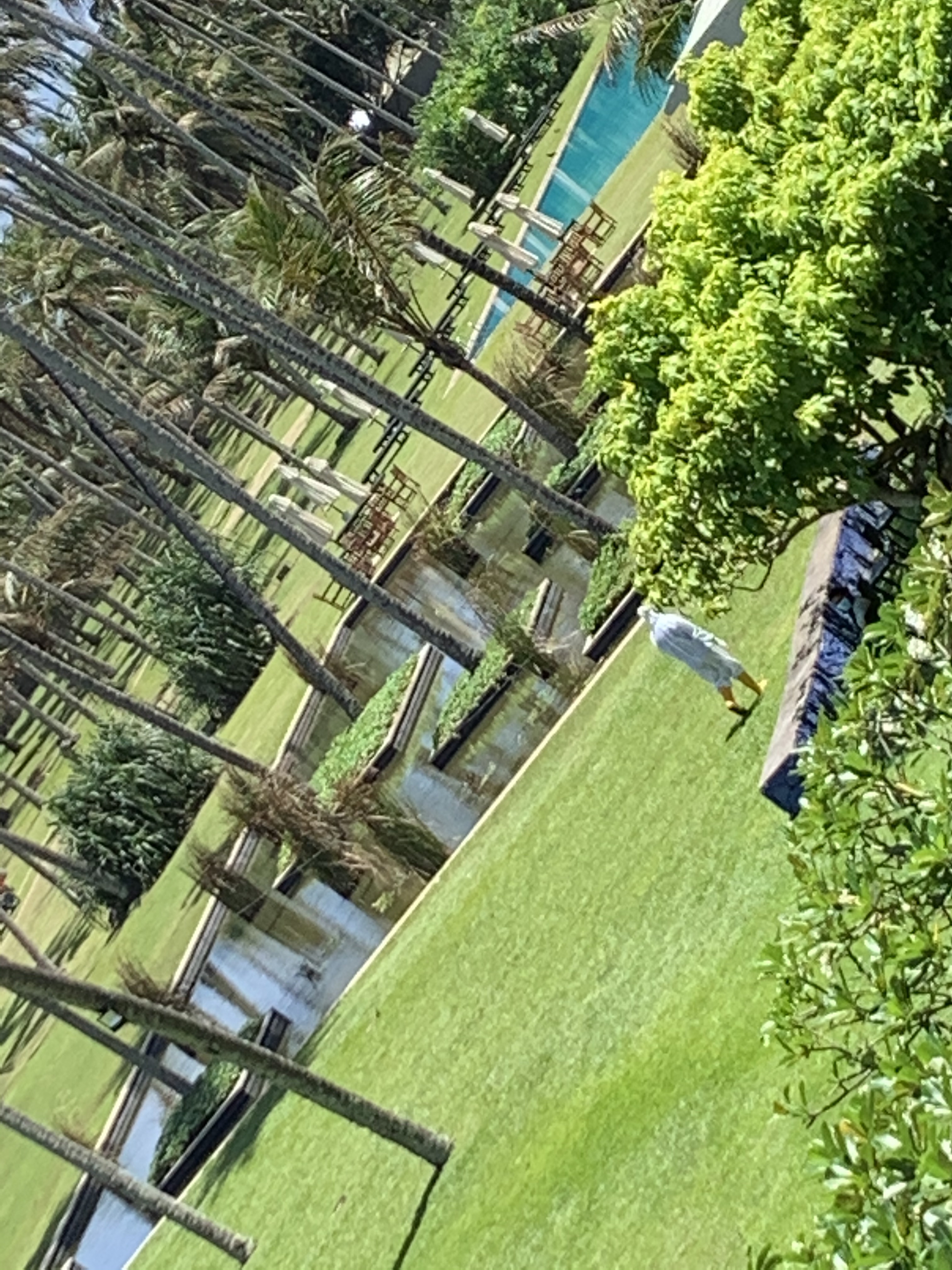


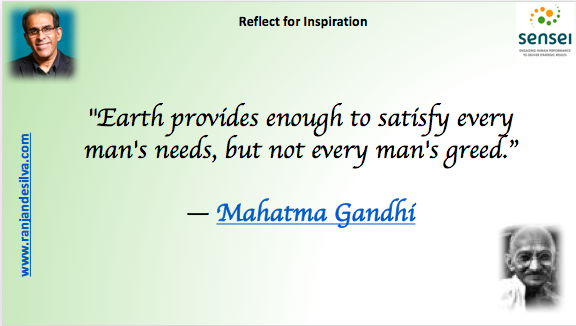


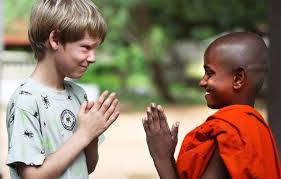

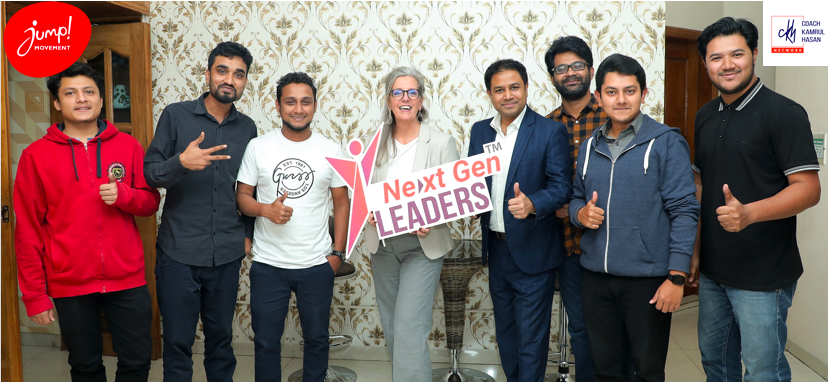 I have learnt that we keep discovering our higher purpose as we live life once we discover the notion of purpose and is conscious of its existence. This had got me in to the habit of reflecting, reviewing, refreshing and re-writing my purpose every month.










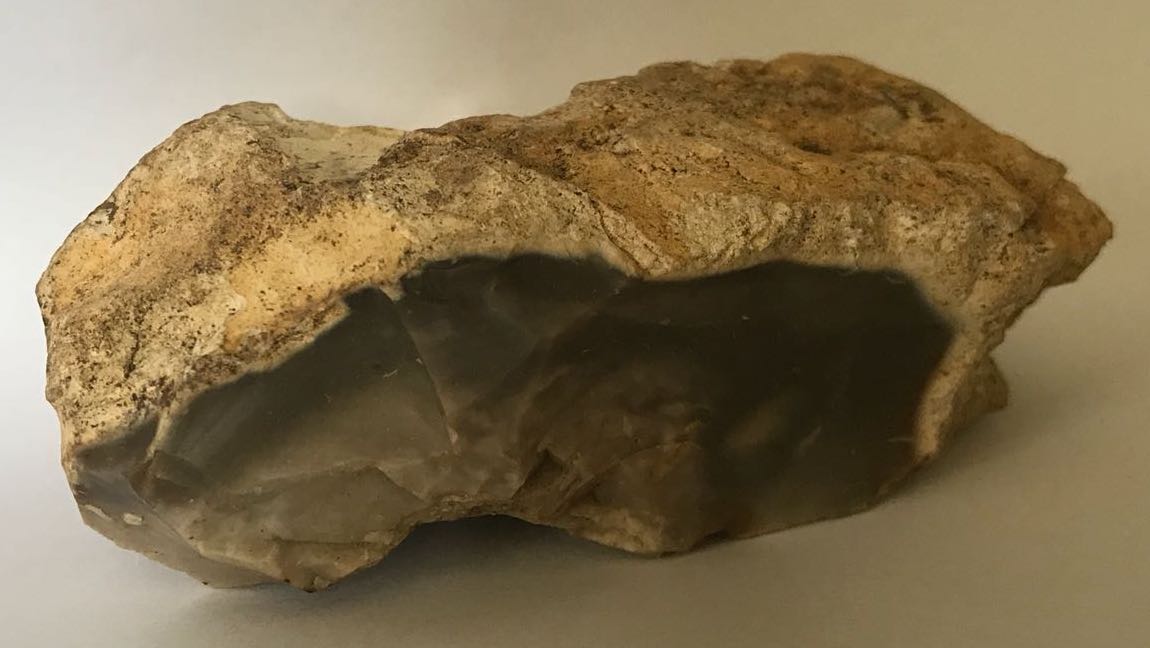





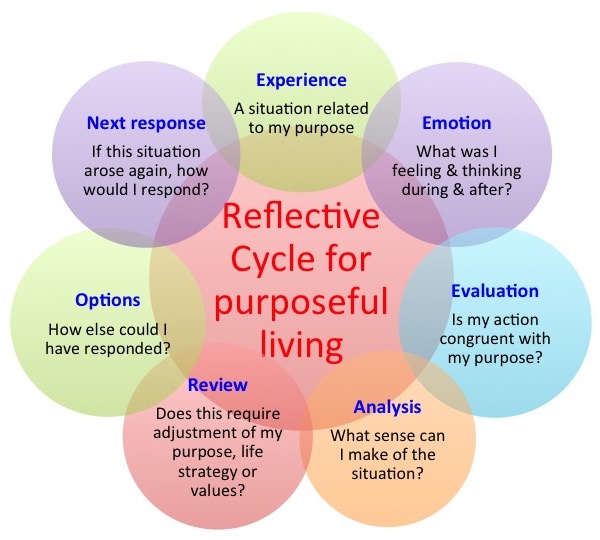

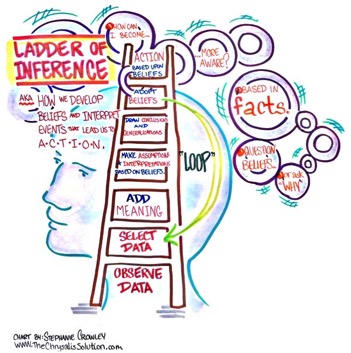 Let me use the words of the ‘Cookie Thief’ poem by Valerie Cox, I recite at trainings and the ‘ladder of inference’ developed by Coghlan & Brannick (2014, p.31) to attempt to figure out why we have misunderstandings. I will interrupt the poem and use the seven steps of the ‘ladder of inference’ model during the interludes in this attempt.
 Have you ever thought about how you know what you know? When this question was first asked from me, the answers that came to my mind was; from books, from parents, from teachers, from the learned. But when confronted with the next question, so do you believe that all that you know was true, I felt yes, it must be true, if not these will not be thought to me by those who I respect as learned, honest and well-meaning. But when I thought deeper, I felt that what is true to them, does not have to be true to me, because they come from different backgrounds, eras, conditions, cultures, religion, and would be driven by different purposes etc. Therefore for us to claim that we know what we know requires a kind of self-validation. John Heron provides a theoretical framework that helps make sense of the way we know. He names it extended epistemology, which has four interwoven ways of knowing (Heron 1992, 1999):